
Dark honey fungus
Armillaria ostoyae
Description
How to identify
The dark honey fungus, Armillaria ostoyae, belongs to the kingdom Fungi and is one of the most destructive tree pathogens in the forest ecosystem.
It is distinctively identified by its black, string-like mycelial structures known as rhizomorphs, which grow through the soil to seek out new hosts.
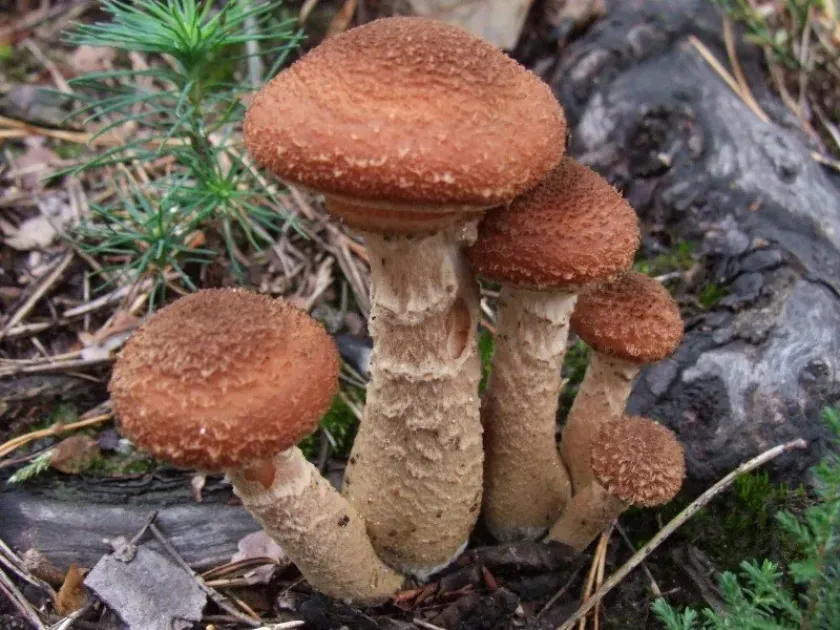
The fungus produces clusters of mushrooms with brownish, scaly caps, which typically sprout at the base of infected trunks or on decaying wood.
Unlike saprotrophic species, this fungus actively colonizes living plant tissues, specifically targeting the cambium and vascular system of its host.
It is widespread across temperate coniferous forests, where it acts as a primary agent of mortality by weakening and eventually killing mature trees.
What it damages
Coniferous trees, particularly spruce, fir, and pine, are highly susceptible to infection, suffering from rapid root and butt rot caused by this pathogen.
The fungus destroys the tree's root system, disrupting nutrient and water transport, which leads to general crown thinning and eventual collapse.
Transmission occurs through root-to-root contact or via the spread of rhizomorphs through the soil, creating large centers of infection in forests.
Orchard crops, such as stone fruits, can also be severely affected, leading to sudden decline and death of healthy, fruit-bearing trees.
Economic damage is substantial, as infected stands lose their structural integrity, becoming vulnerable to windthrow and secondary pest infestations.
When it appears
The fungus remains active within the wood throughout the growing season, with metabolic activity peaking during periods of high soil moisture.
Fruiting bodies (mushrooms) emerge mainly in late summer and autumn, provided there is sufficient rainfall and moderate temperatures to support growth.
Rhizomorphs act as dormant structures in the soil, capable of surviving for several years while waiting to contact the roots of a susceptible host.
In winter, the fungus persists as mycelium deep within the woody tissues of the host, shielding it from harsh environmental conditions.
Large-scale outbreaks are often correlated with seasons of prolonged rain, which accelerate the spread of rhizomorphs through the soil profile.
Signs of infestation
Early symptoms include a noticeable yellowing of needles or leaves, followed by a sparse crown appearance as the tree enters a state of decline.
The presence of thick, white mycelial mats under the bark near the root collar is a definitive sign of an active Armillaria ostoyae infection.
Dark, cord-like rhizomorphs attached to the exterior of the roots or base of the trunk serve as clear evidence of the pathogen's presence.
Increased resin flow at the base of the trunk is a common defense reaction of coniferous trees against the encroaching fungal colonization.
- Stunted growth of new shoots.
- Decay of the root system and lower stem.
- White rot characterized by a distinct mushroom odor.
- Sudden death of the host tree.
Control measures
The most effective management strategy involves the removal of infected trees, including the stump and major roots, to reduce the pathogen's inoculum.
Preventing physical damage to the root systems of healthy trees during forest operations is critical to limit new points of entry for the fungus.
Biological control methods, such as inoculating soil with beneficial fungi like Trichoderma species, help suppress the growth of Armillaria.
In plantation management, creating physical barriers or trenches can help stop the spread of rhizomorphs from infected zones to healthy areas.
Maintaining tree vigor through proper site selection and balanced fertilization helps trees better resist infection by this aggressive root pathogen.
Causes diseases · 1
Discussion
No discussions yet — be the first.