
Armillaria gallica
Armillaria gallica
Description
How to identify
Armillaria gallica is a basidiomycete fungus belonging to the genus Armillaria, widely known as a destructive plant pathogen in both forest ecosystems and orchards.
The fungus is distinguished by its ability to produce rhizomorphs, which are root-like structures of hyphae that facilitate the spread of the pathogen through the soil.
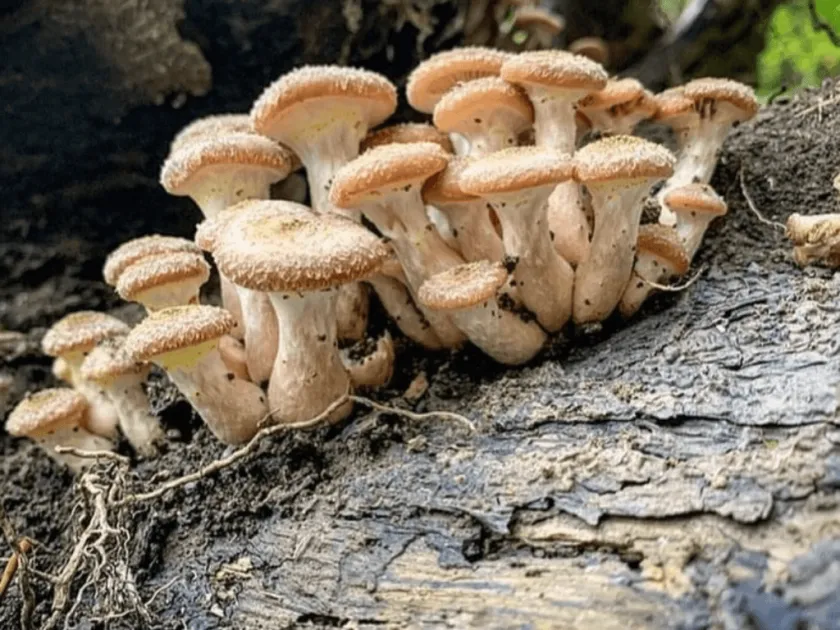
Fruiting bodies typically appear in late summer and autumn, often growing in clusters at the base of infected trees or on decaying stumps of hardwoods and conifers.
The cap of the fungus is brownish with fine scales, and the stipe features a prominent ring, making it morphologically similar to other honey fungus species.
Precise identification of Armillaria gallica is best achieved through molecular analysis or detailed microscopic inspection of the rhizomorphs in a laboratory setting.
What it damages
This pathogen has a broad host range, attacking a variety of broad-leaved and coniferous trees, often proving fatal to susceptible horticultural crops like apple and cherry.
The fungus invades the root system and the root collar, causing a severe white rot that destroys the plant's cambium and prevents the transport of water and nutrients.
Infection primarily occurs through direct contact between healthy root systems and infected material or through the expansion of fungal rhizomorphs in the soil.
Symptoms often involve stunted growth, chlorosis, and premature senescence of foliage as the root system fails to sustain the tree's physiological needs.
In high-density plantings, the fungus can spread rapidly across the orchard, leading to systemic decline and death of large groups of trees over several years.
When it appears
The fungus remains active in the soil year-round, but vegetative growth of mycelium is most rapid during periods of moderate soil temperatures and high moisture.
The formation of mushrooms occurs seasonally, usually triggered by late-summer rainfall, which provides the necessary humidity for sporulation and dispersal.
Rhizomorphs can remain viable in decaying organic matter or deep soil layers for many years, acting as a dormant reservoir of infection between planting cycles.
Winter conditions generally do not kill the pathogen, as the mycelium is well-protected within the roots and woody tissues of the host plants.
Environmental conditions that stress trees, such as drought or waterlogging, significantly increase the tree's susceptibility to colonization by this opportunistic pathogen.
Signs of infestation
A primary indicator of infestation is the presence of white, fan-shaped mycelial mats under the bark near the root collar, often accompanied by a distinct mushroom-like smell.
The outer surface of the roots may show dense, dark, cord-like rhizomorphs that firmly adhere to the bark and penetrate deep into the woody tissues.
Foliar symptoms include reduced leaf size, early yellowing, and sparse crowns, which indicate an advanced stage of root failure and systemic compromise.
Trees may exhibit sap exudation at the base of the trunk as a physiological attempt to isolate the fungal invasion and limit the expansion of the pathogen.
In the final stages of the disease, large clusters of fruiting bodies emerge at the base of the trunk, signaling that the tree's structural integrity is permanently damaged.
Control measures
The most effective strategy for managing this disease is the thorough removal of stumps and large root systems when clearing land to eliminate potential infection sources.
Avoiding mechanical damage to the roots of healthy trees during cultivation or fertilization is critical, as fresh wounds serve as easy entry points for the fungus.
Maintaining optimal tree vigor through consistent irrigation and balanced fertilization helps the plant build natural defenses against fungal colonization.
In confirmed outbreak areas, trenches can be dug to isolate infected trees from healthy ones, effectively creating a barrier against subterranean rhizomorph expansion.
Sanitation practices, including the safe disposal of infected woody debris and the use of resistant rootstocks, are essential for long-term orchard management and disease suppression.
Causes diseases · 1
Discussion
No discussions yet — be the first.