
Honey fungus
Armillaria
Description
How to identify
The honey fungus (Armillaria) is a genus of parasitic fungi that cause significant damage to trees and shrubs, acting as both a pathogen and a saprotroph.
It belongs to the kingdom Fungi and is notorious for its ability to spread through the soil via dark, root-like structures known as rhizomorphs.
Rhizomorphs function like a network, allowing the fungus to navigate underground and infect the root systems of healthy plants nearby.
Unlike many other pathogens, Armillaria can survive for years on dead woody debris, making it a persistent threat in wooded areas and orchards.
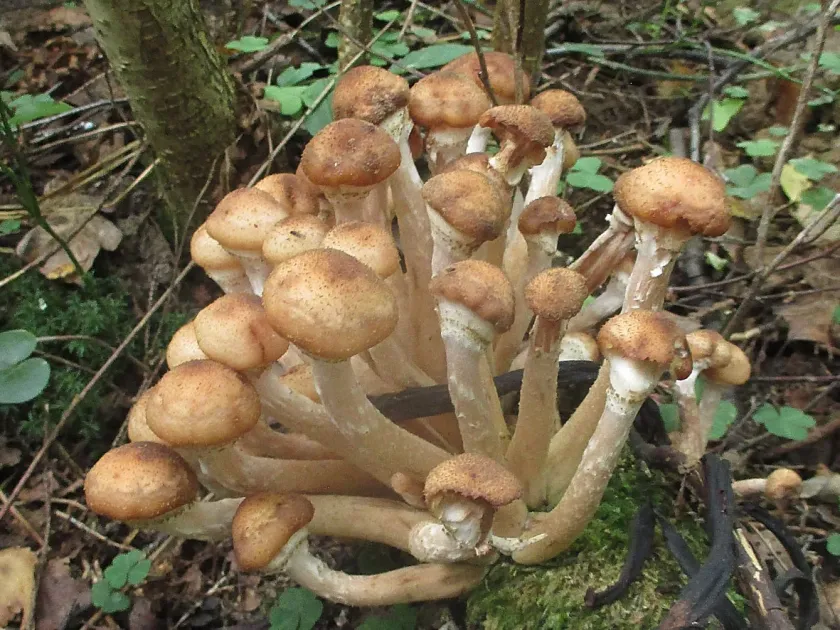
The fungus produces mushrooms (fruit bodies) in clusters during autumn, which release spores that can land on tree wounds and initiate new infections.
What it damages
Armillaria attacks a vast range of hosts, including fruit trees, ornamentals, and conifers, causing white rot of roots and the base of the trunk.
The pathogen disrupts the vascular system by destroying the cambium, effectively starving the tree of water and vital nutrients from the soil.
Orchards planted on land recently cleared of old trees are at high risk, as the fungus often lingers in the remaining root systems of the former forest.
Damage usually spreads from an initial infection point in a radial pattern, impacting all susceptible plants within the localized area.
Death of the infected host is the common outcome, often occurring within a few years after the initial symptoms become visible on the canopy.
When it appears
Fungal activity peaks during the growing season when soil moisture levels are high and temperatures are favorable for vegetative growth.
Rhizomorphs remain active throughout the year, slowly expanding their reach in the soil, regardless of the dormant state of the host plants.
The spore-producing phase occurs primarily in late summer and autumn, coinciding with higher rainfall and mild temperatures.
Winter is survived by the fungus in the form of resilient mycelium and rhizomorphs sheltered within woody tissues or deep in the soil profile.
Spring reactivation is characterized by rapid colonization of new roots as the soil temperature rises and the plant metabolism increases.
Signs of infestation
Early symptoms include pale, stunted foliage, reduced annual shoot growth, and premature leaf drop, which often signal root health issues.
Peeling back the bark at the base of the trunk often reveals white, fan-shaped mycelial mats that emit a distinct mushroom scent.
Dark, shoelace-like rhizomorphs are frequently observed on the surface of the roots or clinging to the bark near the soil line.
The wood tissue underneath the bark becomes brittle and soft, showing the classic signs of white rot with dark, demarcation lines.
- Clusters of honey-colored mushrooms at the tree base
- Bark cracking and exudation of sap near the root collar
- Increased dieback of upper canopy branches
- Brittle root system with visible fungal structures
Control measures
The most effective strategy is the thorough removal of stumps and all major root debris during land preparation to eliminate fungal food sources.
Minimize physical damage to the trunk or roots during landscaping or cultivation, as these injuries are primary infection points for spores.
If an infection is identified, physical isolation by digging deep trenches around the infected tree can help protect adjacent healthy plants.
While no complete chemical cure exists, soil drenching with specific fungicides can help contain the spread in early, isolated cases.
Promote plant vigor through correct pruning, irrigation, and balanced fertilization, as Armillaria primarily attacks stressed or weak trees.
Discussion
No discussions yet — be the first.