
Arceuthobium douglasii
Arceuthobium douglasii
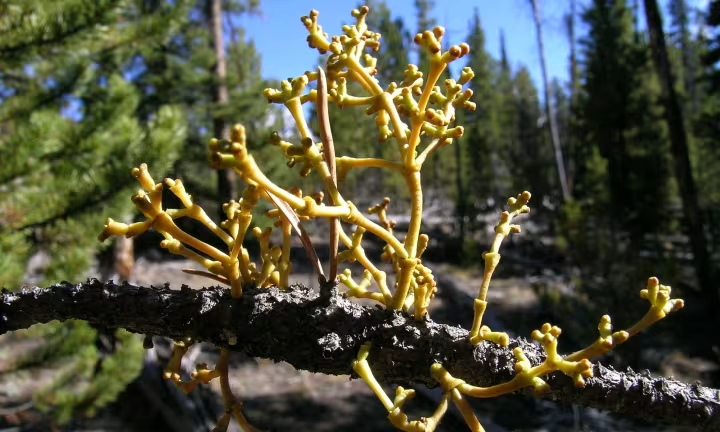
Description
How to identify
Arceuthobium douglasii, commonly known as Douglas-fir dwarf mistletoe, is an obligate hemiparasitic plant belonging to the family Santalaceae. It is a specialized pathogen that thrives by extracting water and minerals directly from its host.
Unlike common foliage, this plant appears as small, segmented, and often inconspicuous shoots emerging from the bark of host branches. Its size is significantly reduced compared to typical mistletoe species.
The organism does not possess traditional roots. Instead, it relies on an endophytic system of haustoria that penetrates the xylem and phloem of the host tree, allowing it to siphon essential resources.
Taxonomically, it is classified as a plant parasite that exhibits high host specificity. Its entire life cycle is intimately connected to the vascular system and physiological health of coniferous tree species.
Because it is a plant parasitizing another plant, its management requires a deep understanding of forestry practices rather than conventional pesticide-based crop protection alone.
What it damages
The primary host for this pathogen is the Douglas-fir (Pseudotsuga menziesii). While other conifers may be occasionally affected, the impact on Douglas-fir stands is the most economically and ecologically significant.
The parasite induces physiological stress by diverting water, nitrogen, and carbohydrates away from the host tree. This depletion leads to reduced radial growth and lower overall tree vigor over several years.
Structural damage is characterized by the formation of "witches' brooms," which are dense clusters of hypertrophic branches. These structures are heavy, energy-demanding, and often die back as the tree struggles to maintain them.
Timber quality is severely degraded by the presence of internal haustorial systems and the associated wood staining or necrosis, significantly lowering the commercial value of the affected wood.
Furthermore, heavily infested trees become focal points for secondary pests such as bark beetles. The combination of parasitic weakening and secondary infestation often leads to localized mortality within the forest.
When it appears
The life cycle of Arceuthobium douglasii is closely tied to the seasonal rhythm of its host. Active shoot growth usually coincides with the spring and early summer period of the host tree.
Seed dispersal is a fascinating mechanical process. The mistletoe fruits build up hydrostatic pressure, which causes them to explode, forcibly ejecting sticky seeds up to 15 meters away.
These seeds are coated with viscin, a glue-like substance that allows them to adhere to host needles or branches. The seed then germinates and begins the slow process of penetrating the bark.
The incubation period—the time between initial seed attachment and the emergence of visible aerial shoots—can last several years, often hiding the presence of the pathogen during early stages.
Environmental conditions, particularly temperature and humidity, play a crucial role during the germination phase, influencing the success rate of the parasite in establishing new infection sites.
Signs of infestation
Early signs include small, yellowish-green to brownish shoots appearing on the surface of branches. These are often difficult to spot in the canopy without close inspection.
Swollen knots or cankers at the site of infection are a diagnostic sign. The tree's cambium reacts to the persistent pressure of the haustoria, resulting in abnormal tissue growth.
The "witches' broom" phenomenon is the most prominent symptom in mature stands. These clusters of distorted, dense foliage disrupt the tree's architecture and indicate a long-term infection.
Needle chlorosis or premature senescence on the lower portions of the infected branches occurs as the parasite disrupts the normal flow of sap and nutrients to the distal parts of the tree.
In advanced cases, the bark around infection points may split or become necrotic, providing entry points for wood-decay fungi, leading to further internal damage of the host stem.
Control measures
The most effective management strategy is the silvicultural removal of heavily infested trees. By thinning out the source of seeds, managers can protect the remaining healthy stands.
Pruning infected branches is a viable option for high-value ornamental trees or nursery stocks, provided the pruning is done well below the infection site before the seeds mature.
Creating spatial buffers is essential when planting new stands. Ensuring a distance between young, susceptible trees and older, infested trees prevents the spread of explosively dispersed seeds.
Diversifying the tree species composition within the forest acts as a natural barrier to the mistletoe's spread, as it is highly host-specific and cannot thrive on non-host species.
Regular forest health monitoring and the promotion of vigorous, healthy tree growth through proper stand management remain the best defenses against the long-term impact of this parasite.
Causes diseases · 1
Discussion
No discussions yet — be the first.