
Apple stem pitting virus
Apple stem
Description
How to identify
Apple stem pitting virus (ASPV) is a plant pathogenic virus belonging to the genus Foveavirus in the Betaflexiviridae family. It contains a single-stranded RNA genome.
The virus is a systemic pathogen that infects the vascular tissues of host plants. It lacks a biological vector, spreading primarily through grafting and infected pruning tools.
Detection is primarily achieved through laboratory diagnostic techniques such as ELISA (Enzyme-Linked Immunosorbent Assay) and RT-PCR (Reverse Transcription Polymerase Chain Reaction).
ASPV particles are filamentous, typically 600-800 nm in length. Due to the high prevalence of asymptomatic infections, field diagnosis based solely on symptoms is unreliable.
The virus is widely distributed across temperate regions where apple and pear cultivation is prominent, necessitating strict quarantine measures for nursery stock.
What it damages
The virus affects several pome fruit trees, including apples, pears, and quinces. It causes significant physiological stress to infected plants.
It often leads to graft incompatibility, which causes poor union development and can result in the decline and eventual death of orchard trees.
The wood development is impaired, leading to structural weaknesses. This makes branches prone to breakage under the weight of heavy crops or during high winds.
Infection leads to a reduction in vigor, causing trees to become stunted and less responsive to standard fertilization and irrigation practices.
Yield reduction is significant, with fruit quality being severely compromised, often leading to unmarketable produce and major economic losses for growers.
Signs of infestation
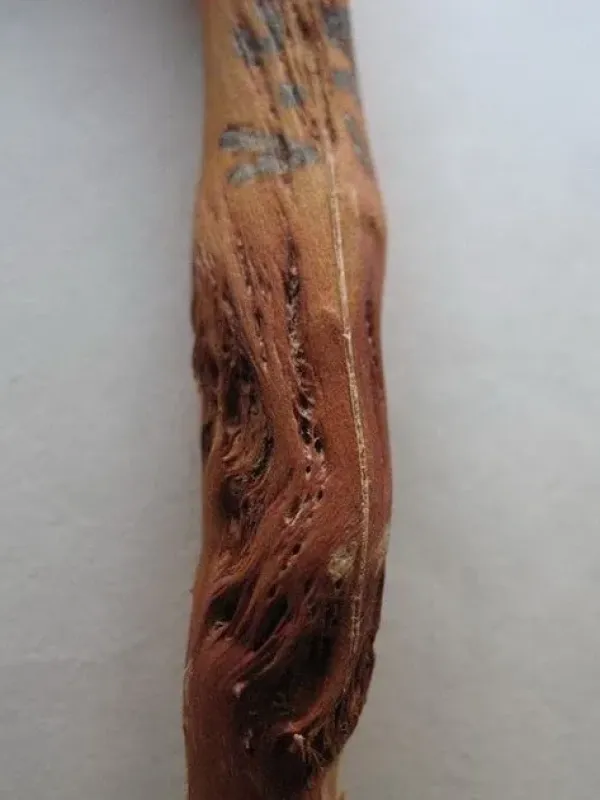
Internal symptoms include pitting, grooving, and indentation of the wood beneath the bark, which can only be inspected by stripping away the bark on stems or branches.
Graft union necrosis is a common external sign, where the junction between scion and rootstock shows swelling, bark splitting, and irregular growth patterns.
Foliage symptoms may include chlorosis, leaf curling, and overall reduced leaf area, contributing to reduced photosynthetic efficiency of the tree.
Premature leaf drop and delayed bud burst are frequently observed in heavily infected trees, particularly in susceptible apple cultivars.
Fruits from infected trees often exhibit malformation, pitting on the skin, and uneven ripening, significantly diminishing their commercial shelf life.
Control measures
The primary control measure is the exclusive use of virus-free certified plant material produced through certified nursery programs.
Rigorous sanitation protocols must be followed during pruning. Disinfecting tools with alcohol or appropriate chemical agents between trees is essential to prevent transmission.
Infected trees displaying symptoms should be removed and destroyed to minimize the inoculum pressure within the orchard environment.
Selecting resistant rootstocks and scion varieties is a key strategy, although complete resistance to ASPV remains limited in commercial apple cultivars.
As there are no curative chemical treatments, integrated orchard management focused on prevention and early detection remains the only viable strategy.
Discussion
No discussions yet — be the first.