
Apiognomonia veneta
Apiognomonia veneta
Description
How to identify
Apiognomonia veneta is an ascomycete fungus that acts as the primary pathogen responsible for anthracnose disease in plane trees (Platanus spp.). It belongs to the Gnomoniaceae family.
The fungus exists in two forms: the anamorphic (asexual) stage known as Gloeosporium platani and the teleomorphic (sexual) stage, which produces perithecia on overwintered leaves.
The life cycle involves the survival of the fungus in infected twigs and fallen leaves during the winter months. As spring temperatures rise, the fungus produces spores that are dispersed by water splashes and wind.
The pathogen is highly specialized and thrives in cool, moist conditions, typically occurring during the spring growth phase when leaves are still tender and vulnerable to infection.
Its ability to infect through both leaf tissue and succulent young stems allows the fungus to cause significant damage to the canopy structure of mature trees and young saplings alike.
What it damages
The disease primarily targets various species of the plane tree genus, causing severe aesthetic and physiological damage. It is a critical issue for urban arboriculture and nursery management.
The main form of damage is the widespread blight of leaves and twigs. Defoliation in late spring forces the tree to expend energy to produce new foliage, which significantly weakens the tree's health.
Recurrent infections over multiple years can lead to the formation of cankers on branches and stems, which can ultimately cause the death of large limbs or even the entire tree.
In nurseries, Apiognomonia veneta causes substantial economic losses by stunting the growth of young trees and making them unsuitable for sale due to distorted growth and persistent dead wood.
The cumulative effect of this disease reduces the overall lifespan of the tree and increases its susceptibility to secondary pathogens, such as wood-decay fungi and wood-boring insects.
Signs of infestation
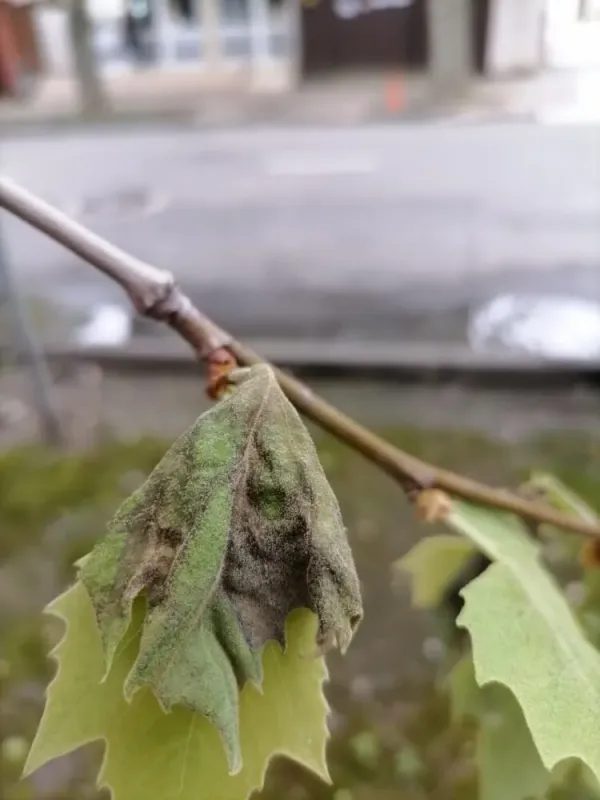
Early symptoms include small, irregular dark brown lesions on the leaves, which often appear along the veins, later spreading to create large dead patches.
Affected leaves often curl and die, falling prematurely. The petioles may show necrotic spots, and the base of the leaf may show signs of tissue collapse, leading to early abscission.
Young shoots may develop sunken cankers that encircle the stem, causing the tip of the twig to wilt and die back suddenly, which is a classic symptom of this fungal attack.
During humid weather, small, gelatinous spore masses (acervuli) appear on the undersides of leaves or on the bark of infected twigs, usually appearing light-colored or pinkish.
Damage often mimics frost injury, as the tips of young shoots die back after cold snaps, but the presence of the fungus can be confirmed by examining the tissue for the typical necrotic lesions.
Control measures
Sanitation is the most effective management strategy; this includes the prompt removal and disposal of all fallen leaves and infected twigs to reduce the primary inoculum level.
Pruning of dead or diseased branches should be performed during the dormant season to improve air circulation within the canopy, which helps keep the foliage dry and limits fungal growth.
Chemical control involving copper-based fungicides or systemic fungicides may be necessary in nursery settings or for high-value ornamental trees, especially during wet springs.
Applications should ideally begin at bud break and continue during periods of rapid foliage growth, following the manufacturer's recommendations for timing and dosage.
- Choose resistant cultivars if available for specific planting locations.
- Ensure proper watering and fertilization to promote tree vigor.
- Avoid overhead irrigation that keeps leaves wet for extended periods.
- Monitor trees regularly during the spring for early signs of infection.
Causes diseases · 1
Discussion
No discussions yet — be the first.