
Apiognomonia errabunda
Apiognomonia errabunda
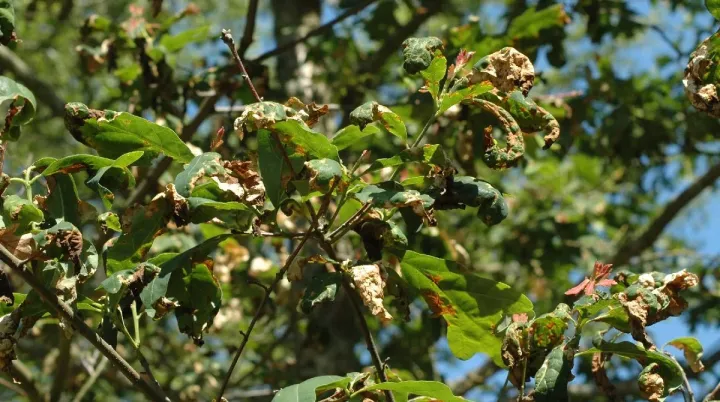
Description
How to identify
Apiognomonia errabunda is a parasitic fungus belonging to the order Gnomoniales, commonly recognized as a significant agent of anthracnose in deciduous trees.
The life cycle involves both sexual reproduction via ascospores and asexual reproduction through conidia, ensuring widespread dissemination across forest and garden environments.
The fungus overwinters in fallen leaves and on infected twigs in a dormant state, emerging as a primary source of inoculum during the early spring months.
Under a microscope, one can identify perithecia embedded in leaf tissue, which release ascospores during periods of high humidity and rainfall.
This pathogen is widely documented for its ability to cause severe leaf lesions, which can weaken host trees over consecutive growing seasons.
What it damages
The primary hosts of this fungus include various species of Oak (Quercus), Beech (Fagus), Linden (Tilia), and Plane (Platanus).
Young nursery stock is particularly vulnerable, as the infection can cause extensive defoliation, stunted growth, and even the death of young seedlings.
In mature trees, the damage is typically cosmetic but repeated yearly infections lead to a decrease in overall tree vigor and increased susceptibility to secondary pests.
Urban trees growing in high-stress environments, such as compacted soil or polluted areas, are more prone to heavy colonization by this fungus.
The pathogen specifically targets the foliage and petioles, though it may occasionally cause necrotic cankers on young, soft shoots.
When it appears
Primary infection occurs in spring, typically beginning when temperatures reach 10–12°C, provided there is enough moisture from frequent rain events.
The secondary spread of conidia occurs throughout the summer months, with peaks in disease development corresponding to rainy and humid periods.
The incubation period for Apiognomonia errabunda is generally short, allowing for multiple infection cycles within a single growing season.
By late summer and early autumn, the fungus prepares for its winter stage by colonizing the dying plant tissues that will soon fall to the ground.
Wet spring weather patterns are the primary driver of epidemic-level outbreaks, as they favor both spore release and the susceptibility of young expanding leaves.
Signs of infestation
The disease first manifests as small, irregular chlorotic spots on leaves, which gradually darken into brown or dark necrotic patches.
These spots often appear near the leaf margins or adjacent to main veins, eventually spreading to cover larger parts of the leaf surface.
- Necrotic brown spots on the leaf blade.
- Curling, puckering, or distortion of leaves.
- Premature yellowing and shedding of foliage mid-season.
- Formation of small fungal fruiting bodies on the underside of infected leaves.
Infection of the petiole can lead to premature leaf drop, as the fungal growth disrupts the plant's ability to transport nutrients to the blade.
Control measures
Effective sanitation is the first line of defense; gathering and removing all fallen leaves in autumn significantly reduces the primary inoculum source.
Cultural practices such as pruning to improve canopy airflow help to lower the relative humidity, making the environment less favorable for the pathogen.
Chemical control involving copper-based fungicides or systemic triazoles is most effective when applied at the bud-break stage to prevent initial infection.
Regular monitoring during the early growing season is crucial, especially in years with high rainfall, to apply control measures before the infection spreads.
Promoting tree health through appropriate fertilization and adequate irrigation allows trees to better withstand fungal pressure and recover from minor infections.
Causes diseases · 2
Discussion
No discussions yet — be the first.