
Anthostomella pullulans
Anthostomella pullulans
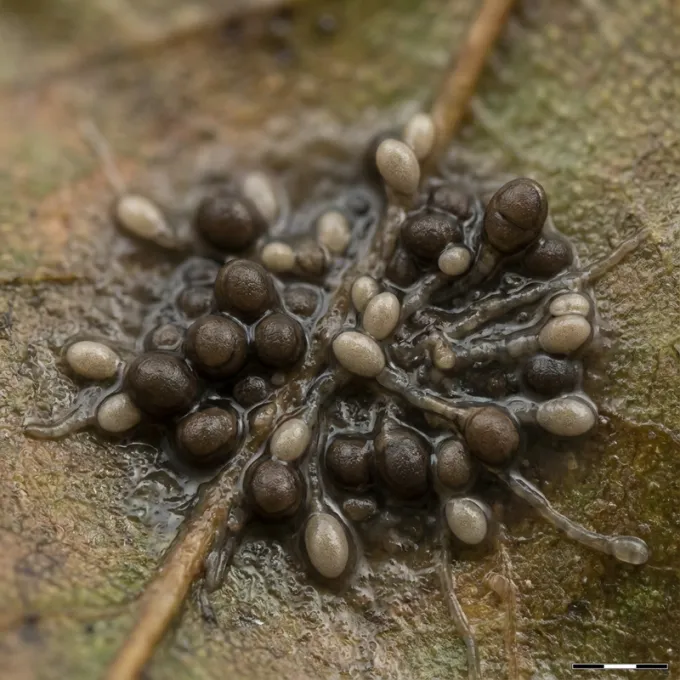
Description
How to identify
Anthostomella pullulans belongs to the kingdom Fungi and the phylum Ascomycota. It is a microscopic sac fungus that typically exists as a saprophyte, but under favorable conditions, it acts as a facultative parasite.
The mycelium of the fungus is characterized by rapid growth and the formation of specific fruiting bodies known as perithecia. The pathogen's life cycle is dominated by conidial stages, which facilitate rapid dispersal through air currents and water splashes.
Morphologically, the object is identified via microscopic analysis of infected tissue, where characteristic dark fruiting bodies are observed. Distinguishing it from related species that inhabit similar substrates is crucial for accurate diagnosis.
The pathogen survives in the soil and on plant debris, overwintering as mycelium or fruiting bodies. As the growing season begins, active sporulation occurs, posing a threat to young plant shoots.
Biological adaptability allows the fungus to survive across a wide temperature range, contributing to its prevalence in diverse climatic zones around the world.
What it damages
This phytopathogen affects a wide range of crops, including fruit trees, grapevines, and various field crops. The fungus colonizes weakened plant tissues, entering through natural openings or mechanical injuries.
Significant damage is typically observed in orchards and vineyards, where the fungus contributes to necrosis of the bark and shoots. Compromised tissue integrity often opens the door for secondary infections by other opportunistic pathogens.
On leaves and young stems, the fungus induces chlorosis and premature wilting, which negatively impacts overall crop productivity. Flower infection often results in abortion and fruit drop.
When the pathogen spreads massively to fruits, it causes rotting, making the produce unsuitable for storage or market consumption, leading to direct economic losses for growers.
Infection of perennial plants is particularly dangerous as the fungus accumulates in the wood, causing gradual dieback of branches and weakening the plant's winter hardiness.
Signs of infestation
The primary sign of infection is the appearance of small dark spots on the surface of leaves or bark. Over time, these spots expand, often becoming zonate and covered with a dark layer of spores.
Stem infection is marked by bark cracking and exudate leakage, indicating an active necrotic process. Tiny black dots—the perithecia—frequently appear at the infection sites.
Infected leaves often become deformed, curled, and yellow prematurely, reducing the total photosynthetic area. In severe cases, premature leaf drop is commonly observed.
Fruit infection appears as sunken, dark lesions that spread rapidly across the surface. Under humid conditions, a visible spore-bearing layer may develop on these lesions.
Visual monitoring of crop health is essential for early detection. It is particularly important to inspect the lower canopy, where microclimatic conditions favor fungal development.
Control measures
The primary control strategy involves strict adherence to agrotechnical practices aimed at reducing the pathogen load in orchards and fields. Timely sanitary pruning of infected branches is vital.
Mandatory collection and disposal of plant debris are recommended, as these serve as the primary overwintering sources of the infection. Deep tillage in rows significantly reduces spore concentrations in the soil.
Chemical control methods include the use of broad-spectrum fungicides, especially during periods of high humidity. Preventive applications of copper-based preparations are effective before the onset of the growing season.
Ensuring optimal canopy aeration through proper plant training helps prevent moisture stagnation, which is a critical factor favoring the activity of Anthostomella pullulans.
- Maintaining crop rotation and spatial isolation of plantations.
- Selecting resistant varieties and hybrids during establishment.
- Optimizing mineral nutrition to bolster plant immunity.
Causes diseases · 1
Discussion
No discussions yet — be the first.