
Anisogramma anomala
Anisogramma anomala
Description
How to identify
Anisogramma anomala is an ascomycete fungus and the causal agent of Eastern Filbert Blight (EFB), a devastating disease affecting hazelnut trees. The pathogen invades the plant's cambium and phloem, leading to extensive tissue damage.
Belonging to the order Diaporthales, the fungus is known for its prolonged latent period. An infected tree may show no visible symptoms for up to two years, making early detection extremely difficult for orchard managers.
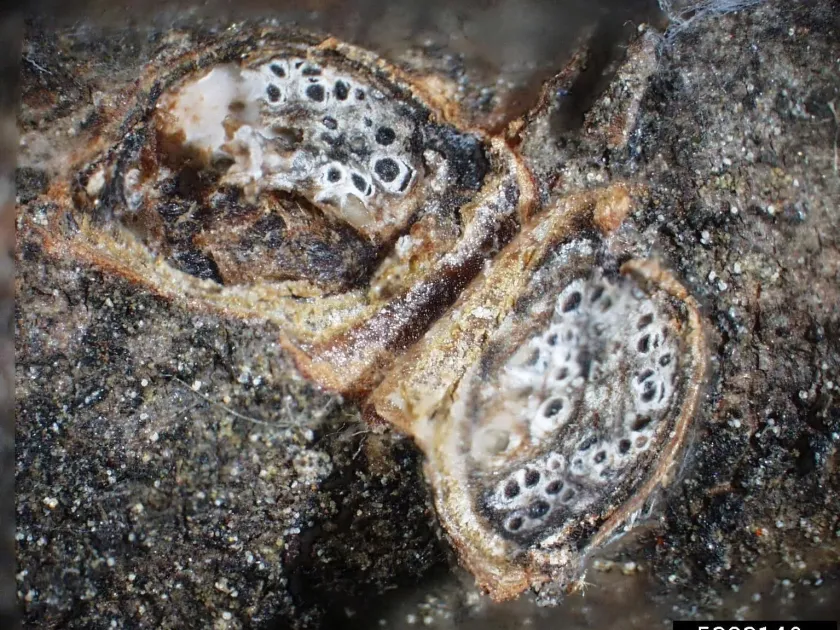
The fungus produces characteristic black, stromatic fruiting bodies that erupt through the bark. These structures serve as the primary source of inoculum, releasing ascospores into the environment during wet conditions.
It is a highly adaptive pathogen that thrives in temperate climates. Humidity and rainfall are critical factors that trigger the release and dispersal of spores, which are then carried by wind or splashing water to healthy hosts.
Once established within the wood, the mycelium persists for the life of the tree, continually producing new spores and spreading the infection deeper into the vascular system.
What it damages
The primary host for this pathogen is the genus Corylus (hazelnuts/filberts). Both commercial cultivars and wild species are highly susceptible to the disease, with potential for total orchard loss.
In high-density commercial orchards, the pathogen can spread rapidly, as the canopy overlap facilitates the movement of spores between trees, leading to severe outbreaks if not managed early.
The fungus disrupts the tree's vascular system, essentially choking the supply of water and nutrients. This results in dieback of branches, reduced yields, and eventually the death of the entire tree.
Infection typically occurs in younger, tender branches but eventually progresses into larger scaffold limbs and the main trunk, making complete eradication of the pathogen from the tree impossible.
The economic impact is profound, including direct losses in nut production, the costs of fungicide spray programs, and the necessity of removing entire blocks of trees to protect the remaining orchard.
Signs of infestation
The first external sign of infection is the development of linear, transverse cracks in the bark. As the disease matures, black, pimply, elongated stromata emerge from these cracks.
Leaves on infected limbs often turn yellow, curl, and wither prematurely. A cross-section of an infected branch typically reveals a distinct, dark discoloration in the wood, signaling the presence of fungal mycelium.
During moist periods, the stromata may release a sticky exudate containing spores. This material is easily transported by insects, birds, and rain to susceptible tissues on healthy branches.
As the disease progresses, the bark dies and sunken cankers form, effectively girdling the branch and causing the terminal end to die back. This results in the characteristic "flagging" seen in infected canopies.
Visual inspections during the dormant season are most effective for detecting the black, rough stromatic structures that contrast against the healthy grey bark of the tree.
Control measures
Cultural management is the cornerstone of EFB control. This includes using certified, blight-free nursery stock and maintaining strict isolation distances from known infected wild or commercial trees.
Pruning is critical: all infected branches must be removed, with cuts made at least 30 to 50 centimeters below the visible canker, and all removed material must be burned or destroyed immediately.
- Regular fungicide applications during the spring when spores are actively released.
- Sanitation protocols, including cleaning tools with bleach or alcohol between trees.
- Maintaining optimal tree health to enhance vigor and resilience.
- Spatial separation of new plantings from existing infected orchards.
- Deployment of resistant hazelnut cultivars to reduce reliance on chemicals.
Integrated Pest Management (IPM) strategies suggest that combining chemical spray schedules with aggressive sanitation is the only viable way to maintain hazelnut production in high-pressure areas.
By monitoring the orchard closely and responding to early symptoms with surgical pruning, growers can significantly delay the progression of the disease and protect the long-term viability of their investments.
Causes diseases · 1
Discussion
No discussions yet — be the first.