
Alternaria leaf spot of sunflower
Alternariaster helianthi
Description
How to identify
The causal agent of Alternaria leaf spot of sunflower is the fungus Alternariaster helianthi (formerly Alternaria helianthi). It is a necrotrophic pathogen belonging to the division Ascomycota and the class Dothideomycetes.
The fungus survives the winter season as mycelium and conidia in crop debris left on the field surface or within the upper soil layer. It can remain viable for several years in the absence of a host.
The primary infection is initiated by conidia being dispersed through wind or rain splashes. Once the spores land on susceptible sunflower tissues, they germinate under appropriate environmental conditions to form new infection sites.
High relative humidity and moderate temperatures ranging from 20°C to 25°C are critical for the rapid germination and colonization of host plant tissues by the pathogen.
The disease cycle can repeat several times throughout the growing season. Secondary inoculum is produced on lesions, allowing the disease to spread rapidly through the canopy during periods of wet weather.
What it damages
The disease affects various parts of the sunflower plant, including leaves, petioles, stems, and heads. Significant damage occurs when the pathogen severely reduces the leaf area, inhibiting photosynthesis.
Stem infections can lead to severe lesions that weaken the structural integrity of the plant, often causing lodging and increased risk of total plant collapse before harvest.
When the infection reaches the flower head, it can penetrate the tissues, leading to poor seed set, shriveled seeds, and reduced oil content. This significantly impacts the economic value of the sunflower harvest.
In cases of severe epidemics, crop yield losses can reach 30% to 50%. Reduced seed quality often leads to further losses during processing and storage due to higher susceptibility to opportunistic decay.
Beyond yield loss, the infection contributes to premature senescence of the entire plant, which prevents the sunflower from reaching its full physiological maturity.
Signs of infestation
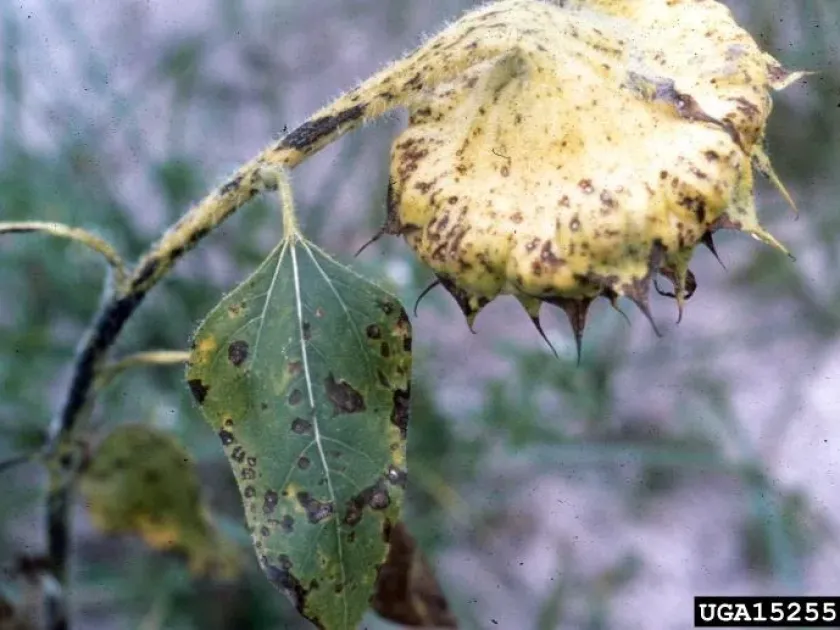
The first symptoms typically appear as small, brown-to-black spots on the lower leaves. As the infection progresses, these spots expand, often developing a characteristic yellowish halo around the edges.
The lesions frequently exhibit a concentric zonation pattern (bull's-eye appearance), which is a key diagnostic feature for distinguishing Alternaria infections from other leaf diseases.
Under humid conditions, a dark olive-brown to black velvety growth (conidiophores and conidia) can be observed on the leaf lesions. This vegetative growth is the primary source of secondary spread.
On stems and petioles, the symptoms appear as elongated, dark-colored necrotic patches. These lesions may become sunken as the infection deepens, potentially girdling the stem in severe cases.
Infected heads show dark, sunken lesions on the back. If moisture persists, these spots can expand into the internal floral tissues, promoting the development of secondary soft rots.
Control measures
Effective management begins with strict crop rotation, ensuring that sunflowers are not planted in the same field for at least 6 to 8 years to break the pathogen's survival cycle.
Deep plowing and incorporation of crop residues are essential practices to promote the decomposition of infected debris, thereby reducing the inoculum load in the field for the following season.
Utilizing certified, disease-free seed and treating seeds with appropriate fungicides provides protection during the critical seedling stage, ensuring a healthy and vigorous start for the crop.
Integrated chemical control involves applying systemic fungicides at the early stages of disease development. Strobilurin and triazole-based fungicides are commonly used for effective inhibition of the fungal growth.
- Implement strict weed management to eliminate alternative hosts.
- Select sunflower hybrids with proven genetic resistance or tolerance to Alternariaster species.
- Maintain balanced soil nutrition, focusing on adequate potassium levels to strengthen plant tissues.
Causes diseases · 1
Discussion
No discussions yet — be the first.