
Wheat Alternaria leaf blight
Alternaria triticina
Description
How to identify
The causative agent of the disease is the fungus Alternaria triticina, which belongs to the kingdom Fungi, genus Alternaria. It is a well-known plant pathogen causing significant damage to cereal crops worldwide.
The fungus develops mycelium within plant tissues and produces conidial spores on the surface of the infected areas. These spores are capable of being dispersed by wind and water splashes over long distances.
The biological cycle involves surviving the dormant period as mycelium or conidia on crop residues and infected seeds. Upon favorable environmental conditions, the pathogen germinates and infects the host plant.
This pathogen is characterized by high adaptability to various climate conditions, making it a persistent threat in wheat-growing regions. It is classified as a facultative parasite, which can also survive as a saprophyte on dead organic matter.
Understanding the life cycle is crucial for implementing effective control strategies, as the fungus maintains high viability in the soil and on seed material for several seasons.
What it damages
Wheat (both winter and spring varieties) is the primary host for Alternaria triticina. The fungus affects all aerial parts of the plant, including leaves, sheaths, stems, and spikes.
Infection leads to premature senescence of the foliage, drastically reducing the photosynthetic capacity of the plant. This results in poor grain filling and a significant decrease in yield.
Infection of the spike leads to the formation of the "black point" symptom on the grain. This not only downgrades the quality of the harvest but also impairs the germination potential of the seeds.
Under favorable conditions for the fungus, yield losses can reach significant levels, sometimes exceeding 20-30%. Beyond quantity loss, the contamination with mycotoxins produced by the pathogen poses a risk to grain marketability.
High plant density and nitrogen-rich environments often exacerbate the disease's spread, creating a microclimate suitable for rapid mycelial development.
When it appears
Alternaria leaf blight thrives in warm and humid weather conditions. Optimal temperatures for the infection process range between 20°C and 25°C, coupled with high relative humidity.
Primary inoculum sources include infected seeds and previous year's stubble remaining in the field. During the vegetative stage, the spread is accelerated by rain splashes and windborne conidia.
Frequent fog, dew, and persistent rainfall provide the necessary moisture for the fungus to penetrate the host tissues successfully. These conditions allow the disease to progress rapidly through the canopy.
While hot and dry periods may slow down the visible spread, the fungus can remain latent within the tissue, waiting for the return of moisture to resume sporulation.
The risk of infection is highest during the stem elongation, heading, and grain-filling stages, when the plant is most vulnerable to environmental stress and pathogen colonization.
Signs of infestation
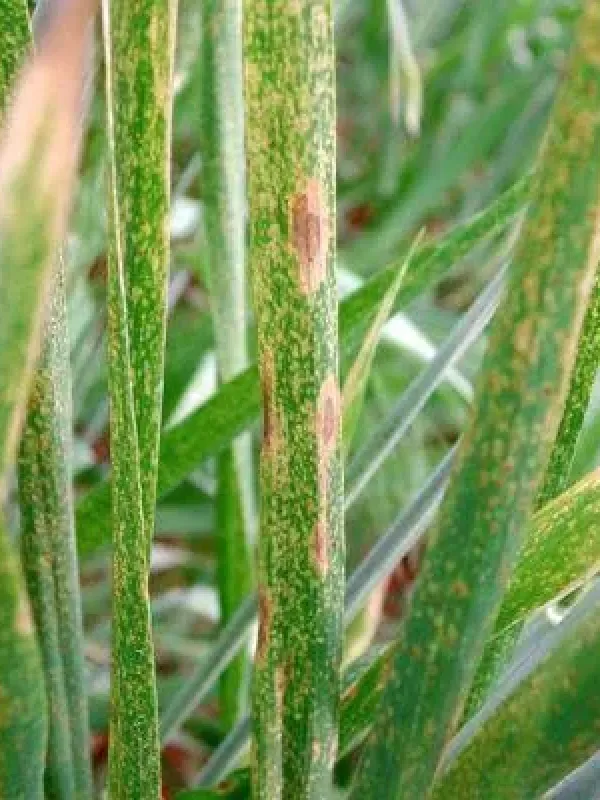
Early symptoms appear as small, chlorotic spots that gradually develop into dark brown lesions. These lesions often exhibit a distinct yellow halo, indicating the systemic effect of fungal toxins on plant tissue.
As the disease progresses, the spots expand into larger, elongated, or oval-shaped lesions. In high humidity, a greyish-olive or blackish moldy growth of conidia becomes visible on the infected areas.
Severe infection leads to the merging of lesions, causing extensive leaf death. The leaves start yellowing from the tips and may curl and die before the grain matures.
- Appearance of oval brown spots with chlorotic margins.
- Development of a dark, velvety mold on spikes and leaves.
- Blackening of the germ end of the kernel (black point).
- Premature drying of the lower canopy leaves.
The disease progresses upward from the lower leaves to the flag leaf, which is critical for final grain filling, thereby causing the most significant impact on the harvest.
Control measures
The primary control strategy involves the use of high-quality, certified seeds combined with seed treatments using systemic fungicides to eliminate initial inoculum.
Cultural management practices include crop rotation with non-host crops and deep plowing to bury crop residues, which helps break the survival cycle of the fungus.
Balanced fertilization, especially ensuring sufficient potassium levels, is recommended to strengthen the plant's cell walls and improve its natural resistance against fungal attacks.
Fungicide application during the vegetative and reproductive stages is necessary when the disease reaches economic threshold levels. Triazoles and strobilurins are commonly effective against this pathogen.
Regular field scouting is essential for early detection of the disease, allowing for targeted and timely control actions to minimize the spread and reduce overall chemical usage.
Causes diseases · 1
Discussion
No discussions yet — be the first.