
Alternaria blight
Alternaria solani
Description
How to identify
Alternaria blight, caused by the fungus Alternaria solani, belongs to the kingdom Fungi. It is a widespread phytopathogen known for its ability to cause severe damage to Solanaceous crops globally.
The fungus produces conidia, which serve as the primary source of inoculum. These spores are dispersed by wind, rain splashes, and irrigation, allowing the pathogen to spread across fields efficiently.
The pathogen survives in the soil within plant debris, on alternative hosts, or in contaminated seeds, waiting for favorable environmental conditions to initiate infection.
It colonizes plant tissues by entering through stomata or wounds, where it secretes enzymes and toxins that degrade plant cells, leading to characteristic tissue necrosis.
The genetic diversity of Alternaria strains allows for adaptation to various host genotypes and environmental pressures, posing a constant challenge to plant pathology.
What it damages
Primary hosts include potatoes, tomatoes, peppers, and eggplants. The disease leads to significant yield losses and reduces the market value of the harvested produce.
Defoliation caused by the fungus reduces the photosynthetic area, which directly stunts fruit or tuber development and lowers the overall crop vigor.
In potatoes, the pathogen can also infect tubers, causing lesions that become portals for secondary pathogens, leading to storage rot and economic waste.
Young plants are less susceptible, but as the crop approaches maturity and enters the reproductive phase, the risk of severe damage increases significantly.
The disease also increases costs for farmers, as it requires frequent fungicide applications to prevent major outbreaks and maintain high-quality yields.
When it appears
The disease typically emerges during warm, humid weather. The optimal temperature for fungal growth ranges between 25°C and 28°C, paired with high leaf wetness duration.
In field conditions, the symptoms are most prevalent during the mid-to-late season when plants are fully developed and leaf density is high.
Greenhouse environments may experience year-round pressure if ventilation is inadequate and humidity levels are left unmanaged.
Alternating periods of rain and hot, sunny weather provide the necessary environmental cycles for spore production and successful infection.
End-of-season environmental stress often triggers the formation of hardy survival structures, ensuring the pathogen can persist until the next planting cycle.
Signs of infestation
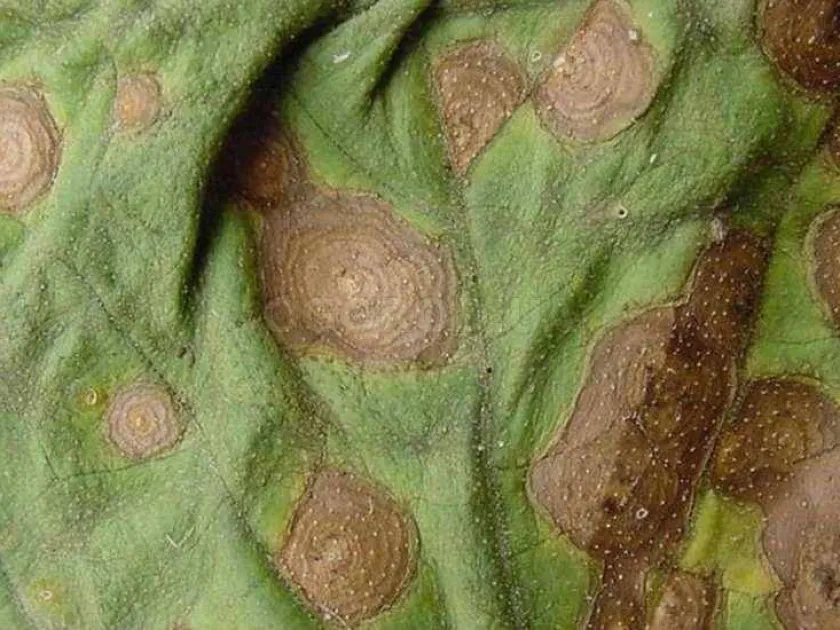
The most diagnostic feature is the appearance of dark brown to black spots with concentric rings, often described as a "target-spot" or "bullseye" appearance.
Infection typically starts on older, lower leaves before progressing upwards towards the upper canopy and younger foliage.
- Necrotic lesions often surrounded by a chlorotic (yellow) halo.
- Leaf wilting and premature senescence leading to complete leaf death.
- Presence of dark, fuzzy spore masses in the center of the lesions during humid weather.
- Stem lesions that can girdle the plant and cause it to break or die.
Fruit symptoms include dark, sunken, leathery spots, typically starting near the stem attachment point on tomatoes.
Control measures
Integrated Pest Management (IPM) is essential, starting with the use of certified disease-free seeds and resistant or tolerant crop varieties.
Crop rotation is a critical practice, involving the avoidance of Solanaceous crops in the same field for at least three to four years.
Sanitation practices, such as removing and destroying post-harvest plant debris, significantly reduce the primary inoculum load for the next season.
Chemical control involving fungicides from classes such as strobilurins and triazoles is effective, provided they are applied before infection becomes severe.
Monitoring for environmental signals and utilizing disease-forecasting systems can help optimize spray schedules, saving costs and reducing environmental impact.
Causes diseases · 1
Discussion
No discussions yet — be the first.