
Alternaria black spot of crucifers
Alternaria raphani
Description
How to identify
The causative agent of the disease is the microscopic fungus Alternaria raphani, classified under the division Ascomycota. This phytopathogen affects all aerial parts of plants throughout the entire growing season, from seedlings to seed maturation.
The fungus survives as mycelium and conidia in soil and on crop debris, and it can also be transmitted via infected seed material. This pathogen demonstrates high adaptability, allowing it to multiply efficiently across a wide range of environmental conditions.
During its life cycle, the pathogen produces chains of dark olive-colored conidia that are easily dispersed by wind, rain splashes, and insects. High humidity levels and moderate temperatures are critical factors that trigger the infection process in healthy tissues.
In addition to its direct impact, Alternaria raphani often acts as an opportunistic pathogen that facilitates the development of secondary bacterial infections. Its presence in fields significantly weakens the plant, making it highly susceptible to other stressors.
Understanding the systematic position of this fungus is essential for implementing a comprehensive protection strategy, as the pathogen maintains strong viability even in unfavorable outdoor conditions during the winter months.
What it damages
The primary hosts of this pathogen are plants within the Brassicaceae family. Crops such as oilseed rape, cabbage, radish, mustard, and turnip are the most severely affected, resulting in significant economic losses for agricultural producers.
Infected plants show stunted growth, premature leaf drop, and, in cases of early seedling infection, massive die-off. This leads to reduced plant density and a decrease in the overall productivity of the cultivated area.
The most severe damage occurs during the pod-filling and heading stages, as the pathogen invades reproductive organs. Pod infection frequently leads to premature shattering and seed shedding, rendering the harvest unsuitable for commercial use.
Seeds harvested from diseased plants serve as a primary source of infection for the following season. Such contaminated material has reduced germination energy and seedling vigor, creating significant challenges for the next planting cycle.
On an industrial scale, black spot reduces the oil content in rapeseed and ruins the market quality of cabbage vegetables, making the produce unsuitable for long-term storage or processing.
When it appears
Initial signs of the disease appear as early as the seedling stage, when small dark spots develop on the cotyledons. However, the peak intensity of infection usually occurs during flowering and pod development when frequent rainfall is present.
Warm weather, with temperatures between +20°C and +25°C, combined with high humidity, provides ideal conditions for rapid fungal sporulation. Heavy dews and morning mists facilitate the entry of the fungus through stomata and plant tissue micro-injuries.
The fungus can produce multiple generations of spores within a single season, leading to rapid field-wide infection. The speed of the epiphytotic outbreak directly depends on meteorological factors that compromise the host plants' immune systems.
As autumn approaches, the disease progress often slows down due to lower daily temperatures; however, the pathogen successfully persists on crop residues, preparing to overwinter in the soil for the next year.
In greenhouse or indoor environments, Alternaria black spot can develop almost year-round if humidity and ventilation protocols are not strictly managed and maintained.
Signs of infestation
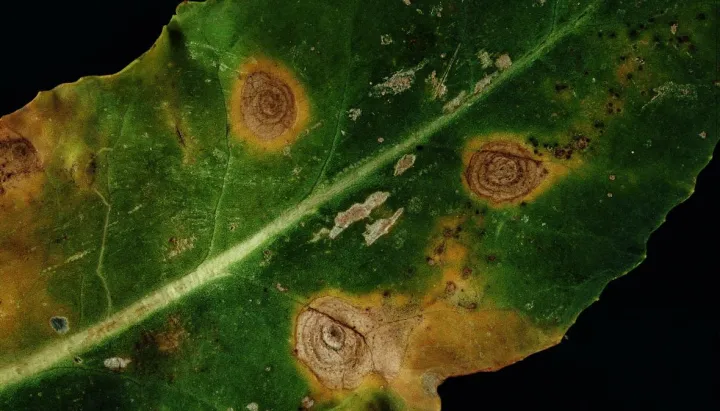
A characteristic symptom of the infection is the appearance of dark, almost black spots of irregular shape, often showing distinct concentric zoning. On leaves, these spots are surrounded by a yellow chlorotic halo that gradually enlarges over time.
Under high humidity, an olive-black velvety layer appears on the surface of the spots, which represents the conidial sporulation of the fungus. This is the primary diagnostic sign observed during field inspections.
On stems and petioles, the spots are often elongated and sunken, which can lead to stem breakage or necrotic damage to the vascular system. This disruption prevents essential nutrient transport to the upper parts of the plant.
Inside the pods, the infection causes seed darkening and deformation. Growers often notice premature browning of tissues, which is frequently misidentified as natural plant ripening during the late season.
The root system may also suffer from "black leg" symptoms if Alternaria raphani is involved, leading to the darkening of the stem base and the gradual wilting and collapse of the entire plant.
Control measures
The foundation of control is strict adherence to crop rotation, ensuring that cruciferous crops are not returned to the same field for at least 3-4 years. This practice effectively breaks the pathogen's life cycle.
A critical agronomic measure is the thorough removal and destruction of crop residues after harvest, as the fungus retains its infectious activity within these materials for extended periods.
Using high-quality, treated seed material is mandatory to prevent primary infection. Fungicide seed treatments significantly reduce the risk of the disease appearing during early growth stages.
- Utilization of resistant cultivars and hybrids.
- Timely application of phosphorus and potassium fertilizers to boost plant immunity.
- Effective weed management of wild Brassicaceae species that serve as infection reservoirs.
During the growing season, if initial symptoms are detected, the application of systemic and contact fungicides is recommended. The choice of products must be based on regulatory guidelines and strict adherence to pre-harvest intervals.
Causes diseases · 1
Discussion
No discussions yet — be the first.