
Alternaria padwickii
Alternaria padwickii
Description
How to identify
Alternaria padwickii is a hyphomycetous fungus belonging to the Ascomycota division. It is a well-documented phytopathogen primarily associated with rice, recognized globally for its role in seed-borne diseases.
The fungus is characterized by its septate, dark-pigmented mycelium. The conidia are typically golden-brown, elongated or pyriform, featuring a characteristic beak and both longitudinal and transverse septa, which allows for microscopic identification.
This pathogen exhibits remarkable plasticity, surviving as a saprophyte on plant debris or in a dormant state as sclerotia. Its ability to persist in diverse environments makes it a persistent challenge in agricultural systems.
Unlike obligate parasites, Alternaria padwickii can switch between living hosts and dead organic matter. This trait allows the fungus to remain active in the field throughout the entire year, regardless of the cropping cycle.
Accurate identification is performed through microscopic examination of conidial structures and isolation onto selective media. Molecular diagnostic tools are increasingly used to detect the pathogen at low levels in seed batches.
What it damages
The primary host for Alternaria padwickii is rice (Oryza sativa). It infects the plant throughout its life cycle, impacting everything from seed germination to the final stages of grain development.
The most immediate damage is reduced seed germination and seedling vigor. Seedlings emerging from infected seeds often develop lesions on the coleoptile and primary roots, leading to plant death or stunted growth.
During the vegetative stage, the pathogen induces leaf spots and stem rot. These lesions hinder photosynthesis and deprive the plant of the energy required for optimal tillering and biomass production.
Grain infection is the most economically significant stage, as it causes kernel blight. This results in discolored, shriveled, and low-quality grain that fails to meet market standards for weight and nutritional value.
Furthermore, the fungus acts as a hidden enemy by spreading through irrigation water, which carries conidia across the entire field, potentially causing an epidemic if weather conditions are favorable.
When it appears
The development of Alternaria padwickii is heavily dependent on moisture and temperature. The fungus thrives in humid environments, with optimal infection occurring between 25°C and 30°C.
The primary inoculum often originates from infected seeds sown at the start of the season. Once the seed absorbs water, the fungus activates and begins colonizing the emerging tissues of the young rice plant.
As the season progresses, conidia are dispersed by wind, rain splashes, and irrigation water. This dissemination allows the pathogen to spread rapidly from a localized infection to a widespread outbreak across the field.
Periods of continuous rainfall and high humidity are critical for disease development. The presence of surface water on leaves and panicles facilitates the germination of spores and the penetration of fungal hyphae into plant tissues.
Toward the end of the harvest, the fungus produces sclerotia. These resilient structures survive in the soil or on crop residue, providing the genetic reservoir for the next season's infection cycle.
Signs of infestation
Infected seeds show dark-brown or black discoloration on the husk. Under humid conditions, a dark olive or black fungal mat becomes visible, covering the surface of the seed and interfering with the grain's structure.
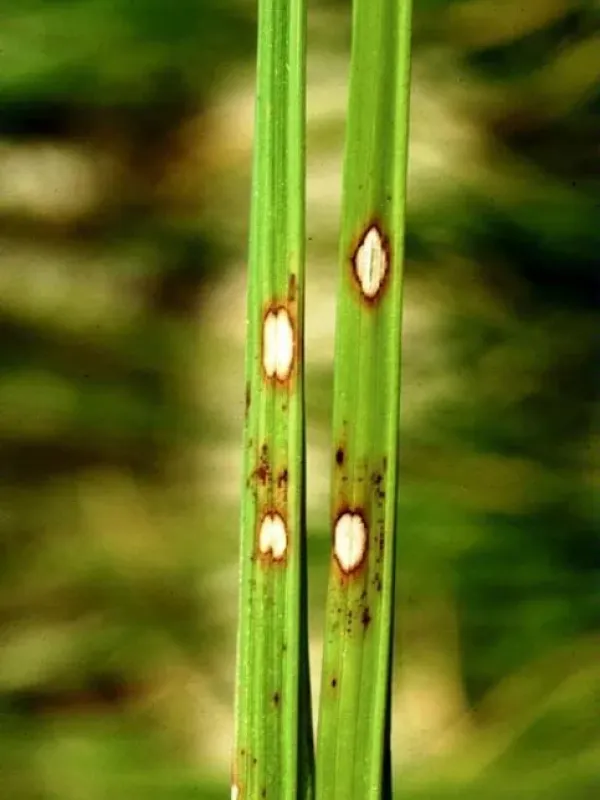
On leaves, the pathogen produces distinctive elongated spots with dark-brown borders and grey or yellow centers. If the infection is severe, these spots coalesce, causing significant tissue necrosis.
Stem infection leads to blackening of the tissue, which weakens the stalk and increases the risk of lodging. This is particularly problematic in dense crops where air circulation is restricted.
Panicle infection manifests as discolored, empty, or shriveled grains. In many cases, the entire panicle can show signs of premature senescence and sterility due to the disruption of nutrient transport by the pathogen.
- Black discoloration on seeds
- Reduced seedling germination rates
- Elongated, necrotic leaf spots
- Weakened, blackened stem tissues
- Shriveled and deformed kernels
Control measures
The first line of defense is the use of disease-free, high-quality seed. Implementing strict seed health testing protocols helps prevent the introduction of the pathogen into new fields.
Seed treatment with systemic fungicides is a standard and essential practice. This protects the seed during the critical germination phase and eliminates internally and externally carried inoculum.
Good agricultural practices, such as deep plowing, help bury crop debris, promoting the decomposition of organic matter and reducing the amount of overwintering fungal structures in the soil.
Proper water management and balanced fertilization are crucial. Excessive nitrogen application can make plants more susceptible to infection, while maintaining optimal plant density improves airflow and reduces humidity.
Fungicidal sprays during the vegetative and booting stages can mitigate the spread of the pathogen if weather forecasts predict extended periods of rain, which are conducive to disease development.
Causes diseases · 1
Discussion
No discussions yet — be the first.