
Alternaria japonica
Alternaria japonica
Description
How to identify
Alternaria japonica is a specialized fungal pathogen belonging to the kingdom Fungi, phylum Ascomycota, and genus Alternaria. It is recognized as a primary causative agent of dark leaf spot diseases.
The fungus is characterized by the production of club-shaped conidia with a distinct short beak, which serves as a key morphological feature for laboratory identification.
This pathogen acts primarily as a parasite on Brassicaceae family crops, although it maintains a saprotrophic phase on decaying plant debris, allowing it to survive between growing seasons.
The life cycle is heavily dependent on environmental conditions, with the fungus producing numerous conidia that are disseminated via wind, water splashes, and contaminated agricultural tools.
Once established in a field, the pathogen can quickly colonize host tissue through specialized penetration structures, leading to the rapid development of characteristic disease symptoms.
What it damages
The host range of Alternaria japonica primarily includes members of the Brassica genus, such as cabbage, cauliflower, broccoli, radish, and mustard.
The fungus affects all above-ground plant organs, including cotyledons, leaves, petioles, stems, and siliques. Infections on pods are particularly critical as they may lead to seed contamination.
By creating necrotic lesions, the pathogen reduces the plant's photosynthetic surface area, which leads to stunted growth, reduced yields, and lower overall quality of the harvested produce.
Early-stage infection of seedlings can lead to complete plant failure, whereas infection during seed development often results in shriveled or non-viable seeds.
Beyond field losses, the pathogen can cause post-harvest storage rot, affecting the marketability and shelf life of cruciferous vegetables.
When it appears
Disease development is favored by warm, humid conditions. The optimal temperature range for spore germination and mycelial growth is typically between 20°C and 25°C.
Frequent rainfall or persistent morning dew provides the necessary free moisture on the leaf surface, which is essential for the conidia to germinate and penetrate the host tissue.
Primary infection typically begins in mid-summer when the canopy density increases, creating a favorable microclimate with high relative humidity near the lower leaves.
The pathogen can undergo multiple cycles of secondary infection within a single season, leading to potential epiphytotic outbreaks if the weather remains wet and warm.
During the cooler off-season, the fungus persists as mycelium or spores within crop residues, waiting for favorable conditions to restart the infection cycle in the spring.
Signs of infestation
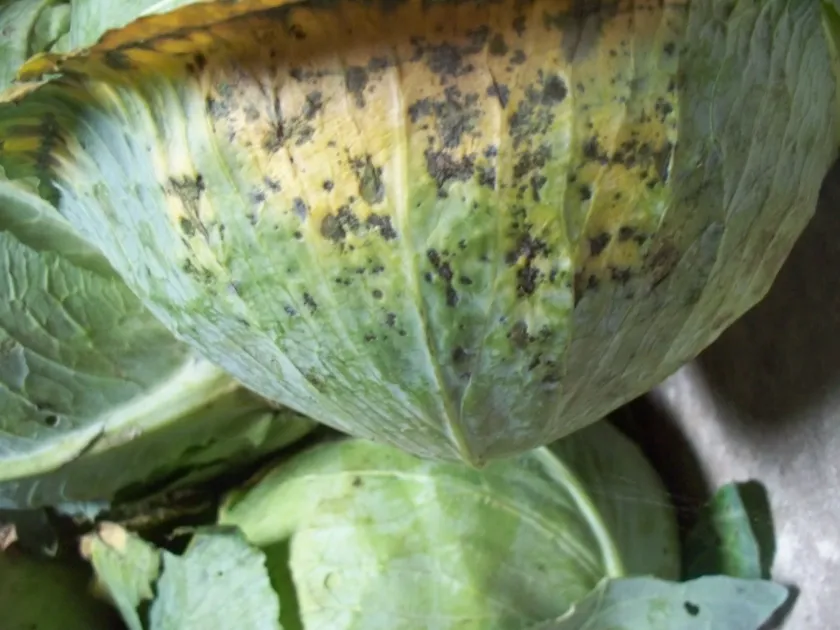
Symptoms typically start as small, dark brown or grey spots on the leaves, often surrounded by a chlorotic yellow halo as the lesion expands.
A distinctive feature of Alternaria infection is the formation of concentric zones or rings within the spots, giving them a "target-like" appearance.
Under conditions of high humidity, a velvety, olive-to-black fungal growth becomes visible on the surface of these lesions, representing the mass production of conidia.
Lesions on stems and petioles are often elongated and dark, and in severe cases, the affected tissues can become necrotic, leading to leaf drop or plant collapse.
- Development of necrotic target-like spots.
- Yellowing and chlorosis of the surrounding leaf tissue.
- Premature defoliation of lower leaves.
- Lesions on stems and reproductive organs.
Control measures
Effective management starts with crop rotation, ensuring that susceptible Brassica crops are not grown in the same field more than once every 3–4 years to disrupt the disease cycle.
Sanitation is critical; all crop residues must be deeply incorporated into the soil immediately after harvest to accelerate decomposition and reduce the amount of inoculum available for the next season.
Using certified, disease-free seed and selecting resistant or tolerant cultivars are essential preventive strategies against the establishment of Alternaria japonica.
Chemical control involving fungicides, such as strobilurins or triazoles, should be applied at the first sign of disease symptoms to prevent the spread of the fungus.
Weed management, specifically targeting wild cruciferous weeds, is necessary as these plants act as alternate hosts and bridges for the infection between cropping seasons.
Causes diseases · 1
Discussion
No discussions yet — be the first.