
Alternaria leaf spot of sunflower
Alternaria helianthinficiens
Description
How to identify
Alternaria leaf spot of sunflower is a destructive disease caused by the fungus Alternaria helianthinficiens. It belongs to the Ascomycota phylum and is known for its ability to devastate sunflower crops.
The fungus is a necrotrophic pathogen that survives in soil, on infected plant debris, and within sunflower seeds for several seasons.
Its life cycle relies on the production of conidia, which serve as the primary inoculum for spreading the infection throughout the field.
These spores are disseminated by wind, splashing rain, and mechanical contact with machinery or insects passing through the canopy.
The fungus utilizes specialized toxins to kill plant cells, creating nutrient-rich dead tissue that supports its rapid colonization and growth.
What it damages
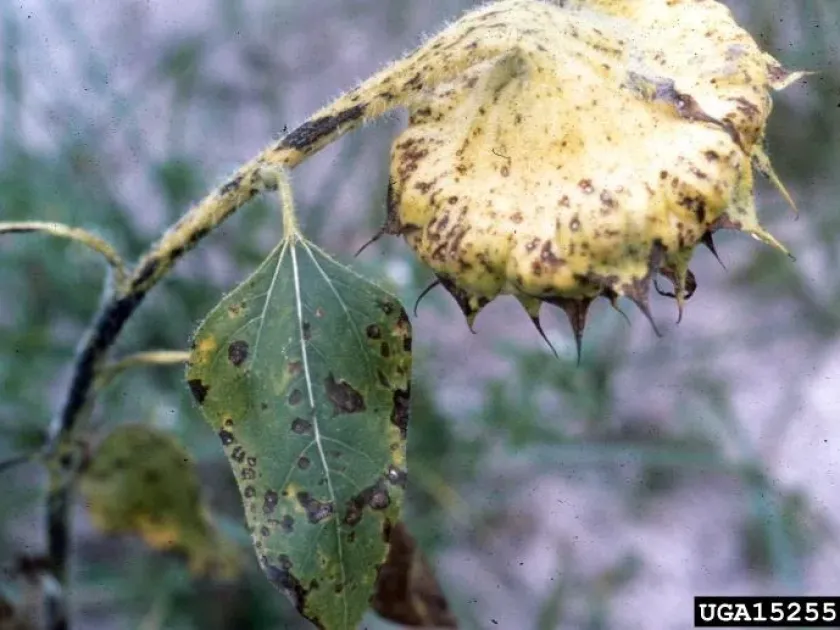
The disease affects all aerial parts of the sunflower plant, including leaves, stems, petioles, and the flower head itself.
Severe leaf infection leads to significant defoliation, which severely limits the photosynthetic capacity of the plant and reduces total biomass.
Stem lesions can penetrate deep into the tissue, weakening the plant structure and making it susceptible to stem breakage and lodging.
Infection of the sunflower head leads to seed damage, including reduced seed weight, lower oil content, and potential total seed decay.
Economic losses are cumulative, impacting both the yield quantity and the quality of harvested sunflower seeds for industrial processing.
When it appears
Symptoms typically begin to appear during the mid-season, particularly as the crop approaches the flowering stage and row closure occurs.
The disease development is heavily favored by warm, humid weather conditions, often occurring after periods of persistent rain or heavy dew.
Optimal temperatures for the fungus range between 25 and 30 degrees Celsius, which are common during the height of the sunflower growing season.
Frequent moisture on the leaf surface is essential for the germination of spores and the subsequent infection of host plant tissue.
As the plant approaches maturity, the fungus continues to proliferate on aging tissues, facilitating the survival of the pathogen until the next season.
Signs of infestation
Initial symptoms include small, dark brown spots on the leaves, which are often surrounded by a characteristic yellow chlorotic halo.
These spots enlarge and coalesce over time, resulting in large areas of necrotic tissue that eventually lead to leaf blight and senescence.
Stem lesions appear as elongated, dark brown or black streaks that can eventually develop into deep, damaging cankers.
Under humid conditions, an olive-black fuzzy layer of fungal growth can be observed covering the necrotic surfaces of the spots.
- Dark, necrotic spotting on leaves and stems.
- Yellowing of tissue surrounding infection sites.
- Pre-mature drooping of leaves and wilting of the whole plant.
Control measures
Implementing a long-term crop rotation strategy, typically excluding sunflowers for at least six years, is vital to reduce soil-borne inoculum.
Choosing resistant or tolerant sunflower hybrids is the most effective approach to mitigate yield losses caused by Alternaria species.
Sanitation practices, including the deep plowing of crop residues, help to minimize the pathogen load left in the field after harvest.
Foliar application of fungicides at the onset of flowering can protect the crop during its most vulnerable stage of development.
Proper plant population management helps improve airflow within the canopy, reducing the moisture levels that the fungus requires to thrive.
Causes diseases · 1
Discussion
No discussions yet — be the first.