
Alternaria leaf spot of sunflower
Alternaria helianthii
Description
How to identify
The causative agent of the disease is the imperfect fungus Alternaria helianthii, which belongs to the Kingdom Fungi. This pathogen is a host-specific fungus that primarily targets sunflower crops.
The fungus produces dark-colored conidiophores bearing multicellular, spindle-shaped conidia. These spores are wind-borne and serve as the primary inoculum for spreading the disease across the field.
The pathogen overwinters in the soil as dormant mycelium on crop residues, in seeds, and on volunteer sunflower plants. This persistence makes it a recurring threat in agricultural landscapes.
Development is heavily favored by warm temperatures (25–30°C) and high relative humidity. Frequent rainfall and leaf wetness are essential for the germination of conidia and infection.
The fungal lifecycle is rapid, characterized by multiple cycles of sporulation within a single growing season. Under moist conditions, the pathogen can quickly cause an epidemic.
What it damages
Alternaria helianthii affects all aerial parts of the sunflower plant, including leaves, stems, petioles, and heads. Infection severely reduces the plant's photosynthetic capacity.
When petioles are infected, the leaf often wilts and drops prematurely. This loss of canopy cover stunts head development and leads to poorly filled, shriveled seeds with reduced oil content.
Stem infections manifest as necrotic lesions that weaken the plant structure, leading to lodging during high winds. This makes mechanical harvesting difficult and leads to significant crop loss.
Head infections cause rotting, which can reach the developing seeds. This lowers seed quality and creates a direct pathway for other secondary pathogens to invade the head.
The cumulative effect of this disease, especially in severe years, can cause yield losses ranging from 20% to 40% and significantly degrades the economic value of the sunflower crop.
When it appears
Initial symptoms typically appear in the early vegetative stages, but the most aggressive spread usually occurs during the flowering and seed-filling stages of the sunflower.
Epidemics are most common following periods of heavy rainfall and high humidity during the mid-summer months. The spores exploit these conditions to infect new tissues rapidly.
The incubation period of the fungus is shortened by high temperatures. Once the infection is established, the spread is exponential if the humid, warm weather persists.
As the plant approaches senescence, the fungus concentrates on returning to the soil via plant residues. It remains in a state of hibernation until the next planting season.
Field scouting during the vegetative to reproductive transition is crucial. Early detection allows for timely fungicide application before the infection reaches the upper canopy.
Signs of infestation
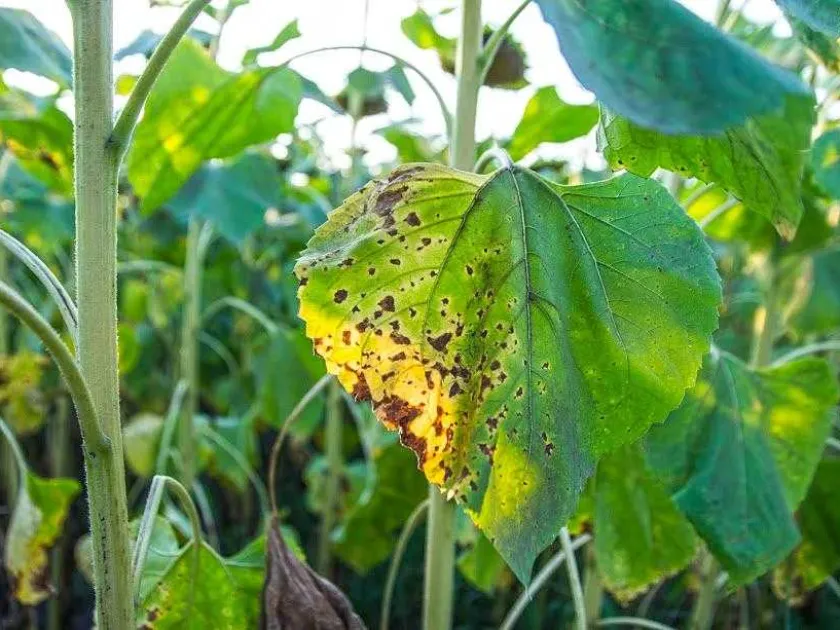
The disease starts as small, circular, dark brown spots on the lower leaves, often surrounded by a characteristic yellow halo. These lesions expand rapidly under favorable conditions.
As the spots merge, they create large necrotic areas on the leaf blade. A velvety, dark-colored mass of spores often develops on the surface of these lesions when humidity is high.
- Dark brown leaf lesions with yellow margins.
- Necrotic spots on petioles and stems.
- Premature leaf senescence and wilting.
- Dark sunken lesions on the back of the sunflower head.
- Stunted plant growth and lodging.
Stem and petiole lesions are particularly concerning as they can create girdling effects, effectively cutting off water and nutrient transport to the higher parts of the plant.
Control measures
Crop rotation is the most effective cultural practice. A rotation of 6–8 years away from sunflowers is recommended to allow for the natural decomposition of infected residues in the soil.
Deep plowing after harvest helps bury crop residues deep in the soil, preventing spores from surfacing in the next season. Effective weed control is also necessary to remove alternative hosts.
Fungicide applications, particularly those containing triazoles or strobilurins, can effectively manage the disease if applied early or when the first signs of spots appear.
Using resistant or tolerant hybrids is a key component of integrated pest management (IPM). Genetic resistance is the most sustainable way to minimize the impact of the pathogen.
Seed treatments with systemic fungicides ensure that the young seedlings are protected during the vulnerable early stages of growth, providing a solid foundation for the crop.
Causes diseases · 1
Discussion
No discussions yet — be the first.