
Alternaria blight of sunflower
Alternaria helianthicola
Description
How to identify
Alternaria blight is caused by the fungus Alternaria helianthicola, an ascomycete pathogen known for its rapid spread via wind-borne conidia. The fungus survives as mycelium or chlamydospores in plant debris and soil, making it a persistent threat in sunflower-growing regions.
The pathogen thrives under warm and humid conditions, with optimal development occurring at temperatures between 20°C and 25°C. Frequent rainfall and high relative humidity (above 80%) significantly accelerate the production and dispersal of spores.
Infection occurs when conidia land on healthy plant tissues and penetrate the epidermis through stomata or mechanical injuries. The fungus secretes toxins that cause cellular death and tissue necrosis, facilitating the rapid colonization of the host plant.
The life cycle involves multiple infection cycles during a single growing season. Secondary inoculum is produced continuously on infected lesions, allowing the disease to spread throughout the crop canopy if conditions remain favorable.
Besides sunflowers, Alternaria helianthicola can host on various weed species within the Asteraceae family. This alternative host reservoir ensures the presence of the pathogen in the field even in the absence of the primary crop.
What it damages
The primary damage caused by Alternaria blight includes premature leaf drop, which severely impairs the plant's photosynthetic capacity. As a result, the filling of the seeds is compromised, leading to reduced yield and lower oil content.
Stem and petiole infections weaken the structural integrity of the plant, often leading to lodging during high wind events. This significantly complicates harvesting operations and increases overall crop loss.
Seedling blight is a common consequence of early-season infection, leading to poor crop stands and uneven plant growth. This lack of uniformity can hinder subsequent field management practices such as weed control and fertilization.
Infection of the sunflower head leads to rot, resulting in shriveled, low-quality seeds with poor germination rates. This negatively impacts the commercial value of the crop and its viability for future planting.
Economic losses can be substantial, particularly in susceptible varieties grown in regions with high rainfall during the flowering and grain-filling stages, potentially reducing yield by up to a third.
Signs of infestation
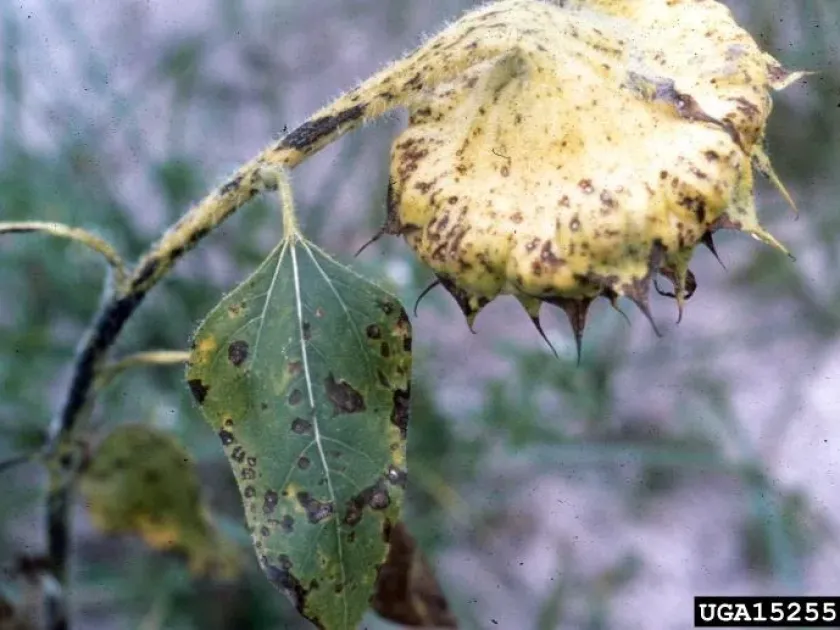
Initial symptoms are characterized by small, brown to black circular or angular spots on the lower leaves. As the disease progresses, these lesions expand, often merging to cover large portions of the leaf blade.
A diagnostic sign is the appearance of a dark olive-green or black velvety fungal growth (conidiophores and conidia) on the surface of the lesions, especially visible under high humidity.
Stems and petioles show elongated, dark brown lesions. These can become necrotic, causing the plant tissue to collapse or break off, a symptom often referred to as "stem blight" or "stalk rot."
The back of the sunflower head often exhibits large, dark, sunken lesions. If the infection reaches the receptacle, it can cause the entire head to rot, leading to seed loss before harvest.
Seedling symptoms include dark brown stem lesions near the soil line, often resulting in damping-off or the total death of the young plant before it reaches the true leaf stage.
Control measures
Effective management requires a long-term strategy, including crop rotation with non-host species for at least 6–8 years. This practice helps to significantly reduce the inoculum load in the field.
Selecting resistant or tolerant sunflower hybrids is the most sustainable approach to minimizing disease pressure. Farmers should consult regional variety trials to identify the best options for their specific climate.
Chemical control involving systemic fungicides, particularly those containing strobilurins or triazoles, is essential during periods of high disease risk. Applications are most effective when timed preventively.
Sanitation practices, such as the deep plowing of crop residues immediately after harvest, are crucial for breaking the pathogen's life cycle and reducing the source of primary inoculum for the next season.
- Maintain appropriate plant density to ensure adequate air circulation within the canopy.
- Manage weeds, particularly those in the Asteraceae family, to remove alternative hosts.
- Apply balanced fertilizers, with emphasis on potassium, to strengthen the plant's natural defense mechanisms.
Causes diseases · 1
Discussion
No discussions yet — be the first.