
Alternaria leaf blight of cucurbits
Alternaria cucumerina
Description
How to identify
The disease is caused by the fungus Alternaria cucumerina, a highly specific plant pathogen belonging to the order Hyphomycetes that affects cucurbitaceae.
The fungus survives between cropping seasons as mycelium or conidia within crop debris, in the soil, and occasionally on infected seeds.
Dissemination of the pathogen primarily occurs through wind currents, splashing rain, contaminated equipment, and insects moving through the field.
The germination of fungal spores is strictly dependent on the presence of free water or high relative humidity levels on the leaf surfaces.
Development is most aggressive during warm and humid weather conditions, with an optimal temperature range spanning from 24 to 28 degrees Celsius.
What it damages
The pathogen attacks a variety of important crops such as cucumbers, melons, watermelons, pumpkins, squash, and zucchini globally.
Infection results in severe leaf damage, leading to premature defoliation and exposing the stems to direct sunlight, which causes further stress.
By disrupting photosynthesis, the blight significantly limits the plant's ability to produce sugars, resulting in stunted fruit development and low yields.
Fruit quality is compromised as the fungus can penetrate the rind, causing necrotic lesions that promote secondary bacterial soft rot during storage.
Under favorable environmental conditions, the disease can cause extensive losses to commercial production if protective measures are not implemented promptly.
Signs of infestation
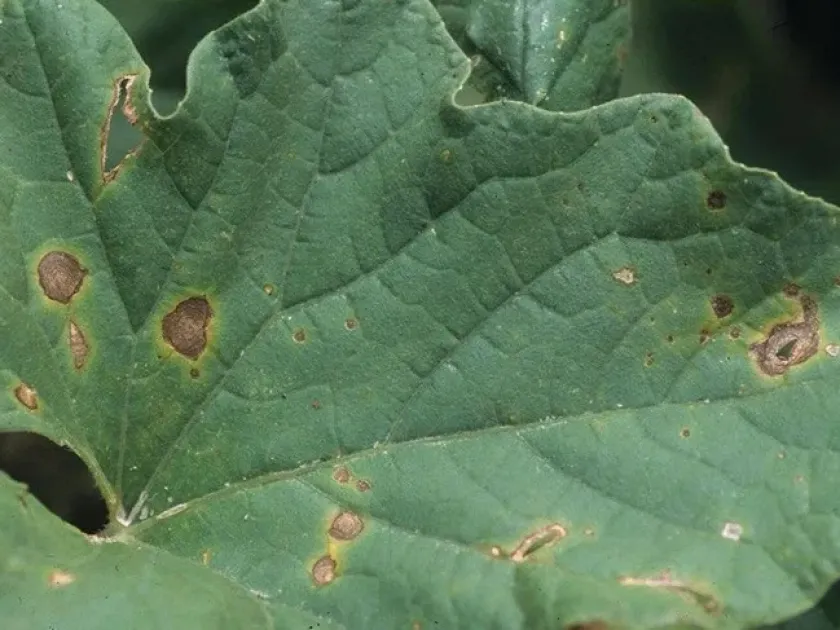
Initial symptoms are usually observed on older, lower leaves as small, circular, water-soaked spots that rapidly expand.
A hallmark diagnostic feature of the disease is the development of concentric rings within the lesions, which gives them a distinctive bull's-eye appearance.
As the disease progresses, these lesions merge and turn dark brown or black, eventually causing the entire leaf tissue to dry out and curl.
Under humid conditions, a characteristic olive-black velvet-like mold, composed of fungal conidiophores and spores, forms on the leaf lesions.
Stems, petioles, and even fruit surfaces can exhibit elongated, dark, necrotic lesions which weaken the overall structural integrity of the plant.
Control measures
Crop rotation remains the most fundamental cultural practice, with a minimum break of three years between successive plantings of susceptible cucurbits.
Sanitation is critical; all diseased plant materials must be destroyed or buried deeply post-harvest to reduce the primary inoculum load.
Integrated pest management should include the application of registered fungicides, such as copper-based sprays or systemic strobilurins, during early stages.
Promoting plant health through proper fertilization and avoiding excessive overhead irrigation can help reduce the susceptibility of the plants.
- Selection and planting of disease-resistant or tolerant cultivars.
- Spacing plants to ensure sufficient airflow and faster drying of leaves.
- Regular field monitoring to detect early signs of fungal growth.
Causes diseases · 1
Discussion
No discussions yet — be the first.