
Alternaria citrullicola
Alternaria citrullicola
Description
How to identify
Alternaria citrullicola is a filamentous fungus belonging to the phylum Ascomycota. It is recognized as a significant plant pathogen that specifically infects crops within the Cucurbitaceae family.
The fungus is characterized by its dark, multicellular conidia produced in branched or unbranched chains, which are diagnostic features under microscopic examination.
As a specialized pathogen, it has evolved mechanisms to penetrate the epidermis or stomata of leaves, stems, and fruits of host plants, initiating the disease cycle.
Genetic diversity within the species allows it to adapt to various environmental conditions, making it a persistent threat in regions where melons and watermelons are cultivated.
Understanding the taxonomic position and morphophysiological traits of this fungus is essential for agricultural pathologists to develop effective detection and management tools.
What it damages
The primary hosts of Alternaria citrullicola include watermelons, muskmelons, and cucumbers. It causes extensive damage to both vegetative and reproductive parts of the plant.
Infection leads to the destruction of the photosynthetic leaf area, causing the plant to weaken and significantly reducing the sugar content and quality of the fruits.
Stem infections are particularly destructive, as the fungus creates necrotic lesions that disrupt water and nutrient transport, often resulting in vine wilt.
Fruit symptoms, often referred to as leaf blight and fruit rot, render the produce unmarketable, causing substantial economic losses for commercial growers.
In severe cases, the entire plant can wither and die prematurely, leading to total yield loss if the disease is not managed during the early stages of development.
When it appears
The disease development is highly dependent on humidity and temperature. Optimal conditions for the pathogen include moderate temperatures between 20°C and 28°C.
Prolonged periods of leaf wetness caused by frequent rain or overhead irrigation provide the ideal environment for conidia germination and colonization of tissues.
The infection cycle can complete within one week under favorable conditions, facilitating rapid secondary spread throughout the field during the mid-summer season.
The fungus overwinters in plant debris in the soil as mycelium or chlamydospores, remaining viable for several seasons until susceptible hosts are planted again.
Early spring serves as the primary infection phase, where spores dispersed by wind or water droplets settle on young seedlings, initiating the disease cycle for the new season.
Signs of infestation
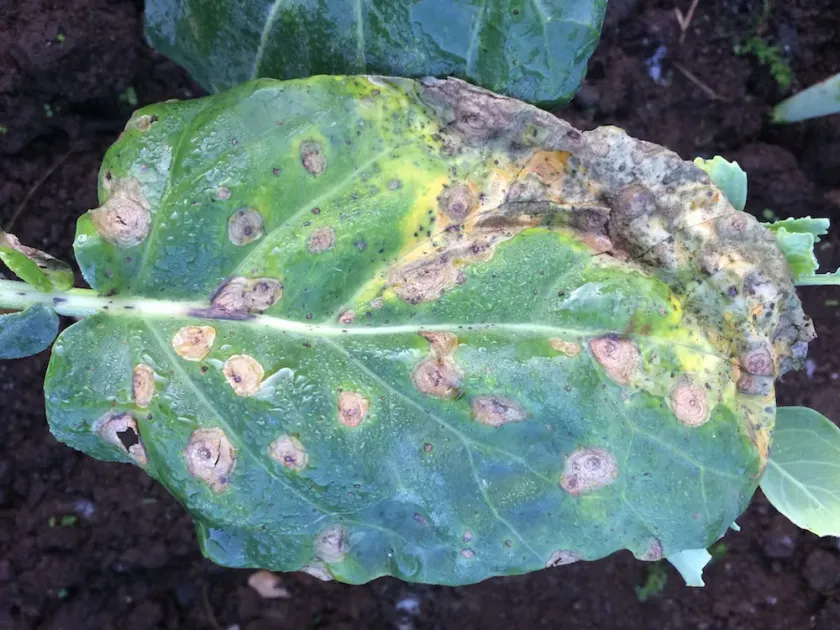
Symptoms initially appear as small, circular, brown-to-tan spots on the leaves, often surrounded by a characteristic yellow halo or chlorotic zone.
As the lesions expand, they develop a distinct concentric zonation, which is a hallmark symptom of Alternaria species infections on various plant hosts.
During humid weather, a velvety, olive-to-black fungal growth becomes visible on the surface of the lesions, representing the mass production of conidia.
Stem lesions appear as elongated, sunken, brown necrotic areas that can girdle the stem, causing the upper parts of the plant to collapse.
Fruits infected by the pathogen show sunken, dark lesions that may eventually be covered by the dark fungal growth, often serving as entry points for secondary decay organisms.
Control measures
Effective management begins with strict cultural practices, including long-term crop rotation to break the life cycle of the fungus in the soil.
Sanitation is crucial; removing and destroying crop residues by deep plowing significantly reduces the initial inoculum level for the following growing season.
The use of high-quality, fungicide-treated seeds helps prevent the introduction of the pathogen into new, clean production areas.
Fungicide applications, specifically those containing strobilurins, triazoles, or chlorothalonil, are effective when applied preventively based on local weather forecasts.
- Implement drip irrigation to keep foliage dry and reduce infection risk.
- Remove wild cucurbit hosts from field margins to eliminate alternate infection sources.
- Monitor crops regularly for early symptoms to optimize the timing of chemical treatments.
Causes diseases · 1
Discussion
No discussions yet — be the first.