
Alternaria alternata
Alternaria alternate
Description
How to identify
Alternaria alternata is an anamorphic fungus within the kingdom Fungi and phylum Ascomycota. It is a common saprotrophic organism that frequently transitions into a plant parasite under favourable conditions.
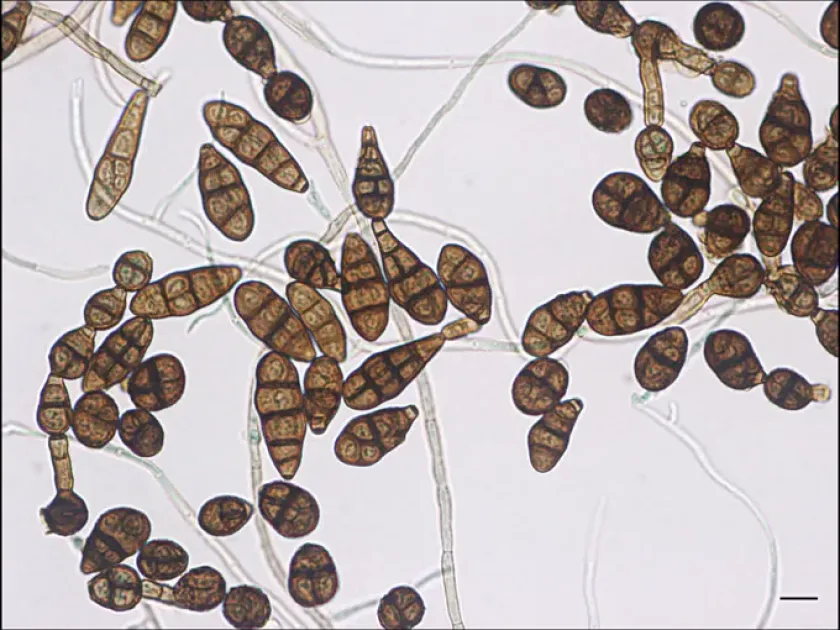
The fungus produces olive-brown septate mycelium and characteristic obclavate conidia formed in long chains. These spores contain both transverse and longitudinal septa, which is a vital trait for microscopic identification.
The pathogen is highly adaptable and produces secondary metabolites, including mycotoxins like tentoxin, which disrupt chloroplast function and aid in the colonization of plant tissues.
Unlike obligate parasites, A. alternata can survive as a saprophyte on dead plant debris and in soil, making it a persistent and difficult pathogen to eradicate from the field.
In laboratory cultures, it typically forms velvety dark grey to black colonies. Its growth rate is highly sensitive to environmental factors, specifically moisture levels and ambient temperatures.
What it damages
Alternaria alternata is a prolific pathogen affecting over 400 plant species. Major agricultural targets include potatoes, tomatoes, sunflowers, apples, citrus, and various cereals.
In solanaceous crops, the fungus causes severe leaf blight and stem lesions, significantly reducing photosynthetic area and leading to premature plant death and yield loss.
In fruit crops, it causes dark rot and black spots on the fruit surface, especially around harvesting wounds or sunscald spots, which severely impacts marketability and storage life.
Economic damage is twofold: it reduces the quantity of harvestable yield and compromises food safety by contaminating products with harmful mycotoxins that are toxic to humans and animals.
The pathogen can strike at any growth stage, from seedling blight to post-harvest decay, causing significant losses in greenhouse and open-field cultivation worldwide.
When it appears
Dissemination primarily occurs via conidia, which are dispersed over short and long distances by wind, rain splashes, and insect vectors, settling on susceptible plant tissues.
The disease thrives in warm, humid climates with temperatures ranging from 20°C to 28°C and periods of high humidity or leaf wetness, which are essential for spore germination.
Primary inoculum often originates from overwintered spores in soil or crop residue. These spores activate as soon as temperatures rise and sufficient moisture is available in the spring.
Epidemics usually peak during the flowering and fruit-ripening stages, as the plant canopy becomes dense and the microclimate within the crops becomes more favourable for fungal growth.
Under optimal conditions, the life cycle of A. alternata can be completed in just 5 to 7 days, allowing for multiple infection cycles within a single growing season.
Signs of infestation
The most recognizable symptom is the appearance of small, dark brown or black spots, often exhibiting concentric rings or target-like patterns on the foliage.
As the infection progresses, these spots expand and coalesce, leading to severe chlorosis and necrosis of the leaf blades, which often causes the foliage to wither and drop.
Stem infections manifest as dark, elongated lesions that can girdle the stem, leading to plant collapse or stunted growth if the vascular tissue is severely damaged.
During periods of high humidity, the affected tissue may be covered by a fine, dark, velvety layer composed of conidiophores and massed conidia of the fungus.
In fruits, the signs include depressed, firm, dark-colored lesions that eventually deepen, turning into sunken rot that can destroy the integrity of the produce.
Control measures
Integrated pest management includes strict crop rotation, the destruction of infected crop residues, and the use of resistant or tolerant cultivars to limit the initial inoculum load.
Cultural practices such as proper plant spacing and pruning are essential to improve air circulation, reduce humidity, and shorten the duration of leaf wetness in the canopy.
Chemical control involves the application of contact and systemic fungicides, such as copper-based compounds, strobilurins, and triazoles, applied at the onset of symptoms.
Regular field scouting is critical to time fungicide applications accurately, especially during periods of wet weather or high susceptibility in the plant growth cycle.
- Seed treatment to prevent seedling blight.
- Balanced nutrient management to avoid nitrogen excess.
- Removal and destruction of infected plant debris.
- Use of biological control agents such as Trichoderma spp.
Causes diseases · 1
Discussion
No discussions yet — be the first.