
Pepper Aecidium
Aecidium capsicum
Description
How to identify
Pepper Aecidium (scientific name Aecidium capsicum) is an obligate parasitic fungus within the Basidiomycota phylum. It functions as a specialized rust pathogen that primarily targets plants within the Solanaceae family.
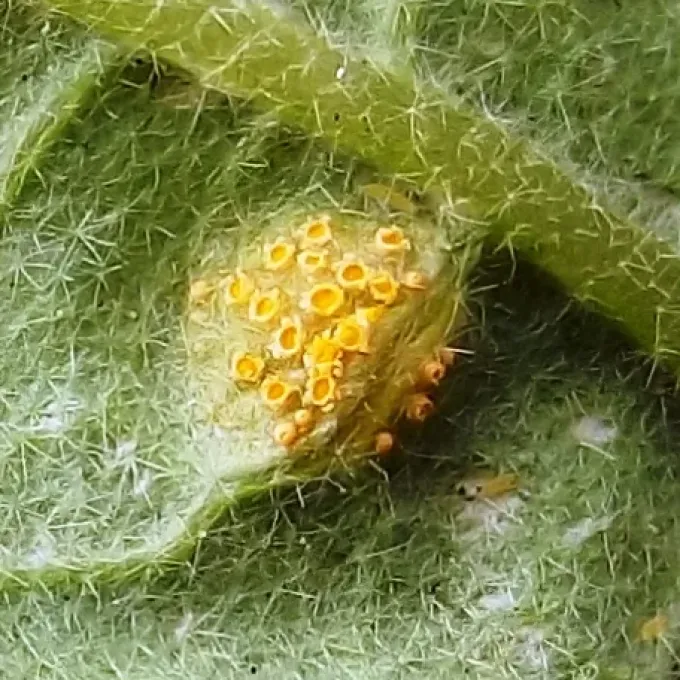
The organism is identified by its characteristic aecial stage, where it produces cup-shaped structures called aecia. These structures are the sites of spore production, allowing the pathogen to disperse effectively across a crop field.
Taxonomically, it is categorized among the Pucciniales order, known for complex life cycles and high host specificity. The pathogen thrives by establishing a mycelial network within the host's intercellular spaces.
Nutrition is obtained through haustoria, which are specialized fungal structures that penetrate the plant cells to extract essential sugars and nutrients, effectively weakening the host plant's vigor.
The fungus is highly resilient and thrives under specific environmental conditions, particularly when high humidity and moderate temperatures coincide with the active growing season of its host plants.
What it damages
The primary host is the sweet pepper (Capsicum annuum), although the pathogen can persist on wild Solanaceous weeds, which act as asymptomatic reservoirs during the off-season.
Damage is characterized by the disruption of photosynthesis and metabolic regulation. Infected foliage loses its ability to function, leading to stunted growth and reduced fruit set, directly impacting yield volume.
In cases of severe infection, premature defoliation occurs, which exposes the fruit to sunscald and further lowers the overall health and quality of the pepper plants in the field.
The weakened tissue is often prone to secondary colonization by bacteria and other opportunistic fungi, leading to rot and rendering the remaining fruit commercially non-viable.
Economic losses arise not only from reduced marketable yields but also from the increased cost of intensive fungicide programs required to prevent widespread epiphytotic events.
Signs of infestation
Initial infection signs appear as small, yellow, or chlorotic spots on the underside of the leaves. As the disease progresses, these spots develop into distinct, bright orange cup-shaped pustules.
The infected plant tissue often shows significant deformation. The leaves may curl or twist, and the epidermis eventually ruptures, releasing a cloud of powdery spores that are easily spread by wind and splashing water.
Systemic damage can manifest as elongated lesions on stems and petioles, which interfere with water and nutrient transport, leading to wilting of individual branches or the entire plant.
- Appearance of bright orange pustules (aecia).
- Deformation and curling of infected foliage.
- Chlorotic spots turning into necrotic tissue.
- Premature leaf drop and flower abscission.
- Development of lesions on stems and peduncles.
In high-humidity environments, a secondary fungal growth or mold may form around the pustules, indicating significant tissue damage and a high level of disease progression within the host.
Control measures
Integrated Pest Management (IPM) is essential for controlling Pepper Aecidium. Crop rotation is the first line of defense, preventing the buildup of spore loads in the soil from previous seasons.
Agricultural hygiene, including the removal and destruction of all infected crop residues, is crucial, as the fungus can survive in dormant states on old plant materials throughout the year.
Chemical control involves the timely application of systemic fungicides, particularly those belonging to the triazole or strobilurin classes, which are effective in inhibiting mycelial development.
Frequent field scouting allows for early detection of initial infection spots. Once the disease is identified, immediate action is required to prevent the spores from spreading to the rest of the crop.
Optimizing irrigation practices, such as using drip systems rather than overhead sprinklers, helps maintain a drier microclimate around the foliage, making conditions less conducive to spore germination.
Causes diseases · 1
Discussion
No discussions yet — be the first.