
Actinomycetes
Actinomycetes
Description
How to identify
Actinomycetes are a group of Gram-positive bacteria that form branching filaments similar to fungal mycelium. In agronomy, the genus Streptomyces is the most critical plant pathogen within this group.
These organisms are ubiquitous soil inhabitants, typically acting as saprotrophs, but they can become pathogenic under specific environmental conditions, attacking various root crops.
They are characterized by their ability to produce spores, which provides them with long-term survival capabilities in soil, making them difficult to eradicate through standard cultivation practices.
Though they are bacteria, their mycelial growth often causes confusion, necessitating careful microscopic and molecular analysis for correct identification.
Field diagnosis usually relies on observing specific lesions on tubers or roots, often confirmed by the presence of alkaline soil conditions where the pathogen thrives.
What it damages
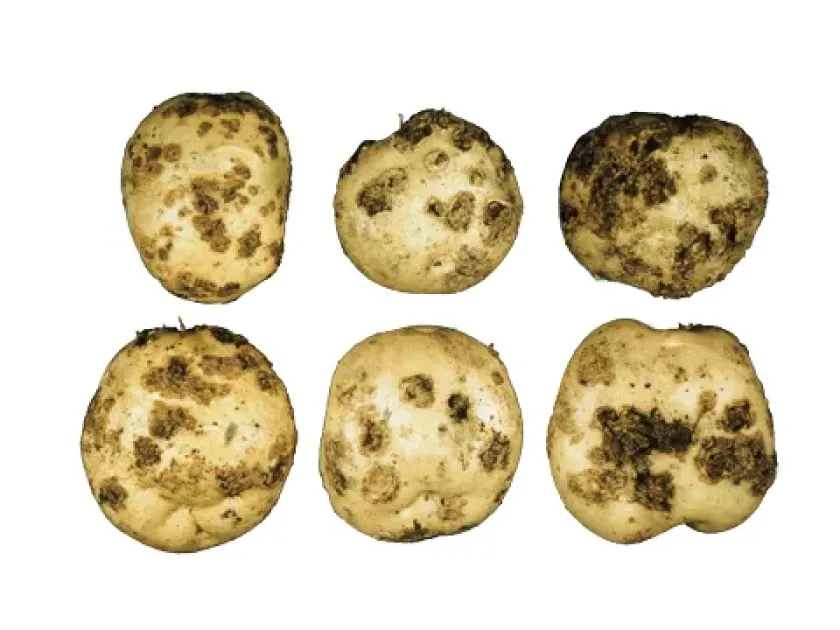
The primary agricultural impact of Actinomycetes, specifically Streptomyces scabies, is common scab in potatoes, which significantly reduces the aesthetic and commercial value of the crop.
Beyond potatoes, they cause damage to sugar beets, carrots, radishes, and turnips, affecting the skin quality and root development of these vegetables.
The disease causes surface lesions that make crops susceptible to secondary pathogens, leading to severe storage rot and increased post-harvest losses.
In terms of yield, Actinomycetes can reduce the starch content in tubers and cause stunted plant growth due to poor nutrient absorption by damaged root systems.
The economic impact involves lowered marketability of produce, increased labor costs for sorting, and the risk of entire batches being rejected by commercial buyers.
When it appears
Development occurs most aggressively during the tuberization stage, which is the most sensitive period for the plant to contract the infection.
The pathogen prefers soil temperatures between +20°C and +25°C, which align with the peak growth season of many root crops.
Contrary to many fungal pathogens, Actinomycetes favor drier soil conditions, as high moisture levels often promote competitive microflora that suppresses the bacteria.
Soil pH plays a decisive role: alkaline conditions (pH 7.0 and above) are highly conducive to the rapid spread and infection rate of the pathogen.
The infection cycle is persistent; the bacteria can remain active in the soil for years, waiting for the right environmental triggers to infect the next cycle of host plants.
Signs of infestation
Symptoms are most visible on the surface of tubers or roots, manifesting as lesions ranging from superficial russeting to deep, corky scabs.
- Flat or raised corky patches on the skin.
- Deep crater-like pits surrounded by necrotic tissue.
- Skin cracking as the lesion expands during plant growth.
- Dusty, sporulating masses on the lesions under humid conditions.
- Stunted development of the root system leading to general plant decline.
The produce loses its smooth texture, becoming covered in unsightly scabs that are difficult to clean and reduce the overall quality of the harvested produce.
In severe cases, the entire surface of the vegetable may become covered with lesions, leading to malformation and significant tissue loss.
Control measures
Integrated pest management includes the use of acidifying fertilizers to lower soil pH, as this creates a hostile environment for the pathogen.
Crop rotation remains essential; planting non-host crops like cereals or grasses helps to break the pathogen's lifecycle and reduce soil populations.
The most reliable control method is the deployment of resistant cultivars, which are specifically bred to withstand the infection in endemic areas.
Seed potato treatment and the use of healthy, certified seeds are crucial for preventing the introduction of the pathogen into clean fields.
Adequate irrigation during the tuber formation phase helps maintain soil moisture levels that are unfavorable for the bacteria, thereby protecting the developing crop.
Causes diseases · 1
Discussion
No discussions yet — be the first.