
Acremonium strictum
Acremonium strictum
Description
How to identify
Acremonium strictum is a filamentous fungus belonging to the Ascomycota division, known for its status as a versatile plant pathogen and an occasional endophyte.
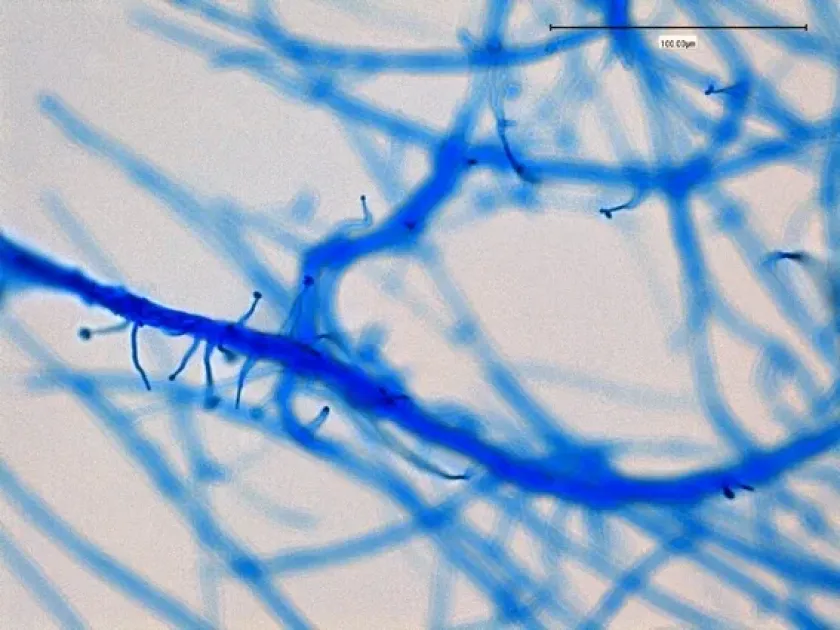
The fungus is characterized by its septate hyphae and long, tapering phialides that produce small, unicellular conidia often clustered in slimy heads at the tips.
Taxonomically, it is classified within the genus Acremonium. It is globally distributed, frequently isolated from soil samples and infected plant tissues in various climatic zones.
In laboratory conditions, A. strictum grows as a slow to moderately fast colony, often exhibiting a white, cream, or pale pinkish color with a fine, velvety texture.
Its ability to adapt to diverse environments allows it to maintain a presence in agricultural systems, sometimes persisting for long periods in the soil profile.
What it damages
Acremonium strictum acts as a causative agent for various plant diseases, significantly affecting major crops such as maize (corn), rice, and various horticultural species.
The fungus causes vascular wilting and stem rot by colonizing the xylem vessels, which disrupts the transport of water and nutrients throughout the plant.
Maize is particularly susceptible to infection, where the pathogen can lead to late-season wilting and poor development of ears, resulting in significant yield losses.
It also infects the seeds of numerous crops, which compromises seed vigor, germination rates, and the overall quality of the harvested produce intended for storage.
Beyond direct damage, the fungus facilitates the entry of secondary pathogens by weakening the plant's structural integrity, leading to severe field decline.
When it appears
Infection cycles are primarily driven by periods of high humidity and moderate temperatures, which are optimal for spore production and fungal dissemination.
The disease is most prevalent during the active growth and reproductive stages of the host plants, as the physiological state of the crop changes during these periods.
A. strictum overwinters primarily as dormant mycelium or thick-walled spores within infected plant debris remaining in the field after harvest.
Spore dispersal occurs via wind, splashing rain, and mechanical contact through agricultural equipment, allowing the pathogen to spread across fields during the season.
Under greenhouse conditions, the lack of proper ventilation and consistent high humidity can lead to an continuous infection cycle throughout the year.
Signs of infestation
Symptoms often start with foliar chlorosis and gradual wilting, which may be localized initially before spreading systemically throughout the plant host.
- Internal browning or reddening of the vascular bundles observed in stem cross-sections.
- Premature wilting of foliage, especially during peak temperature hours of the day.
- Appearance of white to pinkish mycelial growth on damaged surfaces under high-moisture conditions.
- Stunted plant growth and improper development of reproductive parts like ears or fruits.
- Decay of the root system and crown, leading to increased susceptibility to lodging.
Diagnostic accuracy is often challenging because these symptoms can mimic other vascular wilts caused by different fungi or even bacterial pathogens.
Microscopic confirmation is essential to distinguish Acremonium strictum from other look-alike fungi by examining its distinct phialides and conidia arrangement.
Early identification is crucial, particularly in seed production fields, where the presence of the fungus must be managed to prevent long-term soil contamination.
Control measures
The foundation of management lies in robust crop rotation practices to reduce the concentration of fungal inoculum in the soil over several growing cycles.
Deep plowing and effective incorporation of crop residues into the soil promote the decomposition of infected matter, thereby reducing the overwintering potential.
Seed treatment with broad-spectrum fungicides is highly recommended to protect seedlings from soil-borne infections during the critical early growth stages.
Maintaining optimal field conditions, including balanced fertilization and avoiding waterlogged soil, significantly reduces the plant's predisposition to infection.
When systemic infections are identified, the use of systemic fungicides during the vegetative stage can help mitigate damage and prevent further spread within the crop.
Discussion
No discussions yet — be the first.