


SKU #50860
·
62 views
Tomato BURJUIN
Tomato
SedekUser rating
0 votes0% positive reviews
No ratings yet — be the first.
Product Type
Seeds; Seed material
Plant Type
Determinant
Maturation Period
100-120 days
Fruit Weight
More than 200 grams
About product
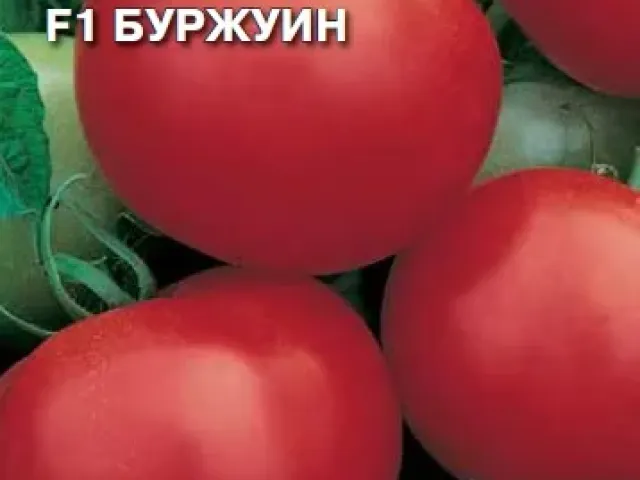
Large-fruited determinate variety with superior shelf life and robust disease resistance.
Product Type
Seeds; Seed material
Plant Type
Determinant
Maturation Period
100-120 days
Fruit Weight
More than 200 grams
Description
Genetic Potential and Plant Protection
The "Bourgeois" (Bourzhuin) tomato by Sedek is a determinate variety designed to produce heavy, high-quality fruits while maintaining a manageable plant height. The primary value of this hybrid lies in its comprehensive pathogen resistance, which helps minimize chemical pesticide requirements. The breeders (Dubinin S.V., Dubinina I.N., Lukyanenko A.N.) integrated resistance to Tobacco Mosaic Virus and Fusarium wilt—the most critical factors limiting yields in both greenhouse and open-field conditions.
Agronomic Characteristics and Productivity
- Vegetation period: 100–120 days, classifying "Bourgeois" as a mid-season variety.
- Fruit weight: Over 200 grams, achieved through intensive fruit filling under optimized nutritional management.
- Plant architecture: The determinate growth habit eliminates the need for complex pruning throughout the season, significantly simplifying crop management.
Post-Harvest Performance
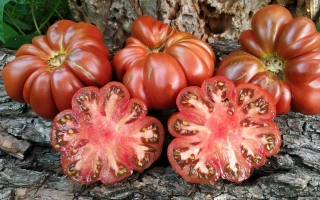
The flat-round fruit shape, combined with a dense cuticle, ensures excellent transportability. Observations indicate that fruit shelf life exceeds 30 days without loss of marketable quality, making "Bourgeois" a strategic choice for farmers operating in markets requiring long-distance logistics. Furthermore, resistance to blossom-end rot effectively reduces culling rates during the ripening stage.
Video · 1 video
Suggest a video →Crop & resistance
Crop
Disease resistance
Pest resistance
Specifications hover over for a hint about the specification
| Product Type | |
|---|---|
| Plant Type | |
|
Maturation Period
Maturation Period
Vegetation period from emergence to technical maturity 30-50 days. |
100-120 days |
|
Fruit Weight
Fruit Weight
Tomato fruits are classified by weight as: very small — less than 20 grams; small — 20 — 50 grams; medium — 50 — 100 grams; large — 100 — 200 grams; very large — more than 200 grams. |
More than 200 grams |
|
Fruit Shape
Fruit Shape
Modern tomato varieties have a diverse fruit shape: flat, flat-round, round, oval, elongated-oval, pear-shaped, plum-shaped, cube-shaped, and cylindrical. On poorly fertile soils and under unfavorable growing conditions, tomato fruits may take on a more rounded shape. |
|
|
Fruit Color
Fruit Color
The fruit color of tomato varieties is influenced by the combination of skin and flesh color. Some varieties have transparent skin, others — yellow. When combined differently, the fruits can acquire quite diverse colors. The fruit color is affected by pigments (lycopene) and thei... |
|
| Transportability | |
|
Storage
Storage
Depending on the variety characteristics, the storage period for heads may vary from one month for early varieties to eight months for late cabbage varieties. |
More than 30 days |
| Registration year | 2015 |
| Catalog | Catalog → Tomato |
| Manufacturer | Sedek |
| Legal data |
Show · 3
|
| Country | Russia |
Store offers
Prices are updated on loadLoading offers…
Aggregator catalog: prices are collected automatically from store websites, normalized by AI and converted at the current exchange rate. Before ordering, confirm the price and availability on the store's website. This block is not indexed by search engines — the data is loaded after the page opens.
Not yet комментариев. Be the first!
Alternatives
Tomato seeds · similar varieties





See also
Often considered together with this variety







Recently viewed
Products you’ve viewed on this site
Reviews · 0