

SKU #1000002038
·
0 views
Sunflower Haiard
Sunflower
Prices in stores
No offers yet — stores have not added prices for this product yet.
Similar varieties with prices
-
 LimeVNIS
from 3.01 €per 1 kg
-
 Set
from 2.5 €per 1 kg
-
 BambooLLC "Agroproject Kniazha"
from 1.07 €за л
-
 NS H 8005INSTITUT ZA RATARSTVO I POVRTARSTVO
from 6.59 €per 1 kg
Registration year
2026
Early Maturing
Medium-maturing
Use Direction
Oilseed
Hybrid Type
Hybrid
Your mark
0 votes
0% positive ratings
About product
A mid-ripening oilseed hybrid for the Forest-Steppe zone, featuring high yield potential and excellent seed filling.
Description
Agronomy and Yield Potential
The «Gayard» (F1) hybrid, registered in Ukraine in 2026, is a mid-ripening oilseed sunflower specifically adapted to the Forest-Steppe zone. Its performance is heavily dependent on precise agronomic management, as defined by the breeder, PP «NASINNEVE».
Sowing Guidelines
To maximize the potential of its large head, «Gayard» requires optimal plant spacing. In the Forest-Steppe region, the recommended plant density at harvest is 50,000–55,000 plants per hectare. Sowing should commence when soil temperatures at seeding depth reach +10...+12°C. A planting depth of 4–6 cm is recommended, depending on soil moisture levels.
Developmental Phase Management
- Emergence to 4-leaf stage: Weed control is essential during this phase. The hybrid features moderate green leaf intensity, requiring early protection against pests to ensure vigorous initial growth.
- Stem Elongation: Given its medium height, «Gayard» shows good resistance to lodging. Nitrogen management is key here to support the development of a robust leaf canopy without excessive vegetative growth.
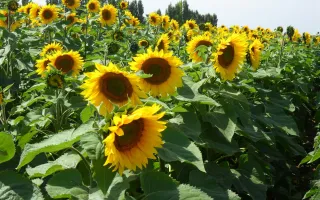
- Flowering: The orange-colored ray and disc florets are highly attractive to pollinators. Monitoring phytosanitary conditions during this stage is crucial to ensure successful fertilization.
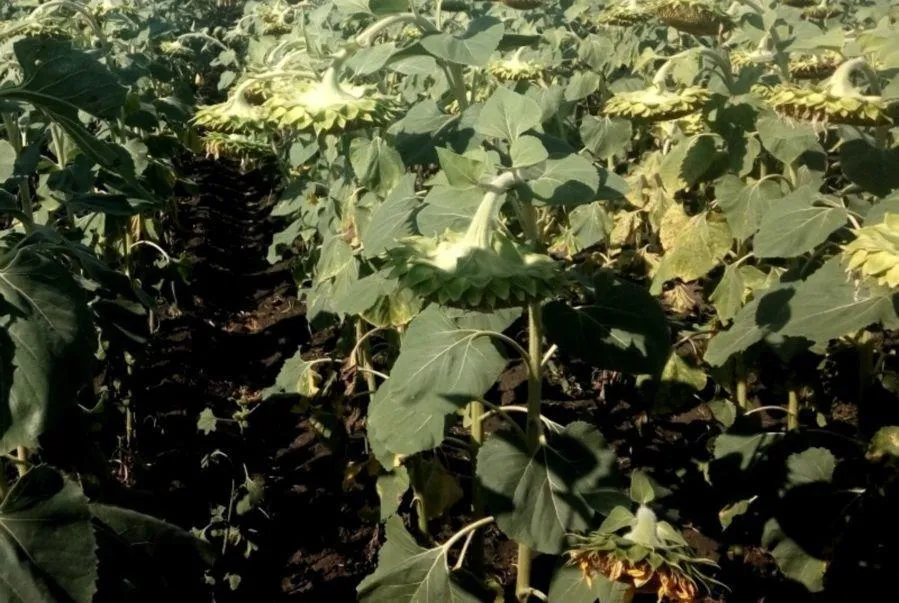
- Seed Filling: The large, downward-facing head provides natural protection against excess moisture and bird damage. During this period, maintaining soil moisture is critical, as the hybrid requires stable water availability to maximize oil accumulation in the seeds.
«Gayard» thrives in well-structured, neutral pH soils. Foliar application of micronutrients during the 4–6 leaf stage is highly recommended to help the crop overcome environmental stressors and reach its full yield potential.
Crop & resistance
Disease resistance
Specifications
| Registration year | 2026 |
|---|---|
| Early Maturing | |
| Use Direction | |
| Hybrid Type | |
| Agroclimatic zone | |
| Hypocotyl: anthocyanin colouration | |
| Hypocotyl: intensity of anthocyanin colouration | |
| Leaf: size | |
| Leaf: intensity of green colour | |
| Leaf: blistering | |
| Leaf: dentation | |
| Leaf: shape in cross section | |
| Leaf: shape of tip | |
| Leaf: auricles | |
| Leaf: wings | |
| Leaf: angle between lowest lateral veins | |
| Leaf: attitude of leaf tip | |
| Stem: pubescence of tip | |
| Time of flowering | |
| Ray florets: density | |
| Ray florets: shape | |
| Ray florets: attitude in relation to head | |
| Ray florets: length | |
| Ray florets: colour | |
| Disc florets: colour | |
| Disc florets: anthocyanin colouration of stigma | |
| Disc florets: pollen production | |
| Involucral bracts: shape | |
| Involucral bracts: length of tip | |
| Involucral bracts: intensity of green colour on outer side | |
| Involucral bracts: attitude in relation to head | |
| Plant: height | |
| Plant: branching | |
| Head: attitude | |
| Head: size | |
| Head: shape in side view | |
| Achene: size | |
| Achene: shape | |
| Achene: thickness in relation to width | |
| Achene: main colour | |
| Achene: stripes on margins | |
| Achene: stripes between margins | |
| Achene: colour of stripes | |
| Achene: mottling of pericarp | |
| Resistance to Orobanche cumana | |
| Resistance to Plasmopara halstedii | |
| Catalog | Catalog → Sunflower |
| Legal data |
Show · 1
|
| Country | Ukraine |
No reviews yet. Be the first to share your experience.
Alternatives
Sunflower seeds · similar varieties








See also
Often considered together with this variety



Recently viewed
Products you’ve viewed on this site
Reviews