Mid-early maturing variety, developed at Buryat PIAOS (now Buryat Research Institute of Horticulture) from crossing varieties Titania and Zabaykalochka. Breeders: N.K. Guseva, T.I. Voronina. Under state variety testing since 2009.
Strong-growing, moderately spreading bush. Growing shoots are medium, straight, with a shortened, compressed apex; woody parts are light-colored, glandular, moderately hairy. Buds are medium, egg-shaped, with a pointed apex, light-brown, dense, densely arranged on one-year shoots, with a sharp angle of deviation from the shoot.
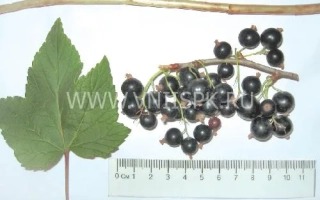
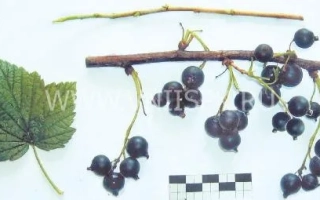
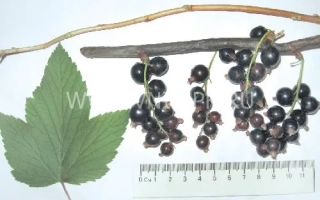
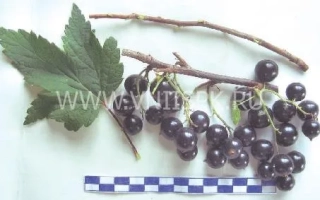
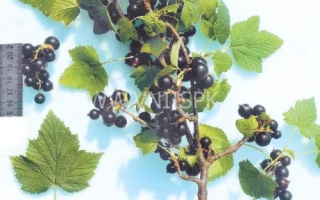
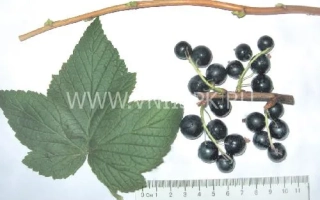
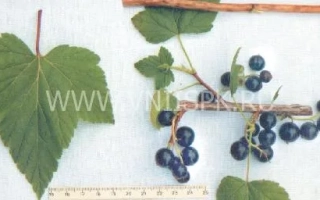
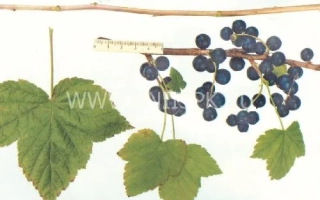
Leaves are large (smaller at shoot apex), dark green, with weak glossiness, clustered in one plane and drawn downward at apex. Leaf blade is moderately hairy, glandular, slightly shiny, leathery, dense, wrinkled, slightly fleshy, straight along main shoot, slightly concave at shoot apex. Teeth are blunt, short, curled.
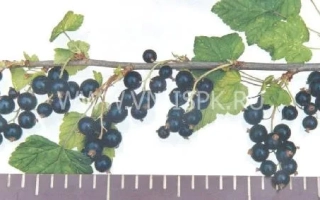
Flowers are medium, pale pink. Stamens are positioned at the level of the pistil. Fruit cluster is long (7.0-9.0 cm), with medium, straight, moderately hairy axis.
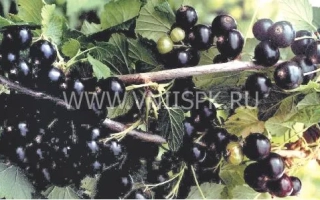
Berries are large (2.0-3.8 g), round, black, shiny, ripening simultaneously, with medium skin and dry detachment, good transportability. Berry stalk is medium, green; calyx is medium, closed. Flavor is tender, slightly sweet-sour (5 points), with aroma. Berries are versatile in use. Chemical composition: total sugars — 9.4-10.8%, ascorbic acid — 184.2-246.0 mg/100 g, P-active substances — 250.0-450.0 mg/100 g.
Highly winter-hardy, highly self-fertile (64-90%), resistant to bud mite and powdery mildew, easily propagated by hardwood cuttings, layering, green cuttings; average yield 9.0 t/ha, maximum — 12.8 t/ha.
Advantages of the variety: winter-hardy, large-fruited, high-yielding, resistant to bud mite and powdery mildew.