


SKU #4600
·
219 views
Currant Champion of Primorye
Currant
Prices in stores
No offers yet — stores have not added prices for this product yet.
Similar varieties with prices
-
Lacy
from 3.15 €
-
 Belarusian Sweet
from 1.14 €per seedling
Belarusian Sweet
from 1.14 €per seedling
-
 Veloy (Leningrad Sweet)
from 1.06 €
Veloy (Leningrad Sweet)
from 1.06 €
-
 Dacha
from 1.16 €
Dacha
from 1.16 €
Type of Variety
Blackcurrant
Your mark
0 votes
0% positive ratings
Description
Early maturing variety, developed in the Primorsky Krai by crossing the variety 'Lia Plododorodnaya' with blackcurrant (Aldan grape). Author: I.L. Khudaykov. Included in the State Register of Varieties approved for use in the West Siberian, East Siberian, and Far Eastern regions in 1947.
Medium-height, semi-spreading bush with medium density; woody canes are brownish at the base, turning light gray with a yellowish tint toward the tips.
Leaves are three-lobed, with the central lobe elongated and the side lobes shorter; leaf blade is convex, light green, dull. Leaf base has a slight notch. Petioles are medium in length and thickness. Buds are thick, pointed, and strongly curved.
Flowers are medium-sized, cup-shaped, pinkish. Sepals are light green and not fused. Inflorescences are short or medium length, 5.5–8.0 cm, containing about 10 flowers of medium density.
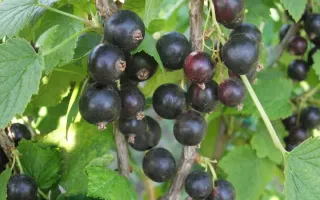
Berries are small (0.6–0.7 g), round or oval, bluish-black, matte, covered with a strong waxy bloom, uniform in size, with a medium sweet-sour flavor. Calyx is small; pedicels are medium length. Chemical composition: dry solids — 13.9%, total sugars — 5.8%, titratable acidity — 3.5%, ascorbic acid — 92.0–120.0 mg/100 g depending on weather conditions, P-active substances — 420.0 mg/100 g.
Average yield up to 7.0–8.0 tons/ha; high winter hardiness and self-fertility.
Advantages of the variety: high winter hardiness, stable yield.
Disadvantages of the variety: mediocre flavor, susceptibility to fungal diseases, small berry size.
Crop & resistance
Crop
Specifications
| Type of Variety | |
|---|---|
| Catalog | Catalog → Currant |
No reviews yet. Be the first to share your experience.
Alternatives
Currant saplings · similar varieties


See also
Often considered together with this variety


Recently viewed
Products you’ve viewed on this site
Reviews