


SKU #8480
·
997 views
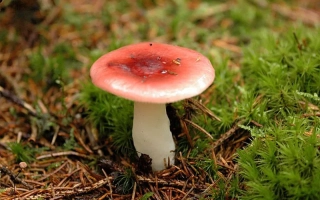
Agaricus bisporus
Mushrooms
User rating
1 vote0% positive reviews
No ratings yet — be the first.
Household Value
Edible Mushroom
Mushroom Type
Gilled mushrooms
Prices in stores
from54.18 €per 1 kg
pack from 2.71 € per 50 g
6 offers from 6 stores
Store offers · 6 from 6 stores
Prices are updated on loadLoading offers…
Available at: Brumo · Квіти Буковини · Сади Буковини · Семена Буковины · Yaskrava Klumba · Zhiva Apteka
Aggregator catalog: prices are collected automatically from store websites, normalized by AI and converted at the current exchange rate. Before ordering, confirm the price and availability on the store's website. This block is not indexed by search engines — the data is loaded after the page opens.
About product

The definitive commercial mushroom, prized for its high yield consistency and logistical durability.
Household Value
Edible Mushroom
Mushroom Type
Gilled mushrooms
Description
The Gold Standard of Global Mushroom Industry
Agaricus bisporus, commonly known as the button mushroom, is the dominant force in commercial mushroom production, accounting for nearly 90% of the market share. Its rise to dominance is not accidental; it is the result of decades of selective breeding focused on industrial efficiency within climate-controlled environments.
From Wild Specimen to Industrial Hybrid
While the history of mushroom cultivation dates back to 17th-century France, the contemporary commercial model emerged during the mid-20th century. Modern breeding programs have optimized the species for specific substrate formulas, resulting in strains that exhibit uniform growth cycles and high yield density. Today's commercial button mushrooms are specialized hybrids designed for consistency, allowing growers to harvest multiple flushes with predictable results.
Strategic Advantages for Producers
- Industrial Resilience: Modern hybrids feature dense fruiting bodies, which significantly reduce bruising during harvest and shipping.
- Yield Efficiency: High-performance strains enable yields of up to 30 kg per square meter per cycle, maximizing space utilization.
- Market Versatility: The mushroom's umami profile makes it a staple for both the fresh produce sector and the processing industry, including canning and freeze-drying.
For agricultural enterprises, the button mushroom represents a stable, high-turnover investment. Its ability to perform under rigorous technological conditions makes it the primary choice for large-scale production facilities worldwide.
Video · 3 videos
Suggest a video →Specifications
| Household Value | |
|---|---|
| Mushroom Type | |
| Catalog | Catalog → Mushrooms |
Not yet комментариев. Be the first!








See also
Often considered together with this variety


Recently viewed
Products you’ve viewed on this site
Reviews · 0