


SKU #47413
·
64 views
Original
Flax
User rating
0 votes0% positive reviews
No ratings yet — be the first.
Type of Flax
Olive
Ripening Period
85-100
Plant Height
50-60
Oil Content
40-44
About product

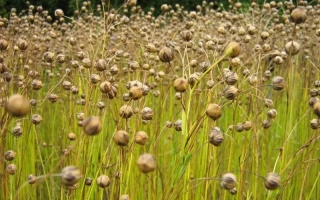
A reliable domestic oilseed flax with yellow seeds and stable yields of up to 3.5 tons/ha.
Type of Flax
Olive
Ripening Period
85-100
Plant Height
50-60
Oil Content
40-44
Description
Breeding Excellence from the Institute of Agriculture NAAS
The oilseed flax variety "Original" is the product of extensive research by Ukrainian breeders, designed specifically for intensive farming systems. It occupies a premium niche for high-quality raw materials with yellow seeds, highly valued in the food processing and pharmaceutical industries. Developed by the National Scientific Center "Institute of Agriculture of the NAAS," this variety is built to deliver consistency in the volatile climate of Ukraine.
Agronomic Profile
The plant exhibits well-balanced parameters: with a height of 50–60 cm, it shows excellent resistance to lodging, which significantly simplifies mechanized harvesting. The growth cycle of 85–100 days makes "Original" a highly predictable choice for crop rotation planning.
- Yield potential: 2.5 to 3.5 tons/ha.
- Oil content: 40–44%.
- Type: Oilseed, with universal application potential.
The distinct yellow color of the seeds sets this variety apart from standard dark-seeded varieties. Due to its specific fatty acid profile, the oil extracted from this flax possesses superior organoleptic properties, which is vital for producers of dietary supplements and health foods.
Market Reputation
"Original" has earned a reputation as a technologically sound and reliable variety. Its popularity stems from the combination of high oil output and relative ease of management. Farmers focused on export and deep processing prefer this flax for its stable quality indicators, which is essential for maintaining long-term contracts with large-scale industrial processors.
Crop & resistance
Crop
Specifications hover over for a hint about the specification
| Type of Flax | |
|---|---|
|
Ripening Period
Ripening Period
It takes 70-100 days until pepper reaches flowering stage, 130-160 days until technical fruit ripeness, and 135-180 days until physiological ripeness. |
85-100 |
| Plant Height | 50-60 |
| Oil Content | 40-44 |
| Potential Yield | 2.5-3.5 |
| Seed Color | |
| Assignment | |
| Registration year | 2012 |
| Catalog | Catalog → Flax |
| Legal data |
Show · 1
|
| Country | Ukraine |
Store offers
Prices are updated on loadLoading offers…
Aggregator catalog: prices are collected automatically from store websites, normalized by AI and converted at the current exchange rate. Before ordering, confirm the price and availability on the store's website. This block is not indexed by search engines — the data is loaded after the page opens.
Not yet комментариев. Be the first!
Alternatives
Flax seeds · similar varieties


See also
Often considered together with this variety




Recently viewed
Products you’ve viewed on this site
Reviews · 0