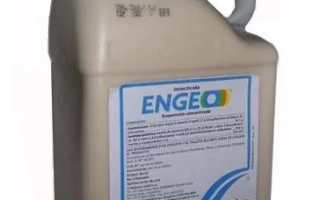
Latest-generation pyrethroid insecticide.
Vantex is the most active pyrethroid insecticide of the latest generation based on gamma-cyhalothrin, whose active ingredient consists only of one isomer.
In addition to its new unique properties, the product combines all the advancements developed for the production of insecticides.
Vantex is available as a capsule suspension. This formulation allows the product to be used over a wider temperature range, including elevated temperatures, at which conventional pyrethroid insecticides reduce their effectiveness. It reduces chemical load on the environment and increases safety for people. Thanks to its latest formulation, the product causes minimal skin irritation.
The product works better at high temperatures.
Unlike other pyrethroid insecticides, the presence of only one isomer in Vantex’s active ingredient allows reducing the application rate to the lowest level.
Vantex effectively controls a wide spectrum of chewing and sucking pests on most crops.
The product acts very quickly: within an hour after spraying, insects lose the ability to damage crops.
Vantex has contact, stomach, and residual action.
The product is hazardous to bees, bumblebees, and other non-target insects.
Mechanism of action:
The product acts on the central and peripheral nervous systems, causing first local, then complete muscle paralysis, resulting in the death of harmful insects. After treatment with Vantex, these insects have no chance to damage crops.
Spectrum of activity:
Vantex is effective against pests from the families Lepidoptera (butterflies), Diptera (flies), Coleoptera (beetles), Cercopidae (bugs), and Hemiptera (aphids, cicadas).
Application rates and recommendations for use.
The product is registered for use on:
cereals — against aphids, the harmful stink bug, aphids, and thrips — 0.06-0.07 L/ha;
rapeseed — against the rapeseed flea beetle — 0.04-0.06 L/ha;
potato — against the Colorado potato beetle — 0.05-0.07 L/ha.
sugar beet — against aphids, fleas, shield bugs, and weevils — 0.06-0.07 L/ha.