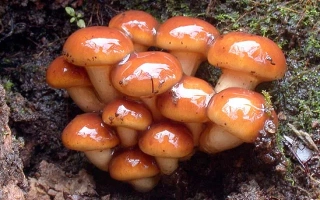
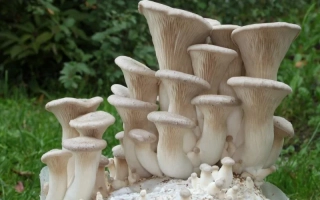
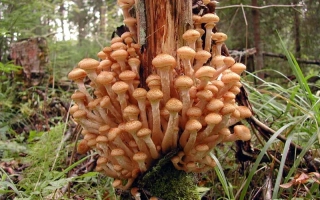
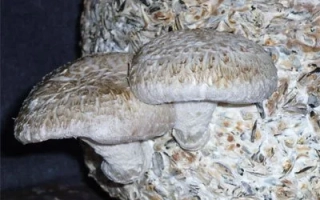
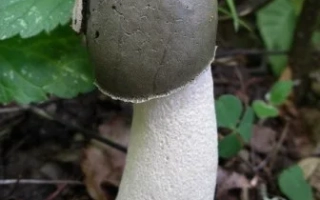
Shiitake, Lentinula edodes — edible mushroom with exquisite taste and medicinal properties, imparts a distinctive aroma to dishes and has a pleasant, slightly sweet flavor, which makes it appreciated by gourmets and fans of Japanese and Chinese cuisine in many countries. Native to Japan and China, where these mushrooms have been cultivated for over a thousand years. Some documents confirm that wild shiitake mushrooms were used in food around 199 AD…
During the Ming Dynasty (1368-1644), physician Wu Juei (angl. Wu Juei) wrote that shiitake can be used not only for food, but also as a medicine for diseases of the upper respiratory tract, poor blood circulation, liver diseases, weakness and fatigue, and for enhancing vital energy or Qi. It was believed that shiitake prevented premature aging.
Shiitake is widely used in Chinese, Korean, and Japanese cuisines. Usually sold dried and soaked before use. Many prefer these mushrooms fresh due to minor changes in taste during drying. Caps are usually used, as shiitake stems are much harder than caps.
Today, shiitake is cultivated and sold in many countries.
Shiitake mushroom is used for malignant and benign tumors, any viral infections (herpes, hepatitis, flu), possessing the property to significantly enhance antiviral protection and much more. Shiitake mushroom contains 18 essential amino acids, zinc, rich in B and D vitamins (more than in herring liver). This is especially important for vegetarians, who always suffer from a severe deficiency of vitamin D — richer in amino acids than soybeans, beans, chestnuts or corn.
The amazing properties of the shiitake mushroom amaze the imagination. Many dangerous microbes retreat before it. Even periodic use of shiitake significantly improves health, helping the body in diseases that have already occurred, and establishing an insurmountable barrier against dangerous viruses attacking from the outside.
In ancient Japan, this mushroom, used for treating diabetes, today shows excellent results in therapy for this disease.
Thanks to research by Japanese and American scientists, it was established that substances contained in the mushroom can combat many ailments and are applicable for:
malignant and benign tumors. Due to the presence in the mushroom of a unique polysaccharide called lentinan, which has no analogs in the plant world, which increases the production of perforin protein-polymer in CTLs, damaging atypical cells, leading to their death and simultaneously stimulating the growth of T-cell fractions (T-killers and T-helper cells), killer cells and tumor necrosis factor (TNF);
multiple sclerosis. Mechanism of action — boosting immunity, relieving chronic stress, inflammation, and restoring missing myelin;
hypertension, post-infarction and post-stroke conditions, the mushroom effectively combats atherosclerosis, sharply reducing cholesterol levels in the blood;
any viral infections (herpes, hepatitis, flu), possessing the property to significantly enhance the body's antiviral protection due to recently discovered volatile compounds, fungal phytoncides;
activation of specific immunity;
restoration of blood formula;
neurological and autoimmune diseases — they trigger remission;
used in the treatment of excessive weight as part of the "Yamakiro" weight loss diet
Cultivation of Shiitake-3776, Imperial on wood: cut logs (deciduous species) into pieces up to 1 meter long and 10-20 cm thick. Use fresh wood, cut within a month before inoculation. After drilling holes 4-5 cm deep and 2 cm in diameter in the logs. Put on sterile gloves, insert mycelium into the hole, and cover with bark pieces, wood chips, sawdust, or moss. Then wrap the log in transparent plastic, making ventilation holes, and move to a dark, humid room. After the mycelium has colonized the logs, soak them in cold water for 12 hours, then stand them upright. After 7-11 days, mushroom primordia appear.
Cultivation on sawdust residues. In specially prepared substrate (made from deciduous wood sawdust, mineral additives such as chalk or gypsum), add mycelium at 4% of the substrate weight.
Substrate: straw, hay, sunflower seed husks, sawdust or wood shavings from deciduous trees, leaves, reed, etc.; as well as deciduous wood from garden or forest trees, freshly cut or aged for several years (not rotten).
Place the substrate in a container and pour boiling water over it. This is done to kill mold spores, soften, and moisten the substrate. Let the steamed substrate cool naturally.
Then, after squeezing out excess water, mix the cooled and squeezed substrate with mycelium. Place in a transparent polyethylene bag. Tie it. For air exchange
leave the neck covered with cotton plug or make several cuts 3-5 cm wide across the entire bag surface. A ready-to-use mushroom block is formed.
During the mushroom block's growth phase, light is not necessary. Germination lasts 3-4 weeks. Initially, visible mycelial growth is observed. Then the substrate turns white, then slightly yellowish, and becomes a dense brown block.
After several days, primordia appear. For normal development, light is required, at least 2-3 hours per day. Where primordia appear, carefully make cuts in the plastic film. Fruit production occurs in cycles of 2-3 weeks. After each cycle, fully immerse the mushroom blocks in water for 3-4 hours, then return them to their original position. The mushroom block will fruit for about four months.
Then place the mycelium-covered block in cold water for 24-72 hours, then stand it upright.
Mushrooms grown on wood last 5-6 years. They tolerate frost well. If you move the pieces to a cellar or other room at the end of autumn, you will have mushrooms year-round. The first mushrooms appear after 3-4 months, depending on the density of the selected wood. From an area planted with one packet of mycelium, you can harvest approximately 25 kg of mushrooms per season.