
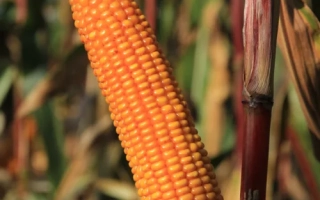

SKU #56205
·
40 views
PRACTICE
Corn
НПО «Галактика»User rating
0 votes0% positive reviews
No ratings yet — be the first.
Ripening
Mid-early ripening
Hybrid Type
Simple Hybrid, Hybrid
Kernel Type
Wax-like
Use Direction
Grain, Silage
About product

A versatile waxy grain hybrid offering stable performance for both grain and silage production.
Ripening
Mid-early ripening
Hybrid Type
Simple Hybrid, Hybrid
Kernel Type
Wax-like
Use Direction
Grain, Silage
Description
Consistency in Field Performance
Selecting the right maize hybrid is crucial for efficient farm management. The 'Praktika' hybrid by NPO 'Galaktika' has proven to be a reliable choice for producers seeking predictable outcomes. As an agronomist, I find its mid-early maturity date to be a major advantage, as it simplifies harvest scheduling and helps in planning effective crop rotation. This simple hybrid is highly versatile, serving as a solid producer for both grain and silage markets.
Key Agrotechnical Nuances
The distinctive feature of 'Praktika' is its waxy grain type. This is an essential factor for cattle farmers, as waxy starch provides superior digestibility for livestock feed. When deploying this hybrid in the field, it is vital to adjust plant density based on your soil profile and climate:
- In high-fertility soils or under irrigation, aim for 80,000–90,000 plants/ha to unlock the hybrid's full yield potential.
- In rain-fed conditions or areas with water constraints, stay within the 60,000–70,000 plants/ha range to prevent resource competition.
Field Operation and Handling
During the harvest phase, the uniformity of this NPO 'Galaktika' hybrid stands out. Consistent ear height and robust stalks make mechanical harvesting straightforward, significantly reducing grain loss. The crop stands well through the end of the season, showing good resistance to lodging, which provides more flexibility if weather conditions delay your harvest window. For those balancing between grain production and high-quality silage, 'Praktika' offers a dual-purpose efficiency that simplifies your seasonal inventory management.
Video · 2 videos
Suggest a video →Crop & resistance
Crop
Specifications hover over for a hint about the specification
| Ripening | Mid-early ripening |
|---|---|
| Hybrid Type | |
|
Kernel Type
Kernel Type
Dent corn (Zea mays indentata) — Large, elongated, flat kernels. The endosperm is horny on the sides of the kernel, mealy in the center and at the top. A depression forms at the top of the kernel upon ripening. Dent corn is the most widely cultivated group among others. Plants ty... |
|
|
Use Direction
Use Direction
Dual-purpose hybrids: for silage and grain in all growing regions. These are "stay-green" type hybrids, meaning the plants remain green for a longer period. However, this does not affect the sugar, cellulose, and hemicellulose content, nor the degree of lignification of the plant... |
|
|
Recommended Density
Recommended Density
Optimal productivity is achieved at a planting density of 4000-5500 plants/ha. Possible planting scheme: 300-500x40-80 cm. |
80-90 thousand pcs/ha, 60-70 thousand pcs/ha |
| Registration year | 2021 |
| Catalog | Catalog → Corn |
| Manufacturer | НПО «Галактика» |
| Country | Russia |
Store offers
Prices are updated on loadLoading offers…
Aggregator catalog: prices are collected automatically from store websites, normalized by AI and converted at the current exchange rate. Before ordering, confirm the price and availability on the store's website. This block is not indexed by search engines — the data is loaded after the page opens.
Not yet комментариев. Be the first!
Alternatives
Maize seeds · similar varieties






See also
Often considered together with this variety









Recently viewed
Products you’ve viewed on this site
Reviews · 0