
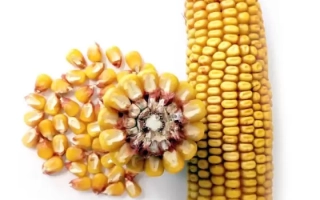


SKU #56261
·
35 views
Maize 14 B 001
Corn
LideaUser rating
0 votes0% positive reviews
No ratings yet — be the first.
FAO
90–1240
Ripening
Early
Hybrid Type
Three-line hybrid
Registration year
2020
Store offers · 1 from 1 stores
Prices are updated on loadLoading offers…
Available at: Agromen
Aggregator catalog: prices are collected automatically from store websites, normalized by AI and converted at the current exchange rate. Before ordering, confirm the price and availability on the store's website. This block is not indexed by search engines — the data is loaded after the page opens.
About product

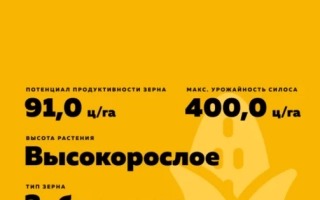
A French three-way early-maturity hybrid with high adaptability to stress conditions.
FAO
90–1240
Ripening
Early
Hybrid Type
Three-line hybrid
Registration year
2020
Description
French Breeding for Early Harvest
The 14 B 001 hybrid from Lidea is a three-way cross maize variety developed by French breeders at Av Du Capitaine N Tchorere. This product is aimed at farmers who prioritize stability and early maturity. In modern intensive farming, this hybrid fills the role of a cycle "accelerator," allowing for precise management of the harvesting campaign.
Technological Potential and Specifications
The three-way hybrid structure provides exceptional plasticity and crop uniformity. With an FAO range of 90–1240, this product demonstrates excellent adaptability across diverse climatic zones. Lidea’s French genetics ensure built-in resilience to abiotic stressors, making the 14 B 001 a reliable tool for securing consistent grain or silage yields, even in regions with short growing seasons.
- Hybrid Type: Three-way.
- Origin: France.
- Maturity: Early.
- Application: Universal grain production.
The deployment of this hybrid is highly effective for farms utilizing both traditional and modern intensive technologies. Its proven yield performance makes it a staple in the European agricultural segment, where the focus remains on reliability and the predictability of output per hectare.
Video · 1 video
Suggest a video →Crop & resistance
Crop
Specifications hover over for a hint about the specification
|
FAO
FAO
Corn hybrids are classified by maturity groups and by the FAO number. All corn hybrids are distributed according to the FAO scale. Under Central European conditions, a difference of 10 FAO units between hybrids results in a 1-2 day difference in their maturity. The higher the FAO... |
90–1240 |
|---|---|
| Ripening | Early |
| Hybrid Type | |
| Registration year | 2020 |
| Catalog | Catalog → Corn |
| Manufacturer | Lidea |
| Legal data |
Show · 1
|
| Country | France |
Not yet комментариев. Be the first!
Alternatives
Maize seeds · similar varieties








See also
Often considered together with this variety






Recently viewed
Products you’ve viewed on this site
Reviews · 0