
Landscaping, automatic irrigation, and drainage: how to properly improve your property
Landscaping, installation of automatic irrigation, and drainage systems. How to properly plan territory improvement, prepare the soil, and organize plant care.
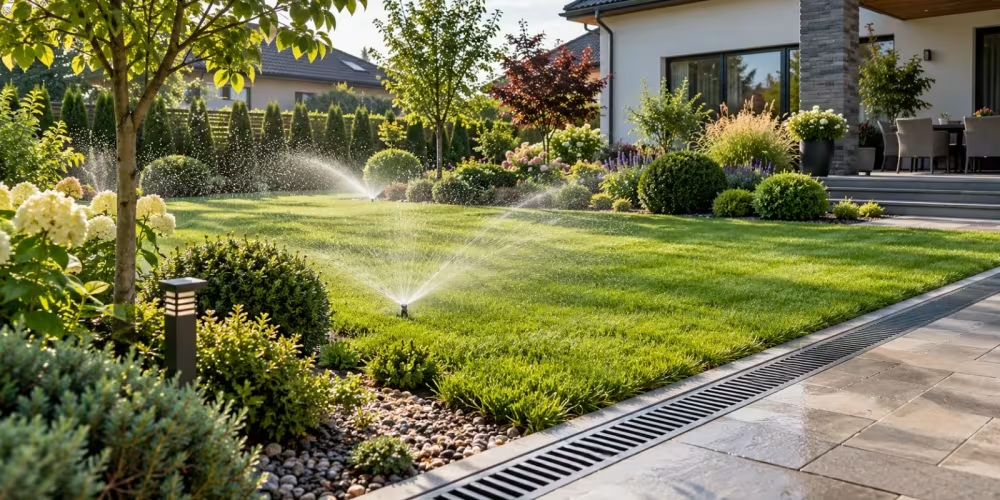
Landscaping a plot is not just about planting a lawn, trees, and decorative plants. To keep the area beautiful and well-groomed for many years, you need to plan ahead for soil preparation, excess moisture removal, and an irrigation system. Mistakes at the initial stage can lead to water stagnation, lawn drying, plant death, and extra expenses for redoing the territory. Therefore, it is wise to involve specialists for such tasks. For example, through the Budver master search service, you can find contractors for the installation of an automatic irrigation system, compare specialists' offers, and select a master for a specific plot.
What landscaping starts with
Competent landscaping always begins with planning. It is not enough to buy plants and plant them wherever there is free space. It is necessary to take into account the area of the territory, relief features, soil type, illumination, groundwater level, and the location of existing buildings.
At the first stage, it is advisable to determine the functional zones of the plot:
lawn and open green areas;
decorative flowerbeds and flower gardens;
fruit and ornamental trees;
shrubs and hedges;
paths and grounds;
recreation areas;
utility areas;
locations for the irrigation and drainage system.
It is especially important to understand in advance which plants will be used. Some species tolerate sun and lack of moisture well, while others require partial shade and regular watering. If these features are not taken into account, even high-quality plants may not take root well.
Before planting, site preparation is also carried out: weeds and construction debris are removed, the relief is leveled, fertile soil is brought in if necessary, fertilizers are applied, and a suitable soil layer is created.
Lawn preparation
The lawn occupies a significant part of many suburban plots, so special attention should be paid to its creation. A good result depends not only on the quality of seeds or sod.
First, the site is cleared and leveled. Then a fertile soil layer is formed, after which the surface is compacted and the site level is adjusted. Areas with heavy clay soil may require additional improvement of the soil structure.
Slope is of great importance. Water after a heavy rain should not accumulate in separate points of the plot. If natural drainage is insufficient, drainage should be planned even before the lawn is established.
After completing the preparatory work, you can sow lawn grass or lay sod. However, even a properly laid lawn requires regular watering, especially during the hot season.
Why automatic irrigation is needed
Manual watering is suitable for a small flowerbed or a few shrubs, but when the plot area is several acres, it becomes inconvenient. You constantly have to move the hose, monitor the duration of watering, and control that different zones receive enough water.
An automatic irrigation system solves this problem. It allows water to be supplied to the required areas of the territory according to a pre-set schedule.
The system usually includes:
water source;
pumping equipment if necessary;
main pipes;
solenoid valves;
sprinklers;
drip lines;
control unit;
rain or moisture sensors.
Pop-up sprinklers are mostly used for lawns. After watering is finished, they are almost completely hidden in the ground and do not interfere with the operation of the site.
For shrubs, hedges, garden beds, and separate decorative zones, drip irrigation is often used. Water goes directly to the root system of plants, thereby reducing moisture loss.
Designing an auto-irrigation system
A common mistake is installing sprinklers without prior calculation. As a result, zones appear on the site that receive too much water, while other areas are practically not watered.
When designing, it is necessary to consider:
area and shape of the territory;
number of separate zones;
water pressure;
capacity of the water supply source;
radius of action of sprinklers;
arrangement of plants;
moisture demand of various crops.
Lawns, conifers, decorative shrubs, and flowerbeds may require different watering intensities. Therefore, the territory is divided into separate zones, each of which is controlled independently.
A modern controller allows you to set the start time, operation duration of each line, and watering days. Some systems additionally take into account the amount of precipitation and can automatically cancel watering after rain.
Why it is better to install auto-irrigation before landscaping
Pipeline installation involves earthworks. If the system is installed after the lawn is laid and plants are planted, you have to dig up the already finished territory.
The optimal sequence usually looks like this:
Territory planning.
Relief formation.
Installation of the drainage system.
Laying auto-irrigation communications.
Soil preparation.
Planting trees and shrubs.
Lawn establishment.
Setting up the automatic irrigation system.
With this approach, most engineering utilities remain hidden underground, and the finished territory does not have to be redone.
Plot drainage: protection from excess moisture
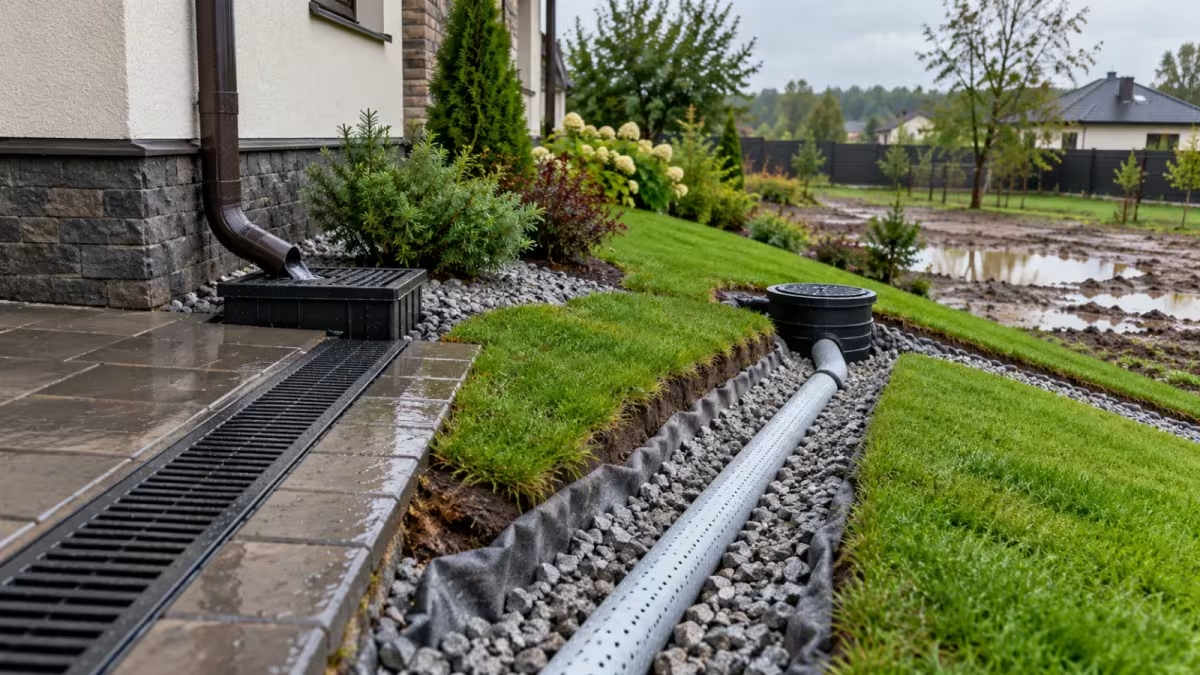
A lack of water is harmful to plants, but an excess of it can create even more problems. After heavy precipitation, puddles appear on a poorly prepared territory, soil is washed away, the lawn is damaged, and the condition of the plant root system deteriorates.
The problem is especially relevant for plots with clay soils, low terrain locations, or high groundwater levels.
To organize proper water disposal, surface or deep drainage may be required. You can find specialists for such work through Budver in the drainage works category, which features masters dealing with the installation of drainage systems, stormwater drainage elements, and other types of territory improvement.
Surface and deep drainage
Surface drainage is mainly designed to divert rainwater and snowmelt. The system may include drainage trays, storm inlets, channels, and receiving wells.
This option is especially important near:
house;
garage;
terrace;
entrance area;
paths;
other hard-surfaced areas.
Deep drainage is used to reduce the moisture level directly in the soil. Special perforated pipes are laid for its arrangement, which collect water and direct it to a drainage well or a discharge point provided by the project.
Pipes are usually placed in prepared trenches using crushed stone and geotextiles. The design must ensure the free flow of water and at the same time prevent rapid siltation of the system.
When drainage is especially necessary
Several characteristic signs can indicate the need for drainage:
water stays on the surface for a long time after rain;
the plot is located lower than neighboring territories;
the soil is predominantly clay;
the lawn is regularly flooded;
dampness appears in the basement or near the foundation;
plants do not grow well due to waterlogging;
in spring, the territory remains waterlogged for a long time.
It is better to solve the problem before establishing the lawn and decorative landscaping. Redoing a fully landscaped plot is much more difficult and expensive.
Landscaping as a single system
The highest quality result is obtained when landscaping, drainage, and irrigation are considered not as three independent types of work, but as elements of a single system.
For example, when shaping the relief, the directions of rainwater movement are immediately determined. Then drainage is laid, auto-irrigation pipes are installed, and only after that does the final soil preparation begin.
This approach allows you to determine the planting spots for large trees in advance and not lay engineering utilities through them. In addition, you can choose sprinklers so that water does not fall on the facade of the house, paths, and other areas where watering is not required.
What plants to choose for the plot
When choosing plants, it is better to focus not only on appearance. The region's climate, frost resistance of plants, soil quality, and the amount of sunlight should be taken into account.
Ornamental trees and conifers can become the basis of the composition. They create volume and shape the general appearance of the territory. Shrubs help divide functional zones and are used for hedges.
Perennials are convenient because they do not require annual complete replacement of flowerbeds. With the right selection of species, you can organize the plot so that different plants bloom from spring to autumn.
At the same time, it is important to consider the future size of the plants. A small sapling in a few years can turn into a large tree with a developed root system.
Maintenance after work completion
Even a professionally landscaped plot requires regular maintenance.
The main works include:
lawn mowing;
pruning trees and shrubs;
fertilizing;
weeding;
plant disease control;
irrigation system maintenance;
cleaning of drainage elements.
Before the onset of frost, automatic irrigation is usually winterized. Water is removed from the pipelines so that freezing does not damage the pipes, valves, and sprinklers.
Drainage should also be checked periodically. Storm grates and inlets must be cleared of leaves, soil, and other debris.
Why complex work is more profitable
When separate works are performed sequentially by different specialists, situations often arise where one system interferes with another. For example, right after laying the lawn, it turns out that a drainage pipe needs to be laid, or after planting trees, auto-irrigation lines need to be run through this territory.
Complex planning allows you to:
reduce the number of repeated earthworks;
properly place engineering utilities;
reduce water consumption;
protect plants from waterlogging;
simplify further maintenance;
maintain a neat appearance of the territory.
A beautiful and comfortable plot does not start with buying plants, but with a competent project. It is necessary to take into account soil characteristics, relief, natural water movement, and the future irrigation system.
Drainage helps remove excess moisture, automatic irrigation provides plants with the required amount of water, and properly executed landscaping combines all elements of the territory into a single composition.
If you think through these systems in advance and follow the correct sequence of work, the plot will be much easier to maintain, plants will receive comfortable conditions for growth, and the lawn and decorative zones will be able to maintain an attractive appearance throughout the season.
Editorial team agronom.info
Materials are prepared by the portal's agronomists and editors. We use only trusted sources: Ukrainian agricultural universities, variety registries, open scientific publications.
Related articles


Not yet comments. Be the first!
Comments · 0