
Stone for decor, backfilling, and mulching in your country garden
Stone for decor, backfilling, and mulching in your country garden is a versatile way to make your property look well-maintained, structured, and beautiful without complex upkeep.
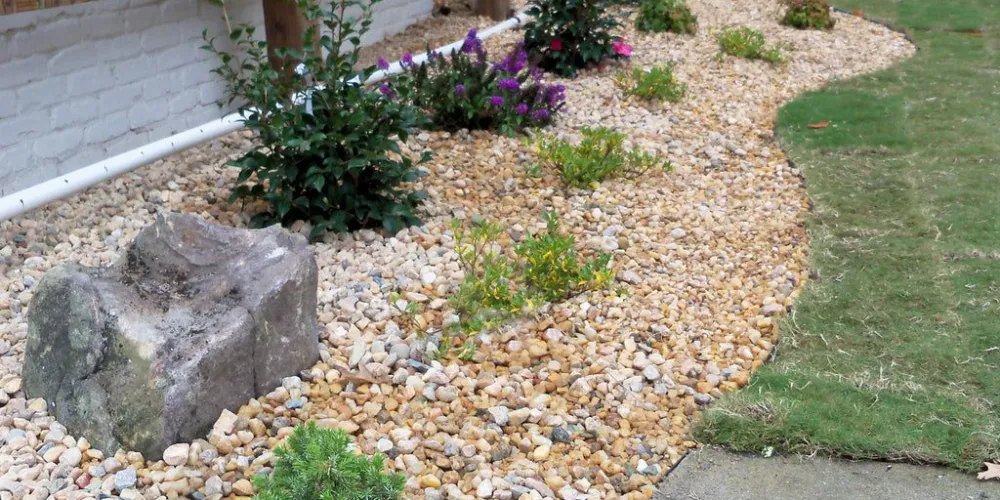
Stone for decor, backfilling, and mulching in your country garden is a versatile way to make your property look well-maintained, structured, and beautiful without complex upkeep. It helps create neat boundaries between lawns, flower beds, and paths, protects the soil, and adds texture that looks equally good in spring, autumn, and winter. Properly selected materials visually “bring” the garden together into a unified composition.
You should start with the role of stone in decor. Elements with a distinct texture set the tone for the entire area: they catch the eye, form focal points, and help emphasize the layout. Large garden decorative stones look especially impressive. They are used as dominant features at the entrance, in recreational areas, next to ponds, at the corners of retaining walls, or near large flower beds. Large boulders do not need to be placed chaotically: it is better to arrange them so that they support the lines of the paths and repeat in scale through smaller stone elements. Then the design looks thoughtful rather than accidental.
For the functional finishing of paths and flower beds, backfilling is important. Here, marble chips are often chosen for pathways and flower beds. Such chips provide a neat, bright, and “composed” look: paths look clean, and flower beds appear clearly defined. The marble fraction combines well with greenery and various garden styles — from classic to modern minimalism. At the same time, it helps reduce soil erosion and maintains neatness even after rain. For the best result, it is important to think through the foundation and prepare the base considering the load: paths should not sink, and the layer of chips should not mix with the soil.
No less important is mulching. It solves several tasks at once: it retains moisture, protects the soil from overheating and drying out, reduces weed growth, and improves the appearance of plantings. Often, larch bark for mulching is chosen for such purposes. It looks natural, has an attractive color, and works well as a decorative layer around shrubs, conifers, and perennials. Larch bark is especially good where you want soft transitions: a harmonious “buffer” appears between flower beds and stone backfilling, and the site looks more picturesque.
To ensure materials truly work as part of a unified design, choose a logic of combinations. For landscape design, it is useful to remember a simple rule: different materials should perform different tasks. For example, large stones form the composition and accents, marble chips set the clear lines of paths and edging for flower beds, and larch bark mulch covers the soil in planting zones. When each layer has a clear purpose, the garden looks professional even without complex techniques.
Special attention should be paid to preparation. Before backfilling and laying stone fractions, it is advisable to clear the site of weed roots, use geotextiles if necessary, level the base, and only then pour the selected material. This way, the coverage will retain its structure and color longer. The fraction is also important: for paths, choose a more suitable grain size so the surface is comfortable and doesn't get tracked around the site, and for flower beds, so the borders remain straight and neat.
Editorial team agronom.info
Materials are prepared by the portal's agronomists and editors. We use only trusted sources: Ukrainian agricultural universities, variety registries, open scientific publications.
Related articles

Not yet comments. Be the first!
Comments