
How healthier farm animals can cut greenhouse gas emissions
The productivity of farm animals is intrinsically linked to global climate goals. When a dairy cow miscarries, the farmer suffers more than just financial loss; there is a significant environmental cost. During the gestation period, resources like feed, land, and water have already been consumed, and methane—a potent greenhouse gas produced during digestion—has been emitted into the atmosphere. When a cow fails to produce milk or a viable calf, those emissions effectively result in zero output, significantly increasing the carbon footprint per unit of actual food produced.
My research, alongside recent peer-reviewed studies, indicates that preventing disease improves growth rates, fertility, and survival in livestock, such as cows, goats, and sheep. These improvements typically lower the emissions intensity associated with every litre of milk or kilogram of meat. However, the existing evidence remains inconsistent, and current climate policies rarely account for animal health because of the complexity in estimating these gains accurately across diverse global farming systems.
To address this, we launched the Halow project (Health Approaches for Lowering Livestock Emissions), supported by the Global Methane Hub. Recently approved as a major initiative under the Global Research Alliance on Agricultural Greenhouse Gases, this project aims to scientifically verify when and where improvements in veterinary health deliver genuine climate benefits. The platform enables researchers to standardize how we measure these impacts, ensuring that interventions are both cost-effective and environmentally sound.
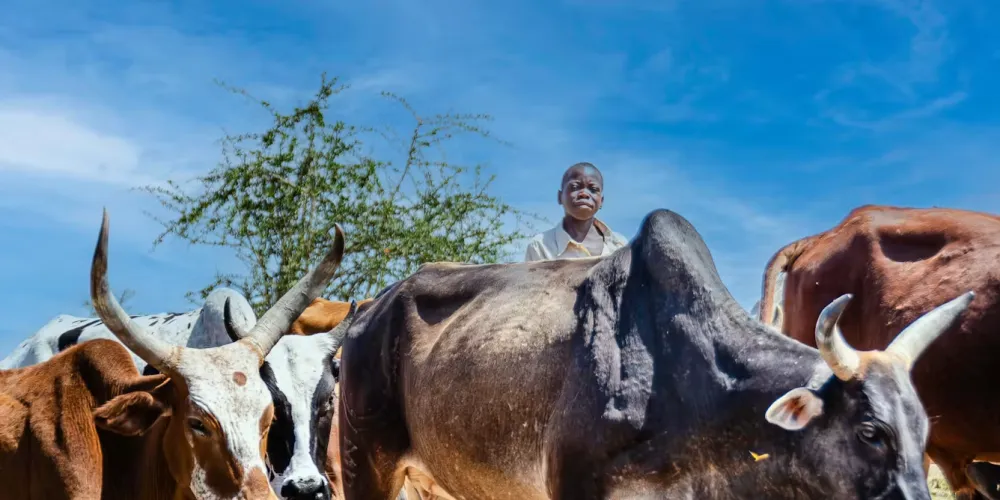
Case studies in Kenya and Tanzania illustrate the potential impact. In Tanzania, cattle miscarriages were found to increase methane emissions per kilogram of milk by 4% in indigenous breeds and up to 15% in higher-yielding cattle. Meanwhile, in western Kenya, high calf mortality—reaching 16% in the first year—led to protein losses equivalent to the annual beef consumption of 4.5 million people. Our data shows that halving mortality rates could reduce enteric-methane emissions intensity by 3.2%.
However, it is crucial to balance these findings. Improving survival rates increases total production, which may lead to more total methane being released, even if the footprint per kilogram of meat is lower. Therefore, animal health should not be viewed as a loophole for unrestricted herd expansion. Instead, it must be integrated into a balanced approach that measures food security, livelihoods, and climate outcomes simultaneously, ensuring a fairer and more sustainable global food transition.
Not yet comments. Be the first!
Comments · 0