
Large-Scale Pumpkin Production Gradually Develops in Ukraine
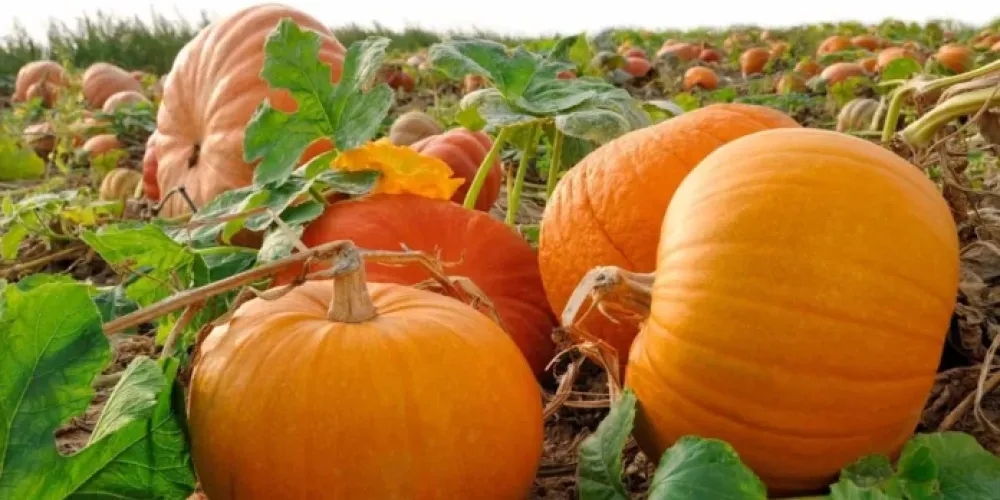
Large-scale commercial pumpkin production is gradually developing in Ukraine, having traditionally been cultivated mostly by household farms. The total area under the crop in 2026 is estimated at approximately 30,000 hectares, although exact statistics are lacking due to different accounting categories for table pumpkins, fodder pumpkins, and seed pumpkins. This was reported by the Institute of Climate-Resilient Agriculture of the National Academy of Agrarian Sciences (NAAS).
According to researchers, the production structure has been changing in recent years: alongside traditional farms, a segment of large commercial producers is forming. The most noticeable development in commercial production is seen in pumpkin seed cultivation, but interest is also growing in table varieties for the fresh market and processing. Demand for fresh pumpkins in Ukraine is increasing, while production volumes remain insufficient.
The average yield of certain table varieties is about 40 tons per hectare, while large-fruited varieties, particularly the Muscat de Provence cultivar, can reach 80–100 tons per hectare. The economic attractiveness of the crop largely depends on storage capabilities and marketing schedules. According to vegetable storage consultant Pavlo Bulgakov, the cost of growing cylindrical pumpkins averages 3–4 UAH/kg, while direct-from-the-field sales are priced at 7–8 UAH/kg. Prices typically begin to rise in late October and increase significantly by late February to early March, reaching 17–20 UAH/kg last season. Meanwhile, setting up a 1,000-tonne storage facility requires investments exceeding 12 million UAH.
Due to the war, the geography of commercial pumpkin production is also shifting. According to Volodymyr Knysh, head of the vegetable and melon growing department at the NAAS Institute of Climate-Resilient Agriculture, some production is gradually moving from traditional southern and eastern regions to Cherkasy, Poltava, Kyiv, Vinnytsia, Sumy, and other oblasts. Specifically, in the Cherkasy region, large farms are already growing pumpkins on hundreds of hectares, although the Steppe and Forest-Steppe remain the most favorable natural zones.
Despite growing commercial interest, industry development is constrained by weather risks and inadequate storage, logistics, and processing infrastructure. Due to the drought in 2026, seed pumpkin yields in some farms are expected to be at 0.6–0.8 tons per hectare, although under favorable conditions they can exceed 1 ton per hectare. According to NAAS specialists, further expansion of commercial production will depend not only on yields but also on the ability of farms to organize storage, processing, and stable product sales.
Not yet comments. Be the first!
Comments