
Ukraine Transfers 773 Seed Samples to the Svalbard Global Seed Vault
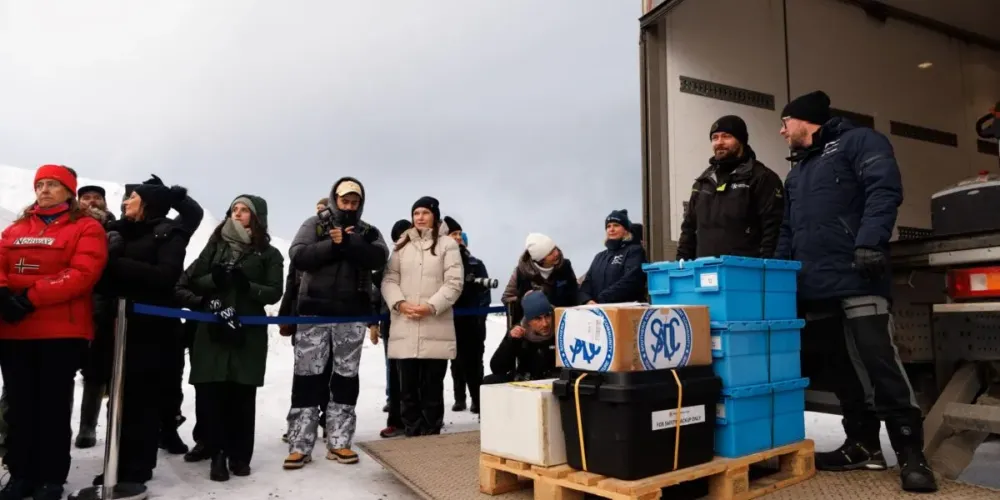
Ukraine has made a significant contribution to the preservation of plant genetic resources and agricultural biodiversity by transferring seed samples to the Svalbard Global Seed Vault in Norway. This international reserve ensures the reliable conservation of unique crop varieties, which is especially relevant amid ongoing warfare.
From the Ukrainian national collection, 773 seed samples of ten important crops were sent to the Arctic facility: triticale, barley, buckwheat, millet, peas, white lupine, common vetch, Sarepta mustard, alfalfa, and clover. This is the second batch of genetic material Ukraine has sent to Svalbard, and the first such transfer to take place since the beginning of the full-scale war.
"The preservation of the national plant gene pool is a matter of our national security and the food stability of future generations. Under the conditions of the war unleashed by Russia, Ukrainian agricultural science and strategic resources have faced direct threats. Transferring the duplicate collection to the Svalbard Global Seed Vault guarantees that the unique achievements of Ukrainian breeders are securely protected," emphasized Taras Vysotskyi, Ukraine's Minister of Agrarian Policy and Food.
To date, the transferred material accounts for approximately 10% of Ukraine's entire national seed collection, which totals over 154,300 samples. The preservation of the collection has been made possible through a joint FAO initiative, financial support from the European Union, cooperation with NAAS of Ukraine, Crop Trust, and NordGen, as well as technical assistance from the International Treaty on Plant Genetic Resources for Food and Agriculture.
As part of the project, 51,000 samples were relocated to western Ukraine, and a permanent Duplicate Center was opened at the end of 2025 to store them. Oleksii Havrysh, Ambassador Extraordinary and Plenipotentiary of Ukraine to the Kingdom of Norway, noted that plant genetic resources are part of the national heritage and a strategic resource for the country's future agriculture. Shakhnoza Muminova, Head of the FAO Representation in Ukraine, stressed that preserving genetic diversity enables farmers to create resilient crop varieties.
Not yet comments. Be the first!
Comments