
U.S. Eradicates Flesh-Eating New World Screwworm Returns: Researchers Develop Tracking Tool
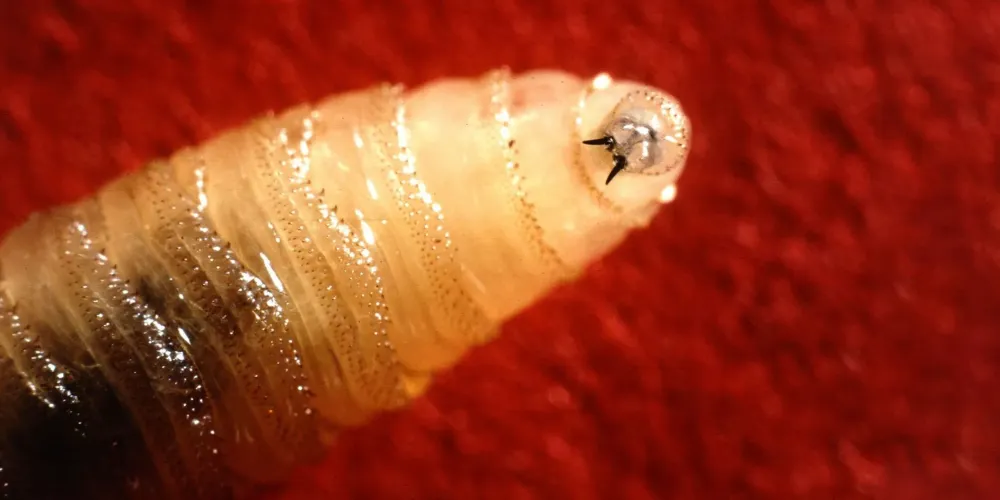
The flesh-eating New World screwworm has returned to the United States, threatening livestock, wildlife, pets and potentially humans as it spreads northward. In the 1950s, New World screwworm infestations inflicted enormous losses on U.S. livestock producers. In the Southwest alone, the pest caused an estimated $50 million to $100 million in damage each year before a major eradication campaign eliminated it from the United States and pushed its range south to Panama.
Now the flesh-eating pest is moving north again, having reached Texas and New Mexico and raising concerns for veterinary and public health officials. To help officials better understand where the threat could emerge next, researchers at the University of California San Diego and the County of San Diego Health and Human Services Agency (HHSA) Public Health Services developed a new tracking tool focused on the parasitic fly and its larvae, which feed on living tissue.
The newly built dashboard estimates screwworm risk for individual counties across the country. It integrates multiple data sources, including confirmed detections, environmental conditions favorable to the fly and its larvae, and news media reports. According to the developers, incorporating media coverage is a key innovation designed to bypass the multi-week delays typical of traditional laboratory confirmations and public health reporting systems, allowing authorities to stay ahead of potential outbreaks.
Unlike most fly larvae that consume dead or decomposing matter, New World screwworm larvae feed on healthy, living tissue. Female flies lay eggs in open wounds or natural body openings, and upon hatching, the larvae burrow into the tissue, deepening wounds and causing secondary infections. Without prompt treatment, severe infestations can seriously injure or kill livestock and wildlife. Human infections can also occur, though they are uncommon, and the parasite does not spread directly between people.
The United States successfully defeated the pest in the 1950s using the sterile insect technique, releasing millions of radiation-sterilized male flies to drive down wild populations. Authorities are now reviving this proven strategy. The U.S. Department of Agriculture (USDA) is leading a renewed eradication campaign combining sterile insect releases, pesticides, and animal movement quarantines.
Not yet comments. Be the first!
Comments · 0