
Pyrograzing: How Livestock Are Becoming Fire Prevention Heroes
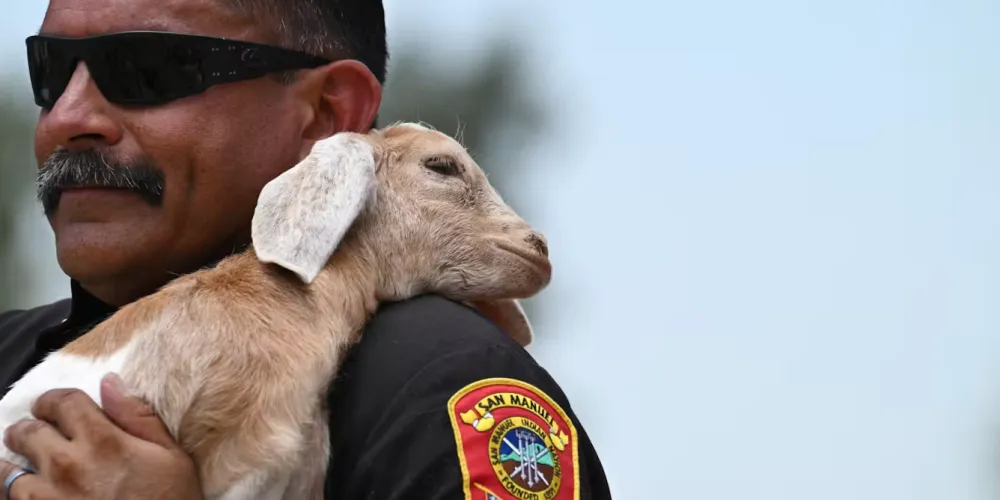
In grasslands across the American West, a practice known as pyrograzing or targeted grazing is gaining momentum as a fire prevention tool. Cattle, goats, and sheep are being intentionally deployed to graze and trample dry vegetation that would otherwise fuel catastrophic wildfires. As wildfire seasons intensify and public land budgets face severe strain, this natural approach is being viewed as a practical and cost-effective alternative to heavy machinery, chemical herbicides, or intensive manual labor.
Experts note that targeted grazing not only slows the spread of fire but also reduces its intensity, allowing firefighters more time to protect vulnerable communities. In 2017 alone, beef cattle in California consumed roughly 600 pounds of vegetation per acre across nearly 34 million acres. Today, regions like Santa Clara County, California, have formally integrated grazing into their wildfire management strategies.
The primary advantage of livestock over other methods is their accessibility. Animals can traverse steep or remote terrain where heavy equipment cannot operate and where chemical spraying or prescribed burning might be too dangerous or infeasible. Savvy land managers are now using grazing as a preparatory step before prescribed burns, clearing away enough biomass to make the intentional fires safer to manage for the crew on the ground.
A survey of over 1,000 U.S. Forest Service staff revealed that most professionals view targeted grazing as at least moderately effective. The practice is already common across ranger districts in the Pacific Northwest and Pacific Southwest. Following the 2025 Grazing Action Plan, leadership from the U.S. Forest Service and the Bureau of Land Management is encouraging the expanded use of this strategy on federal public lands.
Despite the clear benefits, experts caution that pyrograzing is not a panacea. Successful implementation requires significant logistics, such as hauling water to remote sites, coordinating grazing schedules that may not align with typical weight-gain cycles, and managing livestock in challenging environments. Consequently, while the consensus on effectiveness is high, only about 5% of surveyed Forest Service staff indicated they were very or extremely likely to scale up these operations in the near future, citing the complex practical challenges of managing large-scale grazing projects.
Not yet comments. Be the first!
Comments · 0