
Full implementation of India’s IPMS can help tackle fake pesticides, says insecticide board official
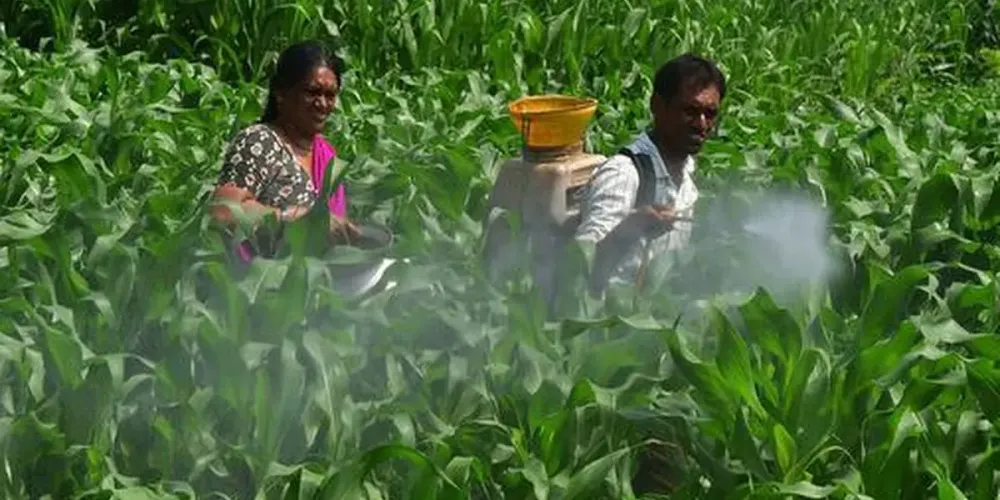
India can eradicate the persistent menace of counterfeit pesticides sold to farmers if the national Integrated Pest Management System (IPMS) is fully implemented, according to Subhash Chand, Secretary of the Central Insecticides Board and Registration Committee (CIB&RC) under the Ministry of Agriculture. Speaking at the National Conference on 'AI for Agriculture Transformation' organised by CropLife India in New Delhi, he emphasized that the national IPMS database enables essential track-and-trace capabilities, ensuring product authenticity through an established and verified dealer network.
Chand urged the agricultural industry to collectively develop AI-based tools and applications to help farmers accurately identify pests and make informed decisions regarding the right pesticide, at the right time, and in the correct dosage. He noted that harnessing advanced technology can significantly strengthen scientific and responsible crop protection practices at the grassroots farm level. CropLife India is an apex industry body representing 17 research and development driven enterprises in the crop protection sector.
During a CEO panel discussion exploring the industry outlook up to 2035, Ankur Aggarwal, Executive Chairman and MD of Crystal Crop Protection, highlighted that the sector will witness proximate innovations and a growing role for robotics. Gyanendra Shukla, MD and CEO of Rallis India, noted that digital channels will substantially impact profit margins and that artificial intelligence can define the next growth phase. Other panelists, including Mohan Babu of Bayer CropScience and Giridhar Ranuva of BASF, discussed the shift toward integrated approaches combining AI, enhanced seeds, gene editing, and climate-resilient agriculture.
Also at the conference, CropLife India and Yes Bank unveiled a comprehensive report titled 'Innovation in Crop Protection Sector'. The publication projects that India's net sown area will shrink by 10 percent by 2050 due to land conversion for urban uses. Furthermore, it pegs crop yield losses caused by pests and diseases at ₹2 lakh crore, warning that climate change pressures will intensify these challenges and necessitate higher per-hectare productivity.
The report underscored the urgent need for structural sector reforms, including deeper digitalisation, enhanced farmer extension services, domestic R&D promotion through the Production-Linked Incentive (PLI) scheme, a nationwide 'One Nation One Licence' policy, and a five-year Regulatory Data Protection (RDP) incentive to encourage the introduction of novel crop protection solutions in the country.
Not yet comments. Be the first!
Comments · 0