
Rural businesses face 'cliff edge' due to surging costs, Tories warn
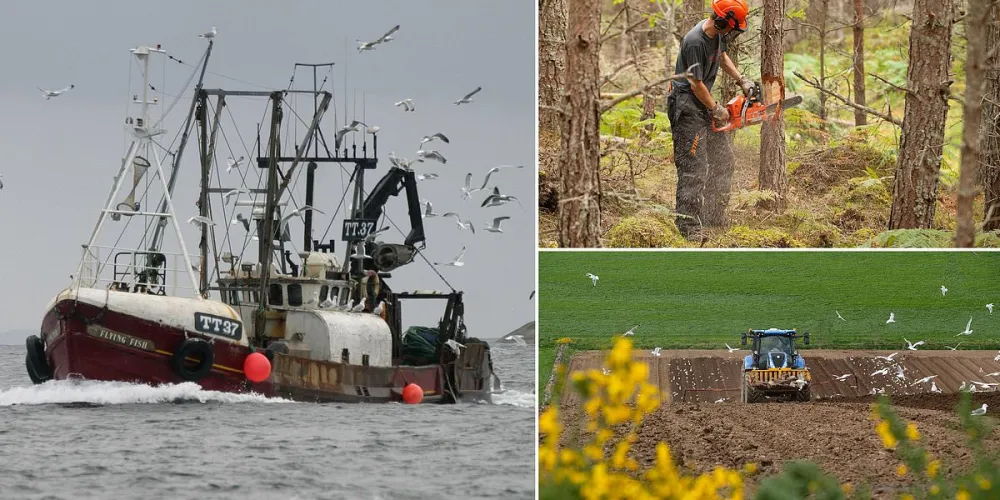
Rural businesses in Scotland are facing a critical financial crisis, with the Conservative party warning that the sector is staring over a 'cliff edge.' Recent data released by the Scottish government reveals a staggering number of 'business deaths' within the agricultural, fishing, and forestry sectors. Since the beginning of 2020, approximately 4,700 such businesses have ceased operations, averaging over 200 closures every single quarter.
Conservative politicians have attributed this downward trend to a perfect storm of economic challenges, including soaring energy costs, punitive business rates, and hikes in National Insurance contributions. Furthermore, the Labour government's proposed 'family farm tax' has become a major point of contention. Industry observers suggest that these cumulative financial burdens are effectively strangling the viability of small and medium-sized rural enterprises, which serve as the economic backbone of rural Scotland.
James Adams, a Conservative Member of the Scottish Parliament (MSP), described the findings as 'extremely concerning.' He argued that the protection of the agriculture, fishing, and forestry industries should be treated as a matter of national security. Adams stated that while these industries are the lifeblood of the Scottish economy, they are currently threatened by an array of fiscal pressures, including VAT increases and high energy tariffs, which jeopardize their long-term survival.
The debate has been heavily influenced by a 2024 policy announcement by Chancellor Rachel Reeves. Initially, the government proposed a 20 percent tax on inherited agricultural assets exceeding £1 million, effectively ending a 100 percent tax relief that had been in place since the 1980s. The announcement sparked immediate public outcry, with farming groups warning that the change could destroy family-run operations and even lead to heightened mental health crises among the farming community.
Following significant backlash, the government partially retreated, adjusting the plan by raising the tax threshold to £2.5 million. Despite this concession, Conservative critics maintain that the government's approach remains fundamentally flawed. They argue that the current fiscal policy continues to disproportionately impact rural communities, leaving thousands of business owners with no choice but to close their doors amidst persistent economic uncertainty.
Not yet comments. Be the first!
Comments · 0