
Study: Almost Half the World’s Farmers Are Poisoned by Pesticides Each Year
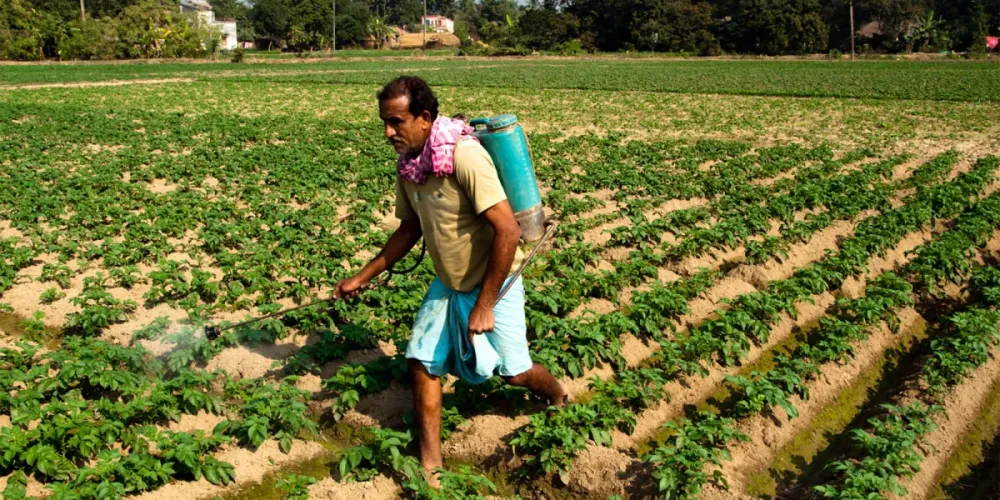
According to a major study published in the journal Frontiers in Public Health, nearly 46% of the world’s farmers and agricultural workers suffer from unintentional acute pesticide poisoning every year. The research, commissioned by the Pesticide Action Network and based on data from 2006 to 2023, estimates that between 402 million and 433 million poisoning cases occur annually among the global farming population of 934 million.
The highest incidence of poisoning was recorded in Southern and Southeast Asia, followed by East Africa. Burkina Faso in West Africa emerged as the country with the highest national incidence rate, where nearly 84% of farm workers reported experiencing poisoning. Researchers highlight that despite ongoing global efforts to mitigate these dangers, the use of pesticides has continued to rise steadily, with 3.8 million metric tons consumed in 2023, effectively doubling the usage levels recorded in 1990.
Beyond acute health issues, the study reports approximately 11,000 deaths caused by pesticide poisoning each year, with India accounting for nearly 60% of these fatalities. Jayakumar Chelaton, executive director of Pesticide Action Network India, stated that the research exposes a crisis that can no longer be ignored. The study authors are calling for immediate action, specifically the implementation of UN recommendations to phase out highly hazardous pesticides in favor of safer alternatives.
The report also touches upon the link between pesticide exposure and long-term neurodegenerative conditions, particularly Parkinson's disease. Experts point to overwhelming evidence suggesting that Parkinson's is, in part, an environmentally driven disease. In several European countries, including France, Germany, and Italy, Parkinson's disease is now formally recognized as an occupational condition for farmers who regularly handle toxic crop protection chemicals.
However, the authors note that these figures likely represent only a fraction of the total impact. The study did not account for the health outcomes of the estimated 84 million children working in agriculture, nor did it track chronic health impacts from long-term low-dose exposure. Given the lack of consistent global data, researchers are urgently calling for standardized surveillance and reporting protocols to ensure that incidents of pesticide poisoning are documented accurately and comparably across the world.
Not yet comments. Be the first!
Comments