
How to Eliminate Acute Manganese Deficiency in Rapeseed
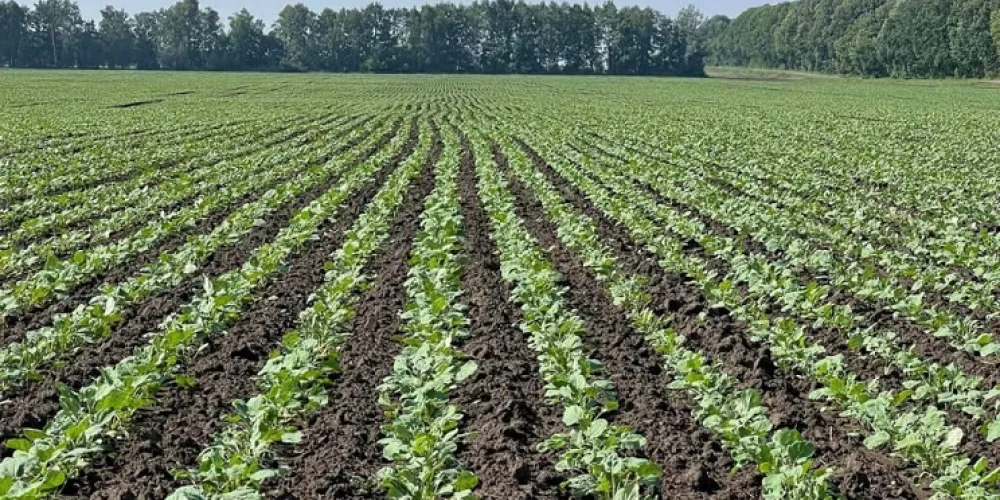
If the manganese content in acidic soil is low, rapeseed plants can be supplied with this essential micronutrient via foliar feeding. This is stated in an article by Hryhoriy Hospodarenko, Doctor of Agricultural Sciences and professor at the Uman National University of Horticulture, published in The Ukrainian Farmer magazine.
The expert recommends applying 400-600 g/ha of manganese in the form of manganese sulfate or 200 g/ha of manganese chelate starting from the 4-leaf stage in autumn. Additionally, 200 g/ha and 100 g/ha respectively should be applied during the budding stage.
Acute deficiency can be quickly corrected using chelates or a two-fold application of manganese salts over several days, such as two treatments of 300 g/ha of manganese sulfate. Manganese chelate is absorbed through plant stomata, while salt solutions typically penetrate through the cuticle.
Applying excessively high single doses of manganese is impractical, as a significant portion of the salt crystallizes and falls off or is washed away from the leaves. In fields with a pronounced deficiency, 15 kg/ha of manganese sulfate (equivalent to 3 kg of Mn) is applied directly to the soil.
However, it is important to consider that at high soil pH levels, manganese converts into unavailable forms and fails to yield the desired results. If the soil contains sufficient manganese but its availability is restricted by high pH, the soil solution can be acidified by applying 200 kg/ha of ammonium sulfate starting from the 4-leaf stage of rapeseed.
Not yet comments. Be the first!
Comments