
'Hunger Stones' Resurface in Europe, Bringing Centuries-Old Warnings Back Into View
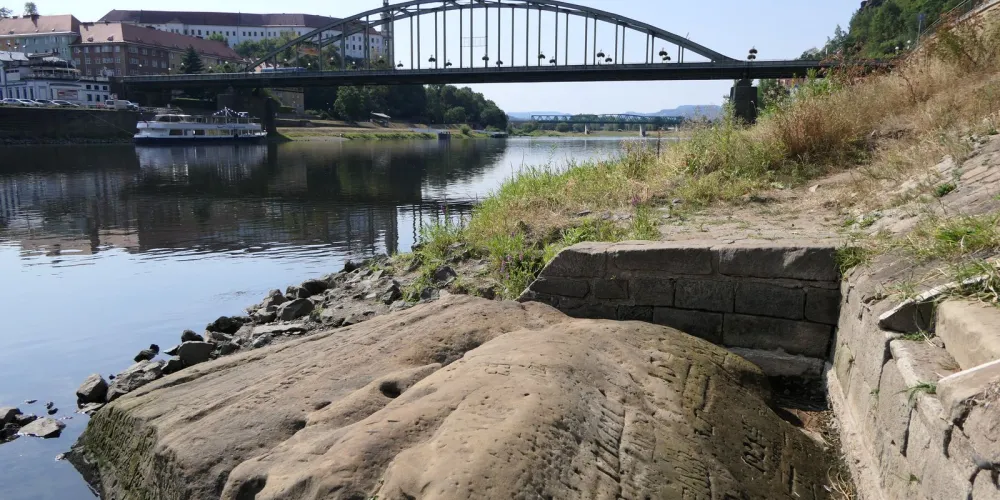
In recent months, historic low water levels in European rivers have brought to light the so-called 'hunger stones.' These geological markers, located along the riverbeds of Central Europe, have been used for centuries by local communities to record instances of extreme drought when water levels dropped so low that navigation and agriculture were severely disrupted.
The stones feature dates spanning from the 15th through the 20th centuries, with many bearing multiple inscriptions carved decades apart. One of the most famous stones, discovered in Decin, Czech Republic, contains markings that have been verified for their remarkable accuracy. A 2020 study published in the journal Climate of the Past found that 11 measurements inscribed on the stone between 1868 and 1957 closely matched official hydrological records from the same period.
Beyond simple dates, these stones often contain chilling inscriptions. For instance, in 1904, a boatman and innkeeper in Decin had the phrase 'If you see me, weep' carved into a sandstone boulder along the Elbe River. This was an intentional reference to earlier, centuries-old markings nearby that read, 'We cried—we cry—and you will cry.' Such messages served as grim reminders of the hardship faced by day laborers and river transport workers during times of severe water scarcity.
These markers played a crucial practical role in drawing attention to future risks. Vlastimil Pažourek, director of the Decin Regional Museum, notes that the stones were vital in warning communities about the economic dangers posed by low water levels. As riverbeds have dried up this season, the stones have emerged alongside other artifacts, including sunken vessels, ancient bridges, and even remains of woolly mammoths.
Today, interest in these artifacts has spiked, not only due to their historical significance but as markers of current climatic trends. While the stones vary in size and location, their collective purpose remains unchanged: to serve as silent witnesses to history, reminding current generations that Europe’s freshwater resources remain highly vulnerable to the impacts of global warming and prolonged periods of drought.
Not yet comments. Be the first!
Comments · 0