
In a first, Bihar joins Centre’s direct pulse procurement network
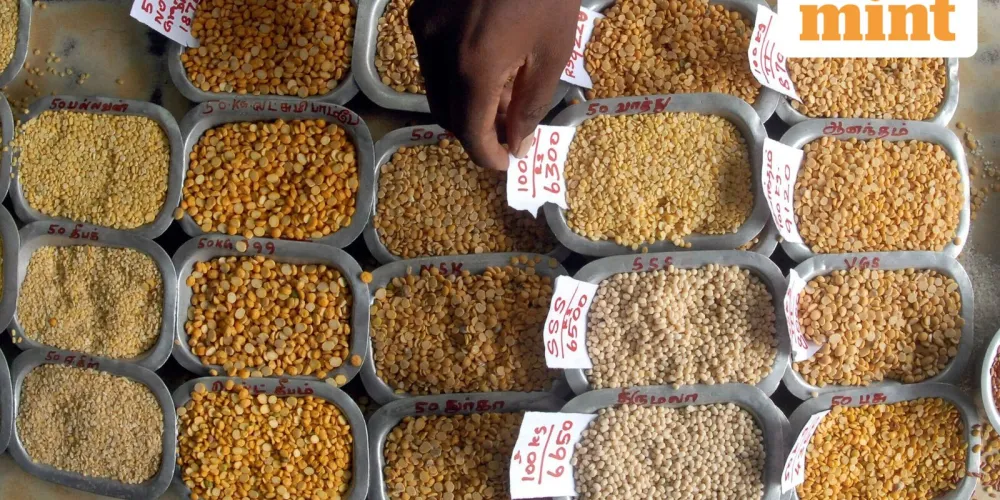
Bihar has marked a significant policy milestone by joining the Centre’s direct pulse procurement network. Following a recent policy shift, central government agencies are now empowered to purchase lentils (masoor) directly from the state’s farmers, bypassing state-level intermediaries. This development is particularly crucial for the state, where farmers have largely relied on private traders for market access since the abolition of the Agricultural Produce Market Committee (APMC) system in 2006.
The direct procurement model ensures that the Centre purchases pulses straight from the cultivators, with payments credited directly into their bank accounts. By the first week of August, approximately 3,000 tonnes of masoor had already been procured against an initial target of 32,000 tonnes. This initiative has already benefited about 750 farmers, who have received total payments of around ₹21 crore, calculated at the Minimum Support Price (MSP) of ₹7,000 per quintal.
Two major central agencies are overseeing the operation: the National Cooperative Consumers' Federation of India (NCCF) and the National Agricultural Cooperative Marketing Federation of India (Nafed). The NCCF has been procuring lentils across the districts of Nalanda, Patna, Vaishali, and Rohtas. Simultaneously, Nafed has been actively conducting procurement in Jehanabad, Kaimur, and Lakhisarai, as well as supplementing efforts in Nalanda, Patna, and Rohtas.
Bihar is a significant player in the pulse sector, producing nearly 400,000 tonnes annually across 448,000 hectares of land. Previously, the lack of an MSP-based procurement system forced many farmers to sell their produce below government-set rates due to private market dominance. Agricultural economist Binod Anand, a member of the Centre’s committee on MSP, noted that this successful rollout is expected to bolster farmer confidence in government procurement channels and encourage broader participation in the future.
This shift aligns with the Centre’s 'Mission for Aatmanirbharta in Pulses,' which seeks to achieve self-reliance in pulse production. Bimal Kothari, chairman of the India Pulses and Grains Association (IPGA), highlighted that Bihar’s inclusion is a testament to the success of encouraging rainfed areas to increase acreage. The benefits of this model are already spreading; for instance, in Chhattisgarh, 380 tonnes of lentils have been procured from over 1,200 smallholder farmers, and Madhya Pradesh continues to be a major contributor, providing 200,000 tonnes of masoor to the national programme.
Not yet comments. Be the first!
Comments · 0