
How to Organize Seasonal Produce Storage on a Farm
Practical recommendations for organizing efficient produce storage on a farm, taking into account seasonal peaks and microclimate requirements.
Features of Agricultural Logistics Organization
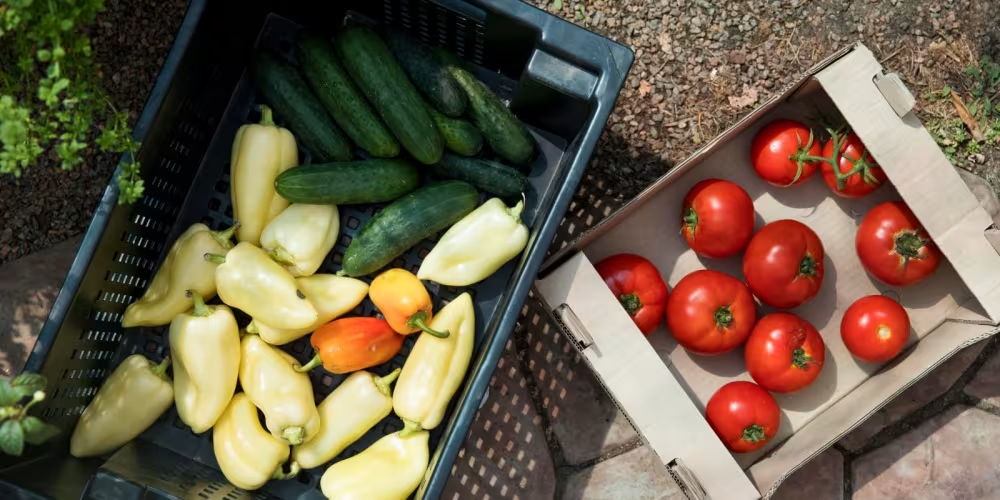
Efficient produce storage on a farm is a key factor in the profitability of any agricultural enterprise. During the harvest period, the volumes of incoming vegetables, fruits, or livestock products significantly exceed current market demand, which requires the creation of reliable reserves. To minimize losses and preserve marketability, farmers need specialized agricultural storage facilities capable of maintaining specified microclimate parameters around the clock. At the same time, stable humidity during produce storage is of critical importance, since deviations from the norm lead to wilting, the development of fungal diseases, or loss of product weight.
Modern agricultural production requires continuous quality control at every stage of goods movement from the field to the shelf. Any disruption of the cold chain at the initial stage can completely destroy the profitability of an entire batch of products. That is why professional market participants pay such close attention to the introduction of innovative engineering solutions in the field of autonomous cooling supply. Investments in modern technologies not only protect the crop from spoilage but also significantly expand the geography of supplies, reaching new regional and international sales markets.
The issue of preservation is especially acute regarding categories that belong to perishable products, requiring immediate cooling right after harvesting from fields or farms. Traditional capital storage facilities do not always manage to cope with peak loads in the middle of the season, so agricultural producers are increasingly looking for flexible alternatives to solve tasks related to such a process as temporary crop storage. Mobile refrigeration solutions, which can be quickly deployed in the immediate vicinity of harvesting areas, are perfectly suited for these purposes. Global Container Service offers to buy a refrigerated container, and here you can choose the optimal equipment to maintain a strictly specified temperature regime. The use of such units significantly reduces the costs of primary cooling and minimizes the transport shoulder until shipment to consumers.
In the context of business expansion, there is an objective need to increase the usable volume for accommodating product batches. Traditional capital construction requires significant capital investments and time, so infrastructure modernization is often achieved through the introduction of modern technologies. In particular, the spacious 45-foot reefer container is excellent for large batches of goods, providing maximum usable loading area and allowing the maintenance of an ideal microclimate. Such autonomous refrigerated warehouses for vegetables and other agricultural products enable farmers to react flexibly to market conditions, avoiding the necessity of urgent sales at knockdown prices.
Tools for Optimizing Logistics Processes
Proper planning of supply chains at an agricultural enterprise directly depends on the reliability and adaptability of the infrastructure used. The growth of production volumes inevitably entails the expansion of storage capacities, and this needs to be done with minimal costs for the farm budget. It is important to consider many factors when designing logistics zones:
accurate calculation of the required area for each type of agricultural crop;
integration of automatic temperature and humidity control systems;
organization of convenient access roads for heavy-duty vehicles;
introduction of energy-efficient equipment to reduce electricity costs;
creation of buffer zones for checking the quality of goods before sending them to buyers.
Economic Efficiency of Autonomous Storage Systems
The introduction of mobile refrigeration systems radically changes the economics of a modern farm. Traditional stationary refrigerators require colossal costs for design, approvals, and construction work, while ready-made container solutions are ready for operation immediately after connecting to the power grid. This allows farmers to quickly scale storage capacities depending on the yield of a particular year. The mobility of the equipment makes it possible to relocate refrigeration modules closer to new fields or logistics hubs, minimizing internal transportation expenses for perishable products.
In addition, modern refrigeration units feature high energy efficiency and precise maintenance of set temperature parameters with an accuracy of tenths of a degree. Intelligent control controllers allow programming operation modes for a specific type of product, whether delicate berries, juicy fruits, or root crops. This approach eliminates the human factor and minimizes the risks of technological failures, guaranteeing microclimate stability 24 hours a day, 7 days a week.
High-quality produce storage before realization guarantees the preservation of all nutritional properties and vitamins, which increases the competitiveness of the farm brand on the market. Investments in modern logistics complexes and mobile refrigeration systems pay off in the shortest possible time by reducing the percentage of product defects and spoilage. Ultimately, a successful agricultural farm is built on a balance between production volumes and infrastructure capabilities to preserve the harvested crop in its pristine form all the way to the end consumer.
Editorial team agronom.info
Materials are prepared by the portal's agronomists and editors. We use only trusted sources: Ukrainian agricultural universities, variety registries, open scientific publications.
Related articles
How to Choose a Pump for Pumping Viscous Products at an Agricultural Processing Enterprise

Why a good walnut harvest does not yet mean good earnings

How can a farm diversify its income and avoid depending on selling a single type of product?
Not yet comments. Be the first!
Comments