
How automatic dosing helps reduce overfill and speed up the packaging line
On a production line, it is important not only to fill the packaging quickly but also to form a consistent portion. Even a small systematic overfill turns into significant product losses at high volumes.
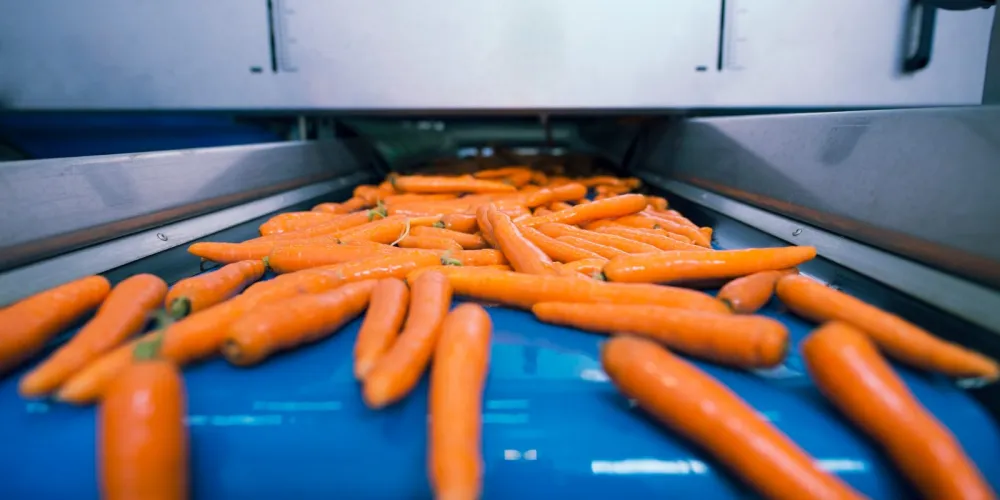
On a packaging line, the final cost of a package depends not only on the speed of the equipment. The accuracy of each portion formed is of great importance. If a package consistently receives more product than stated on the label, the enterprise is effectively giving away part of its goods for free. If the mass falls below the permissible value, there is a risk of claims from the buyer and quality control. Therefore, the dosing stage directly affects both the economics and the stability of the entire line.
Why manual weighing limits productivity
For small volumes of products, a portion can be formed manually: an operator gathers the product, checks the weight, and adds or removes a few units if necessary. But as output grows, this scheme becomes a bottleneck. Speed depends on the human factor, and the weight variance between packages increases due to fatigue, varying sizes of produce, and the need to constantly adjust the portion.
Automation makes it possible to separate the weighing process from the operator's subjective actions. On the line, the product is distributed into several weighing hoppers, after which the system selects the appropriate combination to obtain the target weight. This principle is especially convenient when working with individual items and products of inconsistent size.
Where does overfill come from
Imagine needing to form a package of a fixed weight from potatoes, onions, or apples. Individual items weigh differently, so it is difficult to get an exact value through a simple sequential gathering process. To avoid underfilling, the operator often leaves a small margin. On one package it seems insignificant, but over thousands of portions, it turns into a noticeable volume of product.
This is where the weighing doser for vegetables and fruits becomes part of not only the production model but also the economic model of the line: the equipment's task is to quickly find a combination as close as possible to the target weight and transfer the finished portion to the next packaging stage.
Why both accuracy and gentle handling are important
Vegetables and fruits cannot be treated as uniform bulk raw materials. Potatoes tolerate mechanical impact differently than an apple or a tomato. The greater the drop height, sharp impacts, and unnecessary transfers, the higher the risk of damaging the surface of the product.
Therefore, when designing a line, one should evaluate not only the rated speed of the weighing unit but the entire path of the product: feeding from the storage hopper, distribution through channels, discharge of the portion, and integration with the packaging machine. If one section works significantly faster than another, the nominal performance of an individual piece of equipment will not yield the expected result.
Which parameters to consider when selecting a system
type and average size of the product;
required weight per package;
target line productivity;
permissible level of mechanical impact;
type of subsequent packaging;
height and direction of product feeding;
need for quick reconfiguration between formats.
For example, a company might produce several package sizes for one product: small retail packaging and a larger format. In this case, not only is the ability of the equipment to work quickly important, but also the ease of switching between tasks without long downtime.
Why the doser cannot be chosen separately from the packaging machine
The weighing system forms a portion, but then it must be received, packaged, and the finished product transported away. If the packaging machine cannot process incoming portions in time, the weighing unit will be forced to wait. If the dosing works slower, the packer will start to idle.
Therefore, line productivity is calculated based on its slowest section. Before purchasing equipment, it is useful to pre-determine the required number of packages per shift and check the compatibility of all units in terms of height, pace of work, and method of product transfer.
How automation affects quality control
The stability of portions simplifies internal control. It is easier for the enterprise to track deviations, compare shifts, and understand where productivity loss is occurring. The operator does not disappear from the process: their task shifts from constant manual topping-up to equipment monitoring, product feeding, and responding to non-standard situations.
Summary
Automatic dosing should be evaluated not as a separate machine, but as an element of a single packaging line. The economic effect is derived from reducing excess overfill, ensuring portion consistency, increasing productivity, and reducing manual operations. At the same time, the result depends on selecting the right equipment for a specific product and how well the feeding, weighing, and subsequent packaging processes work in coordination.
Editorial team agronom.info
Materials are prepared by the portal's agronomists and editors. We use only trusted sources: Ukrainian agricultural universities, variety registries, open scientific publications.
Related articles
Not yet comments. Be the first!
Comments