
Grapevine vitivirus
Vitivirus etavitis
Grapevine vitivirus (genus Vitivirus) is a major group of viral pathogens affecting grapevines globally. The most significant member is the Grapevine virus A (GVA), which is primarily associated with the rugose wood complex and leafroll symptoms.
What the section contains
Grapevine vitivirus
The virus is a positive-sense single-stranded RNA virus that resides in the phloem of the plant. It is primarily transmitted through vegetative propagation, meaning that cuttings or rootstocks taken from infected mother plants will inevitably carry the virus.
Insect vectors play a crucial role in the horizontal transmission of the virus between vines. Specifically, mealybugs (Pseudococcidae) and scale insects are known to acquire the virus by feeding on infected plants and transmitting it to healthy ones.
Once inside the host, the virus spreads systemically, disrupting the transport of phloem sap. This leads to physiological stress and reduces the overall vigor of the grapevine, which cannot be cured once infected.
Managing the pathogen relies entirely on prevention because there are no curative treatments available. The focus is on clean stock production and the control of insect populations that facilitate spread.
Symptoms of vitivirus infection can be highly variable and are often latent, meaning the plant may look normal while harboring the virus. Reduced growth and stunted appearance are common early warning signs.
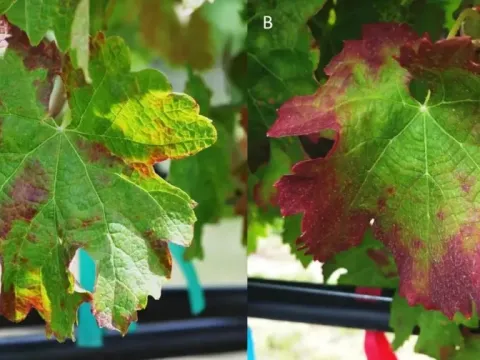
Leaves may show interveinal chlorosis, rolling, or deformation depending on the specific virus strain and the grapevine variety. These symptoms often become more pronounced towards the end of the growing season.
A critical sign is the failure of canes to mature properly. In the autumn, the shoots may remain green and succulent instead of turning woody, which significantly reduces the vine's resistance to winter frost.
Fruit quality is severely impacted. Infected vines often produce loose bunches with uneven berry ripening and reduced sugar content, leading to poor wine quality and lower market value for fresh grapes.
- Stunted shoot growth
- Internal necrosis or wood pitting in stems
- Reduced cold hardiness
- Increased susceptibility to secondary fungal infections
The economic impact of vitivirus is significant, as it leads to the gradual decline of vineyard productivity. Infected plants lose their ability to produce high-quality yields, eventually requiring total removal of the vine.
Because the virus is systemic and persistent, it shortens the productive lifespan of a vineyard. Growers often face the prospect of premature replanting, which involves substantial capital investment and loss of time.
Viral infection weakens the overall immune response of the grapevine. This makes the plants more prone to other abiotic and biotic stresses, such as drought, nutrient deficiencies, and fungal pathogens like powdery mildew.
The spread of the virus within a region can be rapid if mealybug populations are not controlled. This poses a threat not only to the individual vineyard but to the surrounding viticultural area.
Detection is often difficult and expensive. Growers must invest in laboratory diagnostics, such as ELISA or PCR testing, to ensure that nursery stock is free from vitivirus, increasing overall production costs.
The primary control strategy is the use of certified virus-free planting material. Growers should only source vines from reputable nurseries that employ rigorous virus indexing and sanitation protocols.
Implementing an integrated pest management (IPM) program to control mealybugs and scale insects is vital. By reducing vector populations, the rate of natural viral spread within the vineyard can be minimized.
Sanitation of agricultural tools is a basic but essential practice. All pruning equipment should be disinfected between different vine rows to prevent mechanical transmission of the virus via sap.
If an infected vine is detected, it must be promptly rogued (removed) and destroyed. Leaving infected plants in the vineyard provides a reservoir for insects to acquire the virus and transmit it further.
Maintaining spatial distance between old, potentially infected vineyard blocks and new plantings is a recommended cultural practice to avoid virus encroachment from nearby sources.